comments 29

Summer’s end

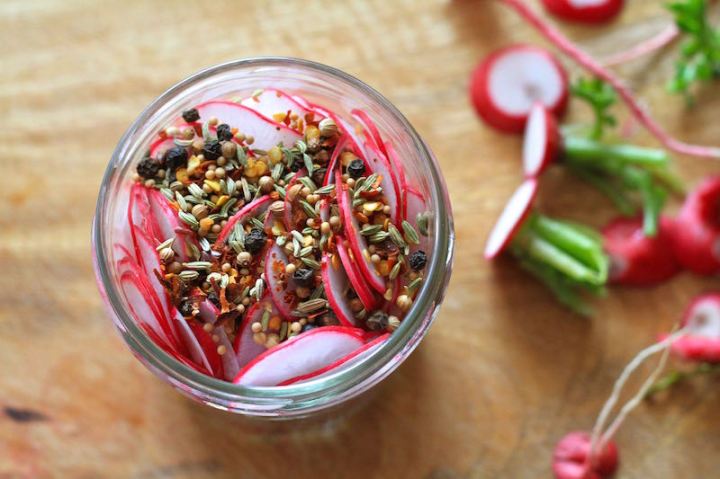
Radishes layered with peppercorns, fennel, mustard, coriander and chilli

Summer is ending with storms in Queensland. I went to the Doomben races on Saturday with a group of girls and saw a total of three races before torrential rain set in and the racing was called off. On Sunday morning I took a long walk along the banks of the Brisbane river and got caught in a downpour while still 30 minutes from home. I quickly decided to abandon myself to the rain, loving the cooling splat of each raindrop, every squelching step, and the novelty of being alone on the boardwalk except for a few equally drenched cyclists flashing grins as they passed. At the storm’s zenith I experienced a momentary fear that it might start to hail. Sheltering under the Story Bridge, I was surrounded by temporary waterfalls pouring off the bridge and rocky cliffs. The air tingled deliciously – Queensland sure knows how to have a good summer storm.
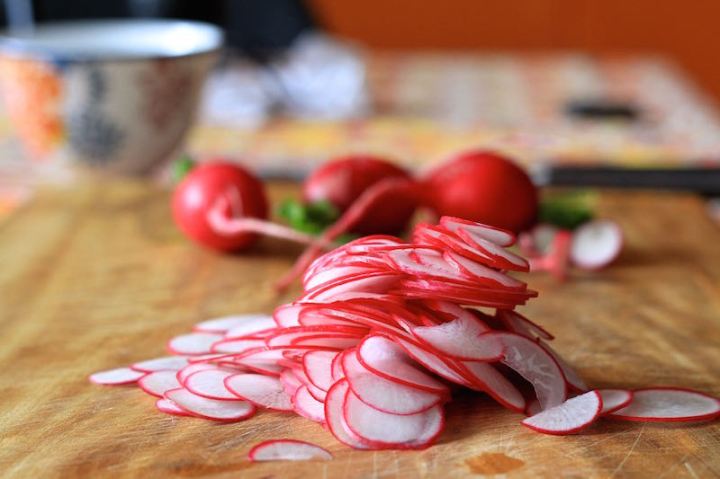
Red radishes sliced using a mandolin, ready to make pickle

All this extra moisture about makes for revolting levels of humidity when the sun is shining. My hair is not coping. Summer might be ending but it is not done yet.
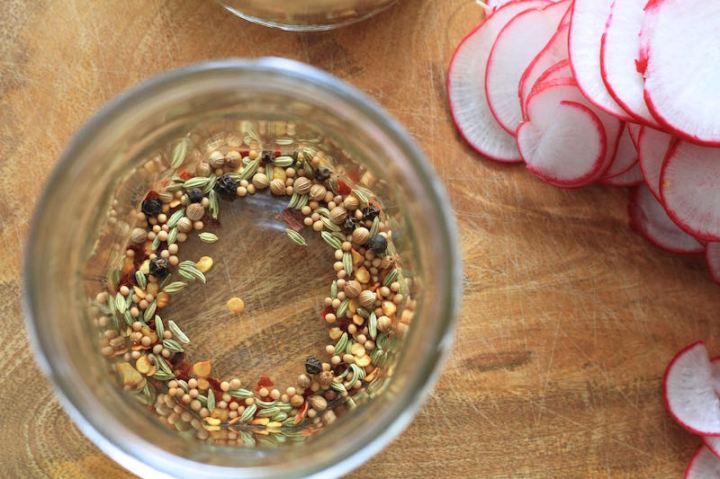
Chilli, coriander, fennel, mustard and pepper - whole spices for pickling brine

I made these pickled radishes back in January when summer was in full flight, but I never got around to posting the recipe. February ended roughly and March has been busy and stressful and all of a sudden it’s been a month since my last post. I never feel guilty for taking blog breaks. It is what it is and sometimes my head is too full of otherstuff to make time for creativity, which won’t be forced. Returning is always a sign that I am starting to breathe again.
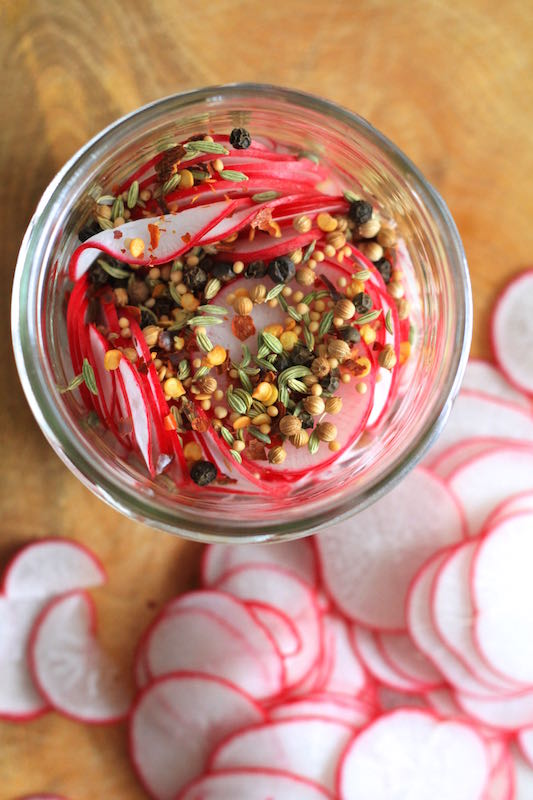
Quick Spiced Radish Pickle

This recipe comes from Selma’s Table, a British blog written by the wonderfully upbeat and colourful Selma. This recipe is like so many that she features – fresh, vibrant, quick and easy. I am a sucker for pickles and chutneys but have never tried my hand at pickling anything before. Selma’s recipe was a perfect introduction, as there is no need to sterilise jars, no need to boil and test and boil some more. The rapid preparation method means that the pickles won’t keep for long, but they are unlikely to hang around anyway; I demolished my jar in a single week of ravenous after-work cheese and cracker sessions.
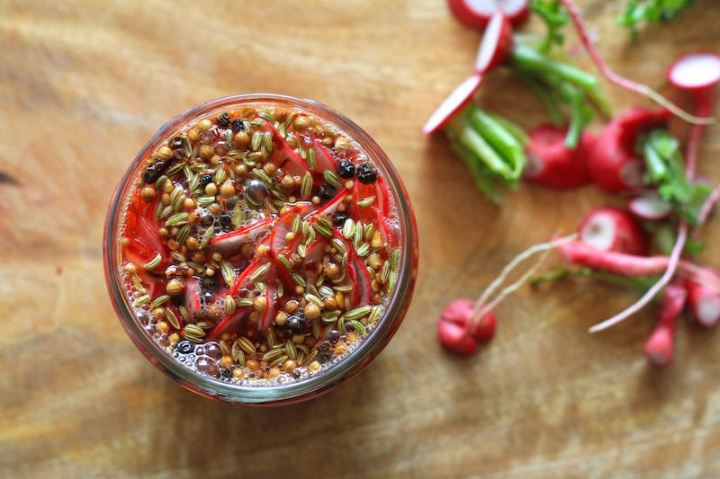
Sliced radishes topped with pickling brine - Quick Pickled Radishes

My love for crackers and cheese is already well documented here – add pickles and my tastebuds are tipped over the edge. These radishes remain crunchy in texture. Their heat is moderated by the pickling method, and the whole seeds become soft and chewy and moreish. The pickle is fresh and piquant and tastes absolutely homemade. I didn’t get beyond the cheddar cheese and cracker combination, but Selma advises that they are great in sandwiches, on burgers, with grilled meat and in salads.
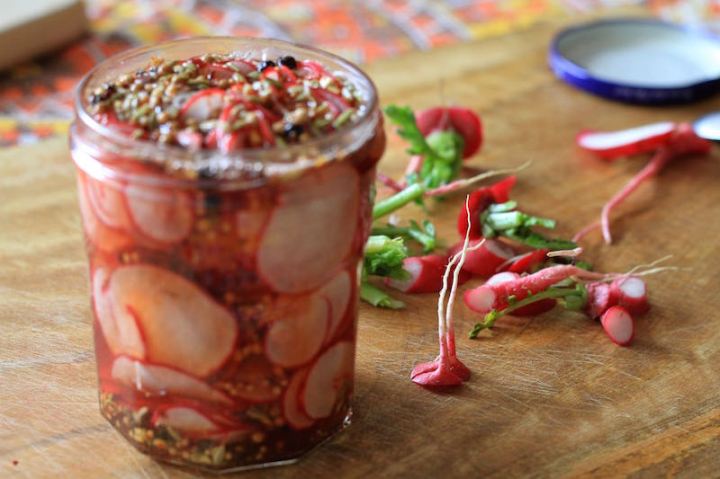
Pickled radishes2

A few tips – if you have a mandolin, use it to slice the radishes quickly and cleanly into thin, uniform slices. If you don’t, a sharp knife and careful eye will produce almost the same result. If you like a spicy pickle, try doubling the amount of chilli flakes. And finally, one of the best things about these pickles is that you don’t need to wait to eat them. They are ready to eat as soon as the jar has cooled to room temperature. Enjoy, and I’ll be back soon with a more suitably autumnal recipe…
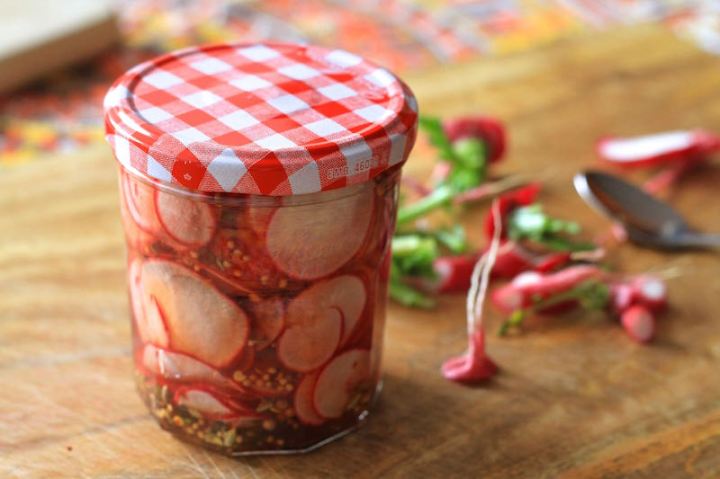
Pickled radishes

Quick Pickled Radishes

  • Servings: makes 1 400ml jar
  • Print
Adapted slightly from Selma’s Table

1 bunch radishes (about eight medium radishes)
1/2 tsp chilli flakes
1/2 tsp mustard seeds
1/2 tsp black peppercorns
1/2 tsp fennel seeds
1/2 tsp coriander seeds
100ml white wine or apple cider vinegar
100ml water
1 Tbsp honey or maple syrup
1 tsp salt

Wash and trim the radishes then slice as thinly as you can – a mandolin is ideal. Mix together the spices in a small bowl, then transfer one third of the spices to the bottom of a clean glass jar. Layer over half of the sliced radishes, packing them tightly together. Sprinkle over another third of the spice mix, layer the rest of the radishes into the jar, then top with the final third of the spice mix.

In a small saucepan, heat the vinegar and water together with the honey or maple syrup, and salt. Bring to a boil and stir to ensure the honey or syrup has melted. Pour gently over the radishes then seal with the lid. Allow the jar to cool to room temperature before serving or transferring to the fridge. The radishes can be eaten as soon as the jar has cooled. They will keep for up to two weeks in the fridge.
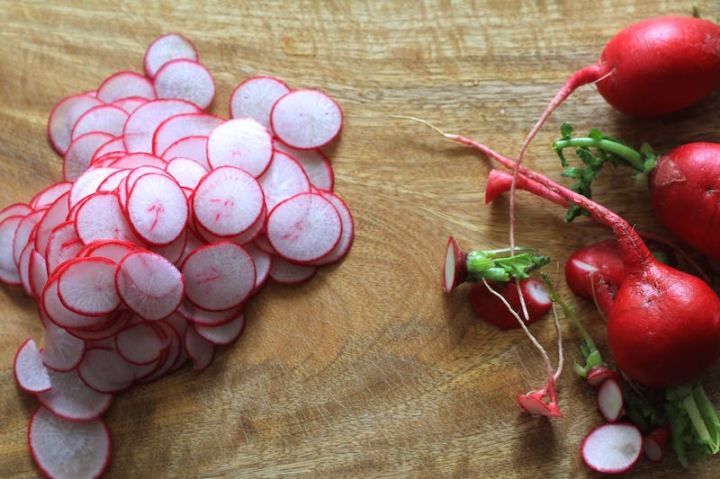
Slicing radishes with a mandolin for Quick Pickled Radishes

Filed under: Eat
comments 23

Two Summer Salads

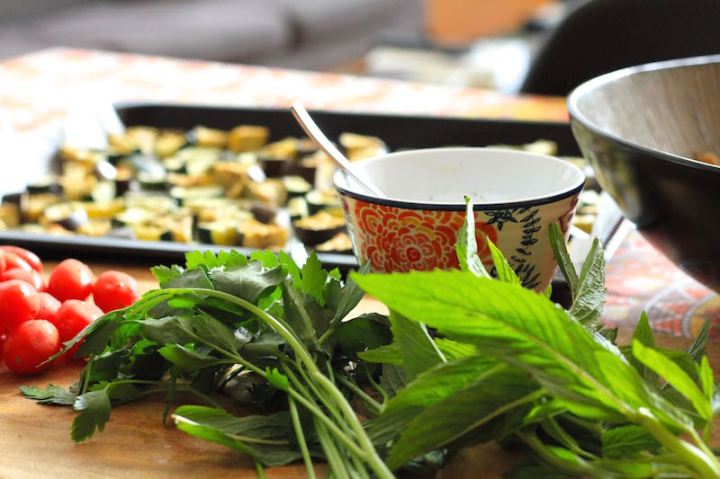
Ingredients for Mediterranean Barley Salad

I complain about summer so often that I’ve been feeling a little guilty. If I’m honest, it’s not all heat and sweat and showering three times a day. Now that the temperature has dropped a little from the highs of January, it’s also long walks at dusk, colourful dresses and divinely cooling cocktails. I remember that I do like summer after all, especially the food – sweet, fuzzy apricots, plums bursting with juice, barbecued sausages in bread with fried onions – easy, fresh, flavourful summer food.

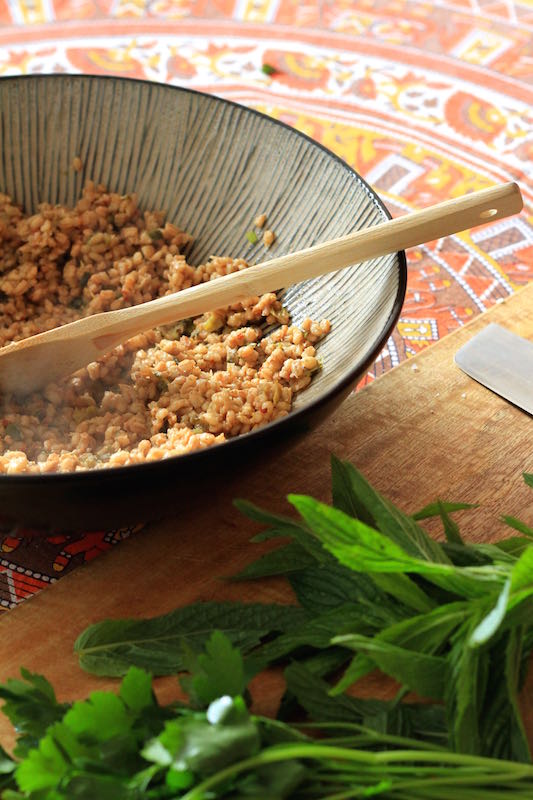
Cooked pearl barley, cooling

It’s strange reading food blogs written by people in the northern hemisphere at the moment. The abundant photos of snow and ice seem so beautiful and otherworldly; other indeed, to the shimmering summer down under. While they are drinking red wine and eating ragu or bacon and beans, I can’t stand to eat anything heavy or stodgy. Curry and rice are out; fruit, yoghurt and salad are most definitely in.

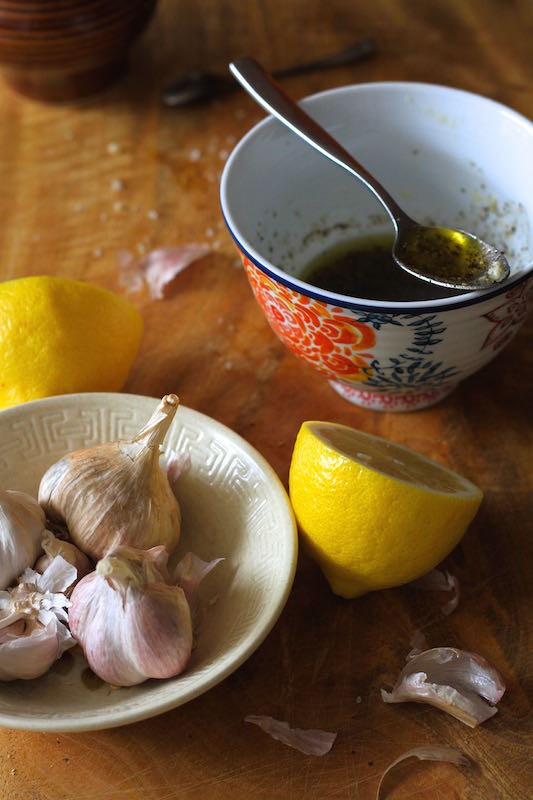
Lemon, garlic and olive oil dressing

Lately I’ve been making big bowls of colourful salad with zingy dressings that I can pick over for dinner and eat from a container at work the next day. The two favourites I am featuring here would be lovely in winter as a side for roasted chicken or lamb, but in summer they are delicious consumed alone. Based on grains, lentils, nuts and feta, they are robust enough to satisfy a hungry appetite yet light enough to cool and refresh.

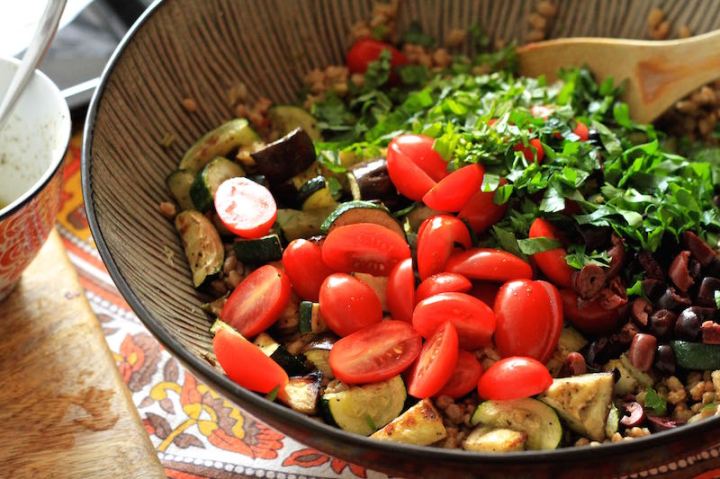
Summer food - Mediterranean Barley Salad

The first recipe comes from Deb Perelman of Smitten Kitchen. This is a hearty salad with Mediterranean flavours, featuring chewy pearl barley tossed with roasted courgette and eggplant, a garlic and lemon dressing, and fistfuls of herbs and tomato. I’ve made this salad many times since Deb posted it nearly eight years ago, most of the time with barley, but lately also with farro. The recipe makes a large quantity which means it is perfect for a group as part of a barbecue buffet. If it’s just going to be me eating it over a couple of days, I usually halve the recipe and leave out the tomatoes, which can turn a little soggy in the fridge.

Marrakesh Carrot Salad with Lime and Turmeric Dressing

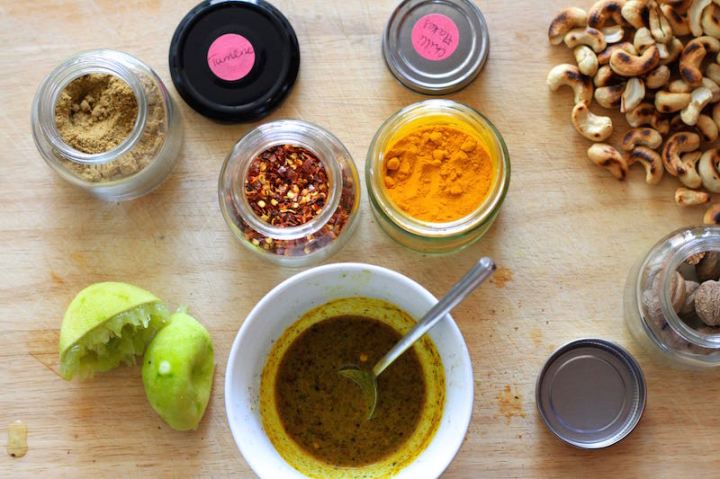
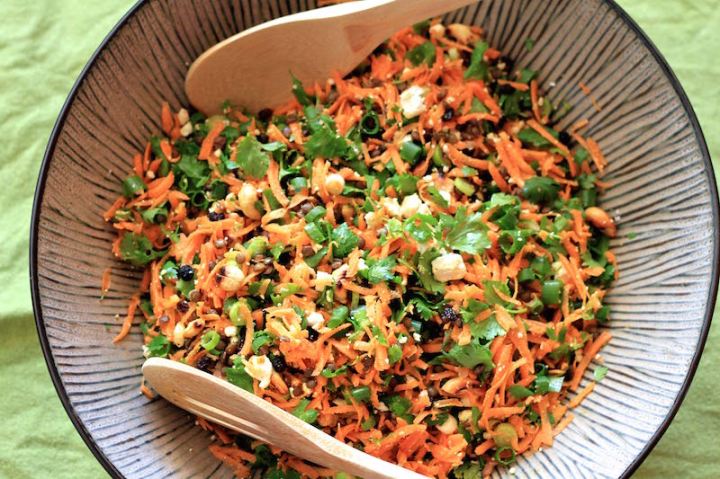
The second salad is a recent discovery courtesy of Sara Forte of Sprouted Kitchen. In the two months since Sara featured it on her site I have made it four times, loving its bold, gutsy flavours. The dressing is amazing, zingy and earthy all at once, and the pungent coriander and spring onions elevate the humble carrots to something quite extraordinary. I use cashews and currants instead of Sara’s pistachios and dates, because that’s what I tend to have on hand. I’ve also made it with mint instead of coriander, which is a nice variation although it doesn’t store as well.

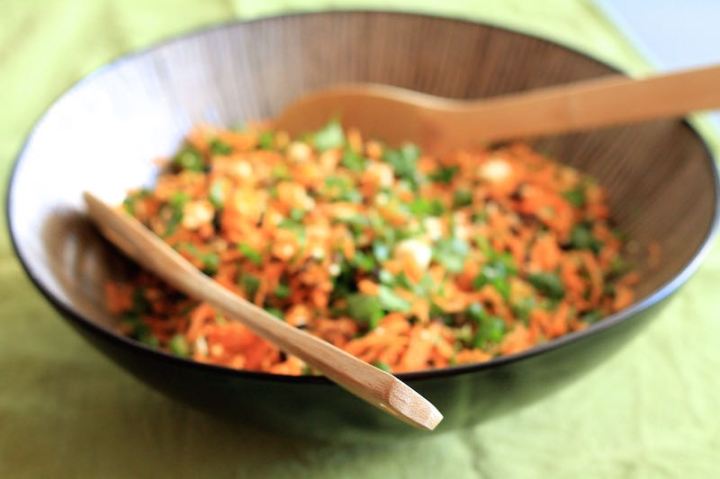
Summer food - Marrakesh Carrot Salad

Both salads make great leftovers, which means easy work lunches, or (even better) totally painless dinners. Warm summer evenings make standing at the stove a challenge, so knowing that I can just open the fridge and dig into a bowl of gorgeous salad has to be one of the best ever after-work relaxants. As summer begins to wane into autumn I might add hard boiled eggs, grilled chicken or toasted bread to my salad, but for now they are both perfect, just as they are.

Marrakesh Carrot Salad

Mediterranean Barley & Vegetable Salad

Adapted from Smitten Kitchen

For the barley or farro:
2 Tbsp extra virgin olive oil
5 spring onions, finely sliced
1 1/2 tsp ground cumin
1/2 tsp ground coriander
1/4 tsp chilli flakes
1 1/4 cups pearl barley or farro
1 3/4 cups vegetable or chicken stock

For the vegetables:
1 large eggplant, cut into 1-2cm cubes
2 medium courgettes, cut into 1-2cm cubes
5 Tbsp extra-virgin olive oil
Good sprinkle of salt and black pepper

For the dressing:
3 Tbsp extra virgin olive oil
2 tablespoons fresh lemon juice
1 garlic clove, minced
1/4 teaspoon sugar
1/4 tsp salt and 1/4 tsp freshly ground black pepper

To serve:
1 punnet cherry tomatoes, halved
1/3 cup black olives, pitted and roughly chopped
1/2 red onion, thinly sliced
1 cup chopped fresh flat-leaf parsley
1/2 cup chopped fresh mint
1/2 cup crumbled goat or sheep feta

To cook the barley or farro, heat the oil in a medium saucepan over a moderate heat, then add the spring onions, cumin, coriander, and chilli flakes and stir constantly for about 1 minute. Add the grains and stir for another 2 minutes. Add the stock and another 3/4 cup of water and bring to a boil. Reduce the heat and simmer, covered, until the liquid is absorbed and the grains are tender, about 30 to 40 minutes. Transfer to a large salad bowl and spread out to cool.

While the grains are cooking, roast the vegetables. Preheat the oven to 220°C / 425°F. Toss the eggplant and courgette with olive oil, salt, and pepper in a bowl, then spread in a large shallow baking pan. Roast until the vegetables are golden brown and tender, about 20 to 25 minutes. Add the vegetables to the bowl along with the barley or farro.

To make the dressing, whisk together the ingredients, adding salt and pepper to taste. Add to the bowl along with the remaining vegetables, herbs and olives and toss to combine.

Marrakesh Carrot Salad

Adapted from Sprouted Kitchen

4 cups grated carrots
1/2 cup green lentils
1/2 cup currants
5 spring onions, finely sliced
Bunch of coriander (cilantro), roughly chopped
1/2 cup toasted cashews
1/2 cup crumbled goat or sheep feta

For the dressing:
4 Tbsp avocado oil
2 limes, zest and juice
1 tsp ground cumin
1/2 tsp turmeric
1/4 tsp fresh grated nutmeg
Good pinch of chilli flakes
1/2 tsp salt
1/4 tsp freshly ground black pepper

Wash the lentils then cover with water and simmer until tender, about 25 minutes. Drain well. While the lentils are cooking, toast the cashews in a frying pan over medium heat, tossing regularly until lightly charred here and there. Set to one side until cool and then roughly chop.

To make the dressing, use a fine grater to remove the zest from the limes. In a small bowl, mix the lime zest and juice with the olive oil, cumin, nutmeg, turmeric, chilli flakes, and salt and pepper. The dressing is key, so pay attention to the flavours and balance acid with salt with fragrance.

Grate the carrots (a food processor is quickest) and add to a large bowl along with the sliced spring onions, coriander, currants, crumbled feta, cashews and lentils. Pour the dressing over and toss well to combine.

Filed under: Eat
comments 11

Mudgee Wine Country

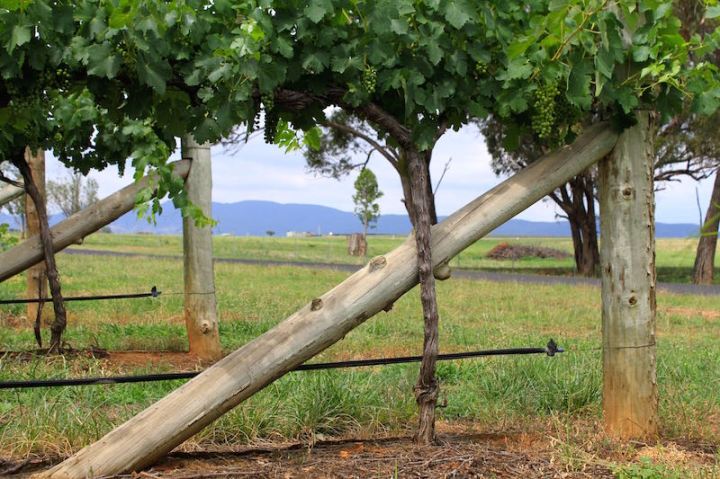
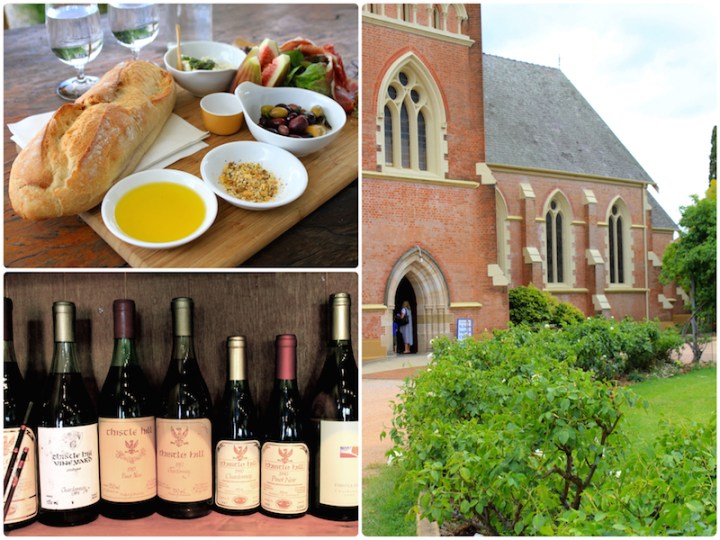
Thistle Hill organic vineyard, Mudgee NSW

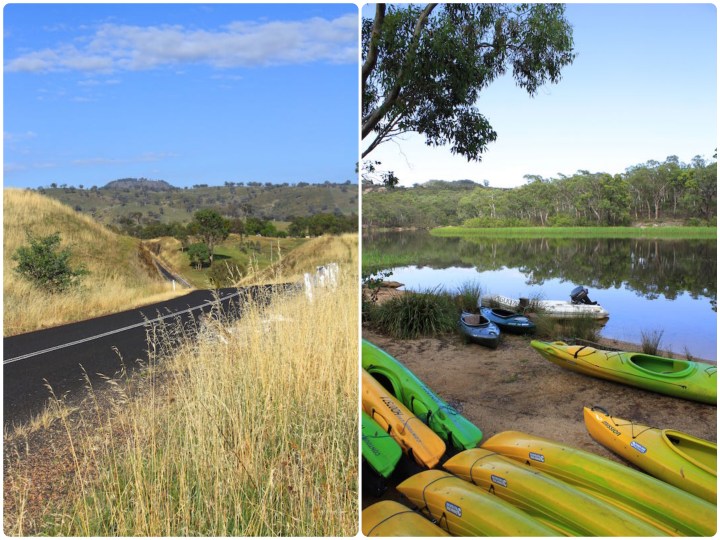
After the success of our Christmas in the Hunter Valley in 2013, we decided to replicate the experience by heading to Mudgee, another wine region in NSW. As for last year, we elected to undertake a road trip, this time heading inland to follow the rolling hills of the beautiful New England Highway. Two days after leaving Brisbane we arrived at our rustic cottage, enclosed on three sides by bush, with the privacy and quiet we craved, and evening shows put on by a family of kangaroos and a pair of goanna.

At dusk, Kirimar Cottages, Mudgee NSW

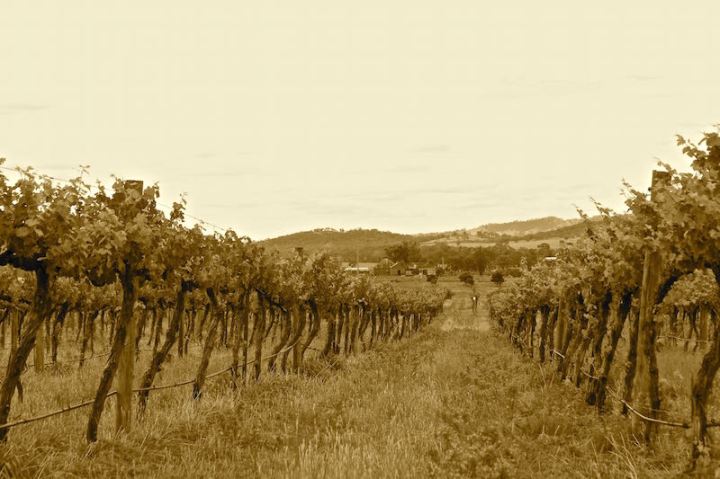
Mudgee wine region isn’t nearly as well known as the Hunter, yet it is only 180 km to the west. The biggest difference that we could see is that the Hunter is far more developed as a tourist destination whereas Mudgee retains the feeling of a quaint country town. Mudgee specialises in full-bodied reds, particularly shiraz and cabernet sauvignon, although it also produces excellent chardonnay and riesling. The region is situated close to the Great Dividing Range and the higher altitude creates a cool climate and longer growing season that intensifies the grape flavours. Looking at the vines, we could see that the grapes had much more ripening to do than the vines we saw at the same time of the year in the Hunter.

Grapevines at Robert Oatley's

Mudgee had been a last minute decision for us and we didn’t know anything about the area. In an effort to ensure that we didn’t miss out on the stars of the show, I asked Conrad from the fantastic blog, The Wine Wankers, for his best Mudgee wine tips. Conrad kindly obliged and suggested: Botobola, Bunnamagoo, Burnbrae, Di Lusso, Huntington, Logan, Lowe, Thistle Hill and Vinefera. Since wine tasting and driving don’t really go together, as for last year, we elected to do a wine tour. We were the only passengers on the last tour of the year for Mudgee Wine & Country Tours and our affable tour guide, Terry, happily adjusted his schedule to include some of the wineries on Conrad’s list.

Old church in Mudgee town, lunch at Lowe's wines and Vintage wines at Thistle Hill

We started at Bunnamagoo Estate Wines, where the star of the show was their 2010 Cabernet Sauvignon. At Oatley Wines we couldn’t resist buying their deliciously fragrant and very affordable Craigmoor bubbly – Christmas Day quaffing was sorted. Our next stop, Huntington Estate Wines, was probably my favourite experience. I found it so romantic that this winery produces wines in a traditional style that are tasty young, but ideally benefit from long cellaring to gradually deepen the flavours. We fell for their amazing 2009 Shiraz, which can be cellared until 2025 (we’ve committed to stashing ours away for a minimum of five years – good luck to us!). The last stop before lunch was the micro-winery, Short Sheep, where we got a tour of the facilities and enjoyed their Rosé and preservative-free Shiraz.

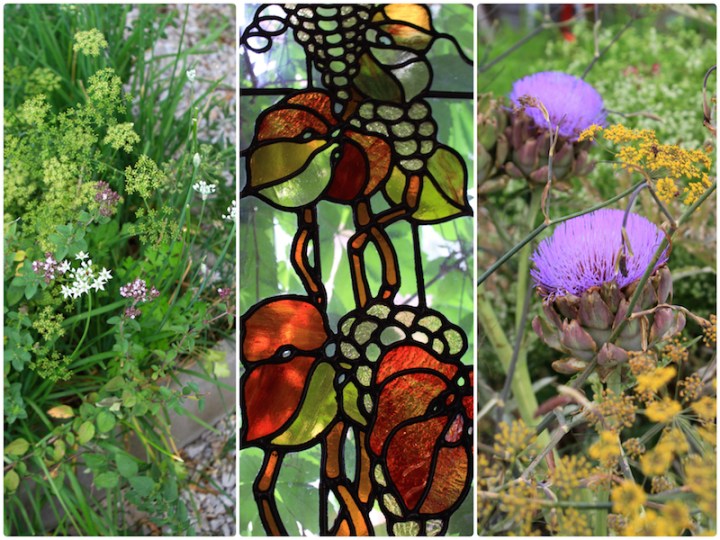
Stained glass windows at Huntington Estate, and the organic kitchen garden at Lowe wines

By 2pm, ravenous for sustenance, we demolished a Ploughman’s style-lunch surrounded by the organic kitchen garden at Lowe Wines. Winemaker David Lowe is best known for producing stunning Zinfandel and his 2003 Lowe Reserve Zinfandel won the 2005 trophy for best in the world at the London International Wine Challenge. We got to taste the gorgeous 2010 Zinfandel, nicknamed by our attendant as “the wine that makes your wife forgive you”. It was indeed wonderful, but at $75 a bottle, we settled for draining our glasses to the very last ruby-red drop while sheltering from a summer squall that briefly swept through.

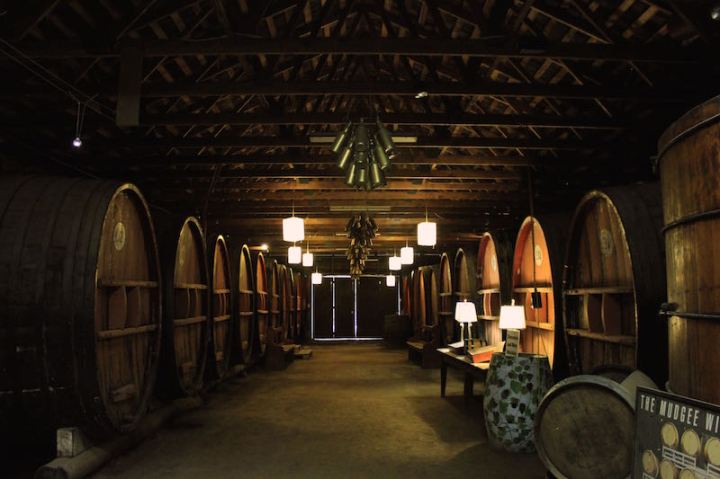
Dark and atmospheric cellar at Pieter van Gent Wines, Mudgee, NSW

After lunch we went to Robert Stein Winery where I most enjoyed their unusual combination of Semillon Riesling. Our final stop was the atmospheric cellar at Pieter van Gent winery (in the photo above), where we laughed with the cheeky kiwi girl behind the counter, matched exquisite chocolates with dessert wines and came away, staggering a little, with a bottle of Botrytis Durif.

A tour is a great way to get a crash course in the wines of a particular region but by the time we got home I needed a cup of tea and a lie down. Even so, the next day we rallied and took ourselves to the organic winery, Thistle Hill, which was close to where we were staying. Thistle Hill was established as chemical-free from its beginning in 1975, which sets it apart from most organic wineries which have converted from conventional farming methods. At Thistle Hill we especially enjoyed their 2012 preservative free Shiraz and 2011 Reserve Cabernet Sauvignon…and then we decided we were wine’d-out.

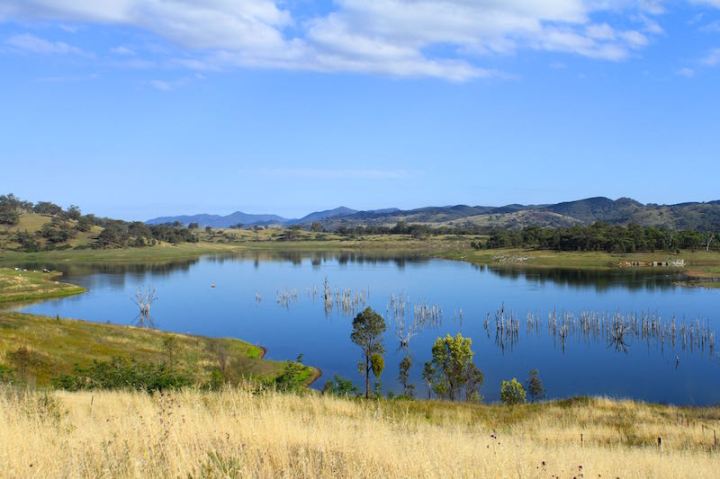
Windamere Lake, NSW

The following day was Christmas Eve, and we decided to do a kayaking tour at Dunn’s Swamp in the nearby Wollemi National Park, part of the northern Blue Mountains. Our early morning drive out to the Swamp took us through some achingly beautiful rural landscapes, including Windamere Lake (above) and the rugged sandstone rock formations close to the Park.

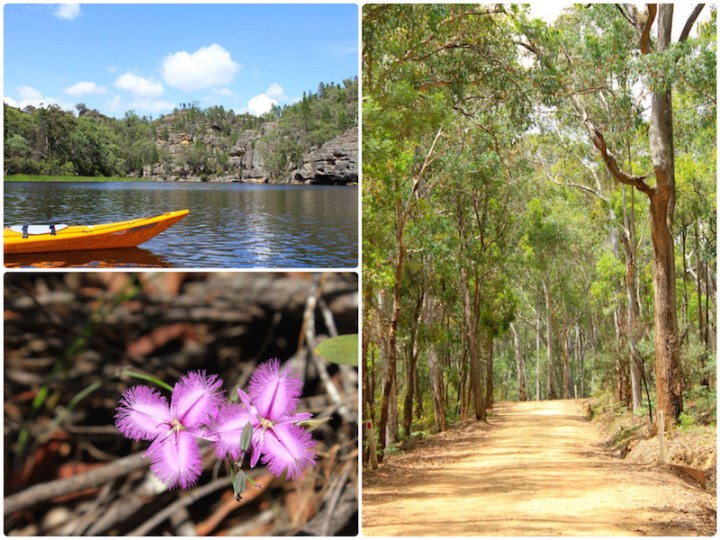
Near Windamere Lake and at Dunn's Swamp, NSW

The lush, green Cudgegong River, was perfectly still and clear as we paddled out to the dam, built in the 1920s and now one of the oldest operational dams in the country. Cindy from Southern Cross Kayaking gave us a wonderful experience rich in knowledge of the area and its history. At the dam itself a couple of park rangers showed up, and with good-natured Christmas cheer, invited us down to watch them opening the pipes to flush out the water. Back onshore, a late lunch was had at in Rylstone, before we returned to Mudgee to shop for for supplies for Christmas Day.

Cudgegong River, Native Orchid and Wollemi National Park, NSW

Christmas Day dawned clear and bright and after a breakfast of Corn Fritters and eggs we settled into a lazy day of reading novels and nibbling treats. The next day we reluctantly packed up and drove north to Armidale, feeling well stocked up with wine, and more importantly, truly chilled out for the first time in months.

Christmas 2014 in Mudgee NSW

comments 14

On days like these

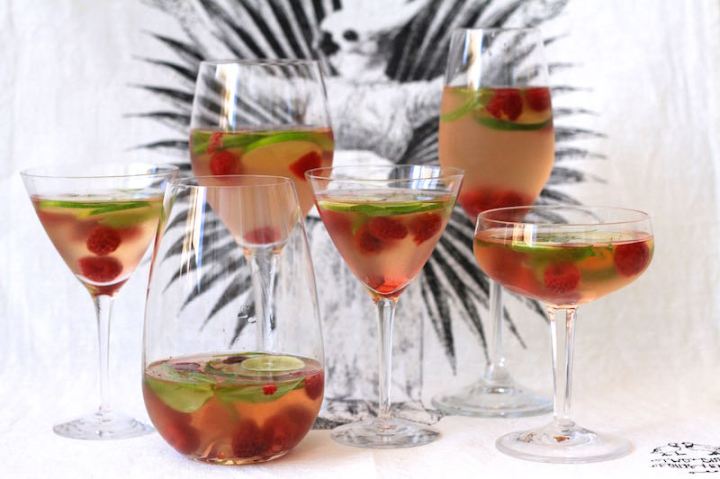
Cocospritz Cocktail 4

Brisbane was steamy hot over the weekend, and all I wanted to do was stay inside in the air conditioning, sipping iced water and fruity cocktails. Everyone’s behaviour changes on days like these. We move slowly, seek out the shade, and carry water and hats everywhere. The clubbing district is quiet at night with everyone at home or at the beach. Appetite’s come and go; mostly go.

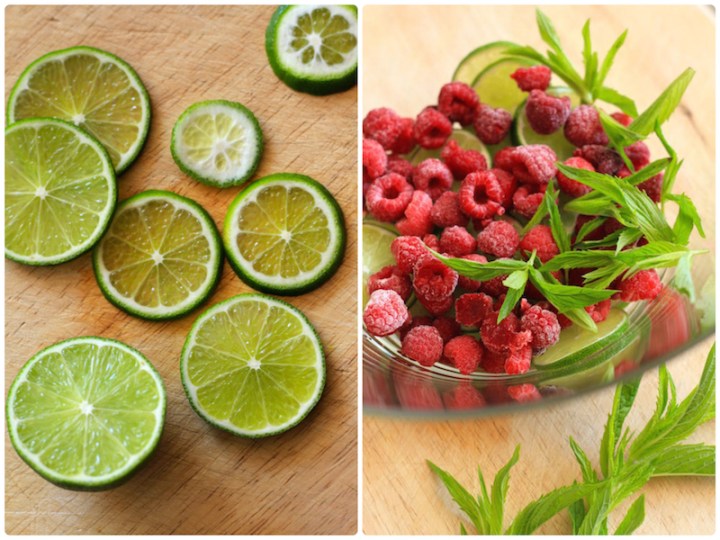
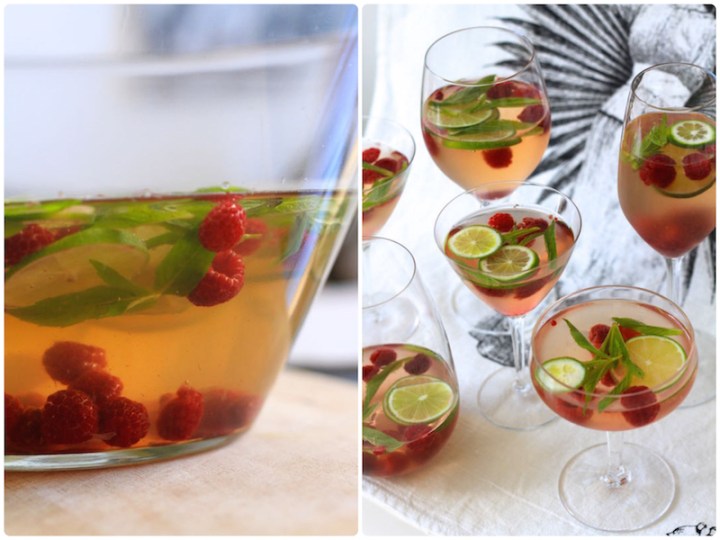
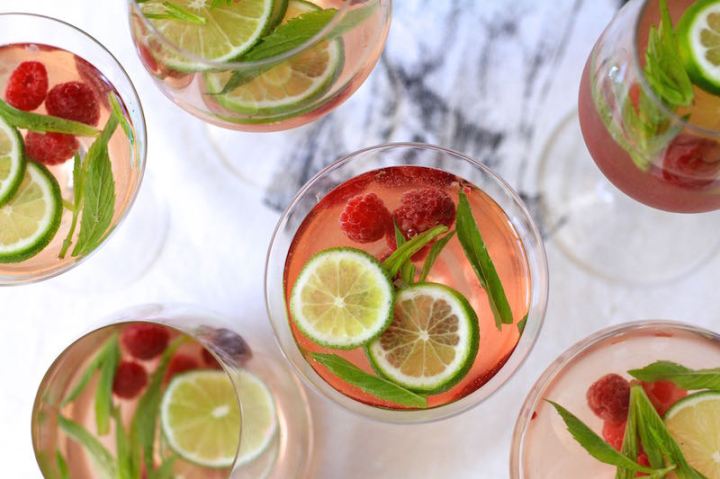
Raspberries and lime - Cocospritz cocktail_Fotor_Collage

The nights are the worst. Our single, ageing air conditioning unit can’t work hard enough to reach the bedroom in the upper-back corner of the apartment so at night we reluctantly make do with open windows and a pedestal fan. The lightest sheet cannot even be contemplated. Come the morning we’re groggy with dehydration, for which the best cure is not the glass of tepid water on the bedside table, but a large bowl of chilled watermelon.

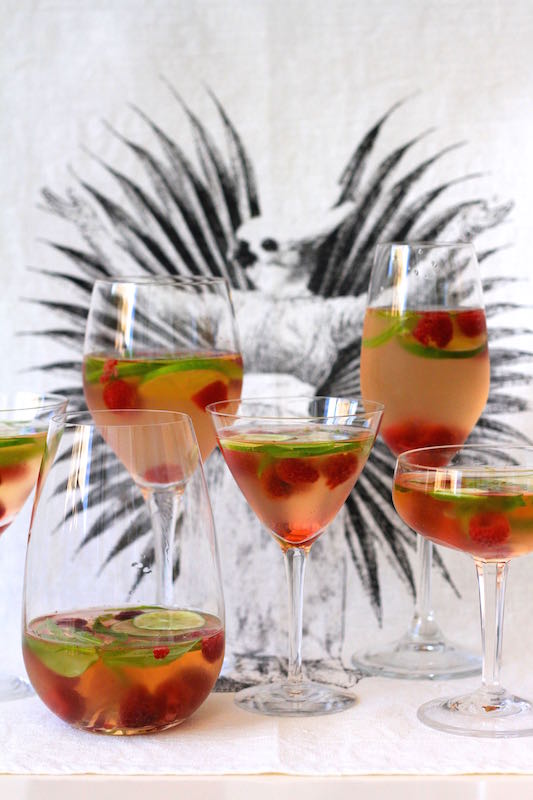
The Cocospritz Cocktail and Two Birds Four Hands teatowel

Thanks to the wonders of modern science, we always know when it’s going to be an especially hot day. Forewarned, last Saturday morning we rushed about doing everything that had to be done, sweating and complaining, then turned the air on, had another cold shower and basked in cool relief. The afternoon passed slowly and slothfully watching movies on the couch. From time to time one of us would step out onto the balcony for a moment to marvel at the oppressive air, thick with heat and humidity.

Cocospritz Cocktail_Fotor_Collage4

Hot weather demands cool refreshment, and Saturday afternoon was the perfect opportunity to try the Cocospritz: a wine-based punch that features hydrating coconut water and raspberries floating prettily in a pool of pale pink. I tweaked the recipe just a little and the resulting punch was so delicately fruity and lusciously cool that we polished off the entire bowl with ease. This is a cocktail with a very different tenor to the boozy drinks I have been choosing lately (Negroni and variations) which are more suited to the darkness of winter nights. Think poolside summer party for the Cocospritz, bikinis, sunscreen and salad. It’s as cooling as a fresh breeze…and I could really do with another, right now.

Summer freshness - the delightful Cocospritz Cocktail

Cocospritz

Adapted from Donna Hay, Issue 78 Dec/Jan 2015

1 bottle (750 ml) chilled white wine, such as Sauvignon blanc or Semillon
1 cup (250g) chilled coconut water, or more to taste
1 cup (250ml) chilled lemonade
2 limes, thinly sliced
1 cup (150g) frozen raspberries
Fresh mint leaves

Place the limes, raspberries and mint into a large bowl or jug. Top with the liquid ingredients and stir to combine. Taste the punch and add more coconut water if desired (single serve cartons of coconut water are generally 330g each, and I ended up using the entire amount). When you add the liquid the raspberries will instantly release some of their colour, but if you want a deeper hue, crush a few berries against the side of the bowl with the back of a spoon. Ladle or pour the punch into glasses with ice cubes. Theoretically, this recipe makes enough for 6-8 servings but two hot people can easily polish it off in a single hot afternoon. I would double the recipe for a party.

Filed under: Eat