comments 7

What to do with Cacao Nibs

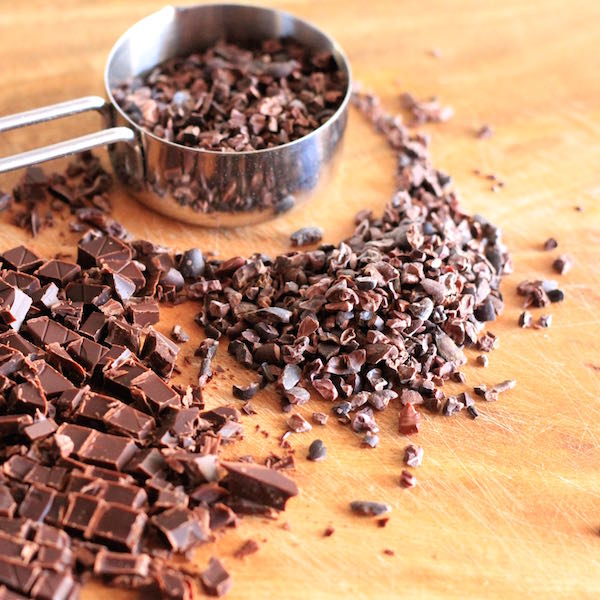
dark-chocolate-and-cacao-nibs-2

By now you should realise that you can’t expect cutting-edge food fashion from me. I’m solidly home-cook material, and by that I don’t mean Masterchef or MKR “home-cook”. I like to cook everyday food that’s not too complicated, with the occasional elevation only when I have time to fuss. I save the wow and panache for restaurant chefs who usually do it best, and, let’s be real, have armies of kitchen hands to prepare fiddly individual components and deal with the washing up.
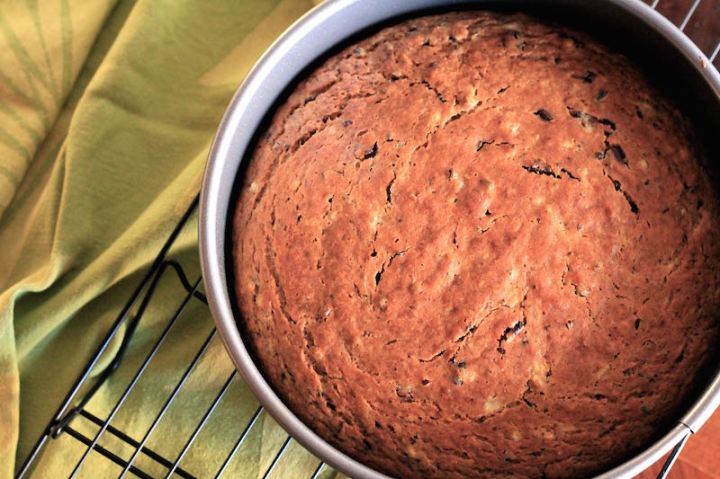
banana-and-cacao-nib-cake-cooked

This focus on simple and everyday food means that I rarely rush out to buy novel ingredients. It usually takes quite a while for me to try a new food fad at home, which means that by the time I do, the fad in question has become thoroughly mainstream. Take cacao nibs, for instance, which have wended their way into everything lately. Part of the current raw-chocolate revolution, cacao nibs are popular for their lack of sugar and antioxidant properties, delivering intense chocolatey flavour without the calories. Food bloggers have gone cacao nib-wild, putting them into everything from cookies and smoothies, bliss balls and granola and even in salad. I threw a packet into my shopping basket a few months ago, like the hipster I thought I was, only to find later that food bloggers have been featuring them since 2005. For goodness sake, I’m practically ten years behind the cool kids.
delicious-banana-and-cacao-nib-cake

I’m the same with technology. I only got my first mobile phone back in 2005 when my seven-years younger sister upgraded hers, enabling me to inherit her old pre-paid one which barely kept a charge for longer than half a day and would only receive network coverage when propped up in a very specific spot on the window-ledge in my office. My office-pod-mate is forever having to support my under-developed iPhone and iPad skills, much to her amusement…and now I’m going to stop, before I make myself out to be a total Luddite, which I’m not. Frankly, I’m just lazy. I just can’t muster the will to keep up.
banana-and-cacao-nib-cake-finished

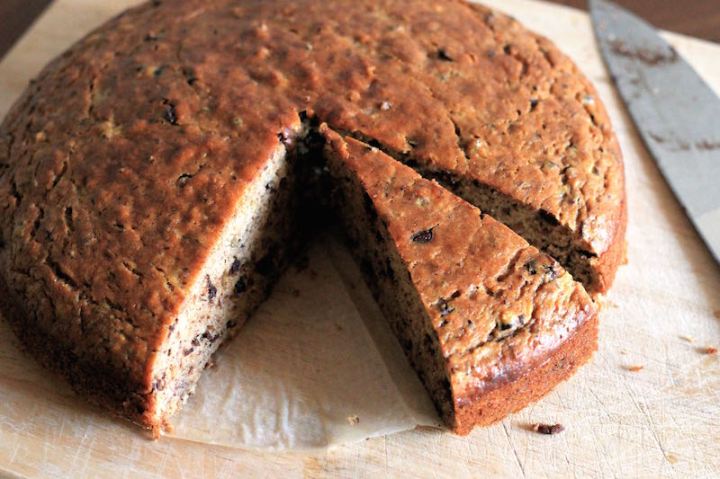
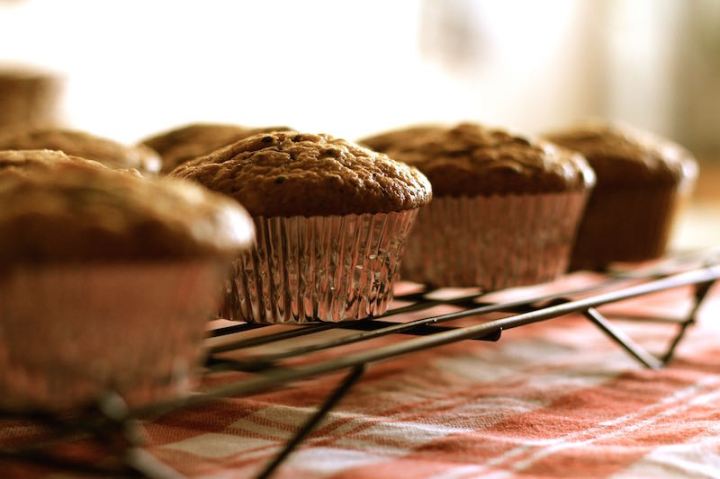
Unless you’ve been living under a rock (or maybe one of those old mobile phones like bricks that retailed for about $4,000) you will have heard of cacao nibs, which can be found at most large supermarkets or organic food stores. If you can bear to part with the cash to purchase these brown bits of woody matter, then do I have a recipe for you. Like most excellent and reliably performing recipes, this one comes from a baker with an established reputation, in this case, David Lebovitz. I had been making a modified version of David’s Banana & Chocolate Chip Upside Down Cake for years (except not upside down, without the caramelised banana topping, and usually as 12 muffins rather than cake) until one day recently when, halfway through making it, I discovered that I didn’t have enough 70% chocolate. Scrounging the pantry in desperation I spotted the packet of cacao nibs that I had bought in that moment of abandon. I made up the difference in nibs…and now there is no other way that I can make this cake. Necessity really is the mother of invention.
muffin-cases

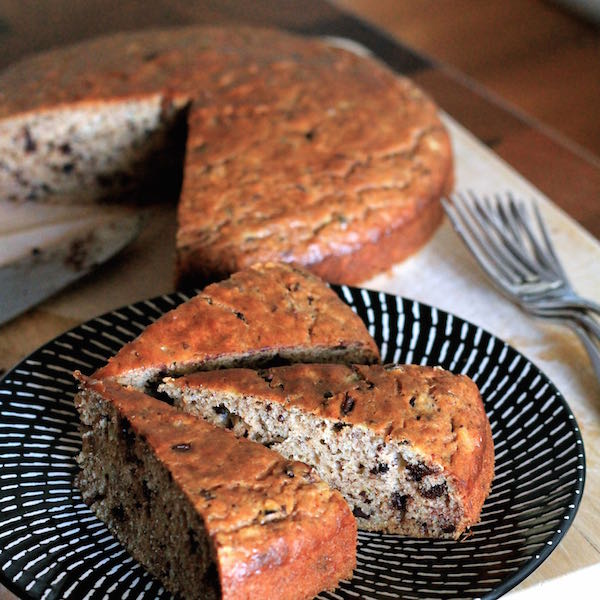
It’s such a good cake, even without the nibs. It’s fragrance has to be experienced to be believed. Heady with vanilla and cinnamon, just smelling this cake while it bakes is almost enough to satisfy. Best the day after it is baked, the cake is soft and moist with a hint of spice enlivening the childishly comforting flavour of banana. The cacao nibs provide a beguiling texture, simultaneously crunchy and chewy, and they have this weird effect of making your mouth feel momentarily cool: it’s like popping candy for grown-ups. If you can’t find cacao nibs then simply use a double quantity of dark chocolate, as I did for years. But if you can find them, then this cake is a great introduction to these chocolatey little nuggets. All the coolest kids are doing it these days.
banana-and-cacao-nib-muffins-cooling

Banana Cake with Chocolate & Cacao

Adapted from David Lebovitz

1 1/2 cups plain flour
1 tsp baking powder
1/2 tsp baking soda
1/2 tsp salt
1 tsp ground cinnamon
3/4 cup sugar
30g unsalted butter, melted
2 eggs
1 cup mashed ripe banana
1/2 cup plain yoghurt or buttermilk
1/2 tsp vanilla extract
45g raw cacao nibs
45g dark (70%) chocolate, roughly chopped (or dark chocolate chips)

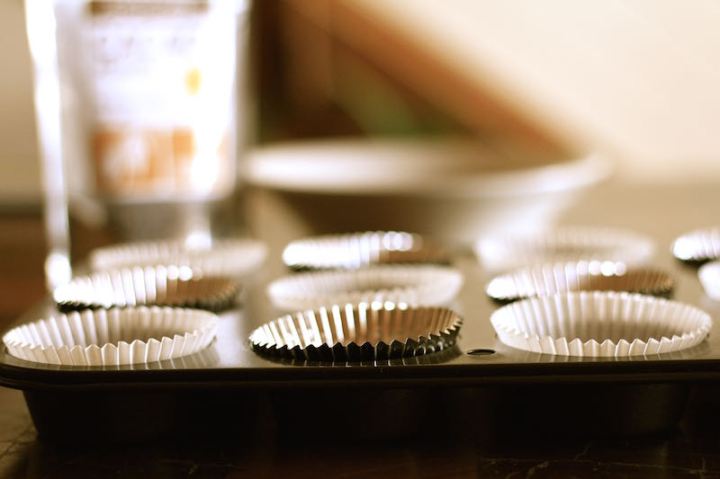
Preheat the oven to 180°C / 350°F. Prepare a 20 cm cake tin with a paper bottom and buttered sides. Alternatively, if you wish to make muffins, prepare a muffin tin with 12 paper cases.

Whisk together the flour, baking powder, baking soda, salt, cinnamon and sugar in a large bowl until thoroughly combined.

In another bowl, stir together the melted butter, eggs, mashed banana, yoghurt and vanilla extract. Make a well in the centre of the dry ingredients and pour in the wet ingredients. Stir together gently until almost combined. Fold in the cacao nibs and chocolate pieces, being careful not to overmix the batter.

Transfer the batter into the cake tin and spread out to an even layer (or spoon into the paper muffin cases). Place in the oven and bake for 30-40 minutes, or until a toothpick inserted in the centre comes out clean (muffins take about 18-20 minutes). Cool completely on a rack. The cake/muffins taste best the day after being baked.
Filed under: Eat
comments 15

A Spring Soup

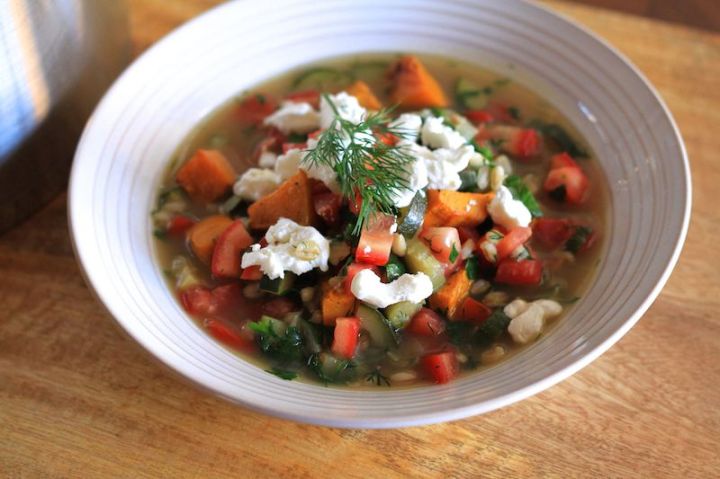
A spring soup, with pearl barley, roasted pumpkin, fresh tomato and herbs

I want to call this Spring Soup but the fact remains that it features pumpkin and pearl barley rather than tender greens like asparagus and peas. This concerns me. I deeply feel that this soup wants to be called Spring Soup because, despite the presence of starchy winter staples, its essence is overwhelmingly light and fresh. The base vegetable is lightly cooked courgette. Herbs are scattered by the fistful. The fresh tomato is added directly before serving, so that it remains uncooked and vital. This soup couldn’t be further from stodge.

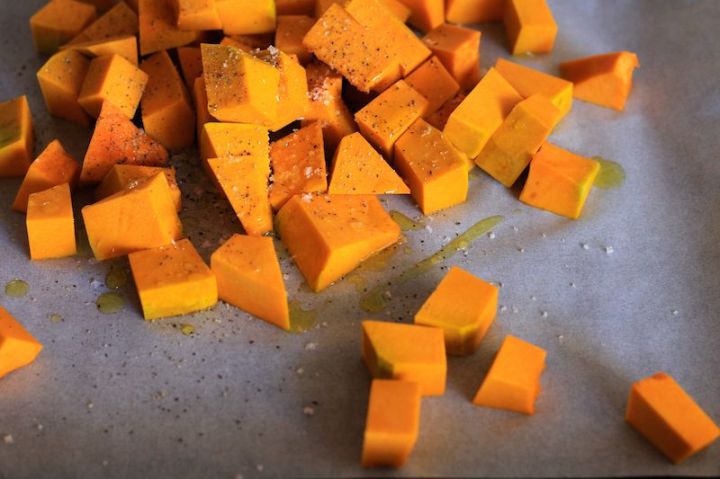
Roasting the pumpkin intensifies the flavours, providing nuggets of sweetness through the soup

But still, I’m perplexed. It’s spring right now, here in Brisbane, so why is it that I can easily buy vibrant pumpkin, firm young courgettes and fat Roma tomatoes? I always avoid imported produce, but am I buying hothouse vegetables grown out of season? Maybe I’m still not in tune with the seasons here? I know that the sudden appearance of strawberries in May continues to surprise me – in New Zealand the plants don’t even go into the ground until June. Whatever the reason, it’s really my own fault. I haven’t been going to the farmer’s market each Saturday like I used to, and without access to a garden where I can closely observe the changing seasons, I’m all out of whack with what should be available and when. I’m just going to have take a stand: this soup cleanses and nourishes mind, body and soul. Without question then, this is a Spring Soup.

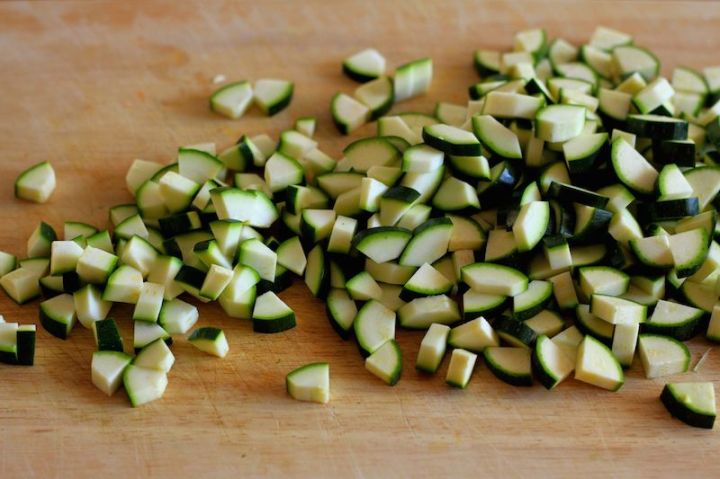
Courgettes (zucchini) are chopped into small dice to form the base of the soup

Spring cleaning was at the forefront of my mind when I made this soup. It was the Labour Day long weekend and I had initially thought I would use the time to undertake a detox. After mulling on this idea for a while I decided that, rather than shocking my body with deprivation and purges, I would opt instead for a gesture towards lightness and purity. So, there was yoga each morning after lemon juice and water, no alcohol (except one cocktail), no coffee (well, only one per day), no sugar (except for a little dark chocolate), and a delicious diet of fresh vegetarian food (oops, the soup has chicken stock in it, but hey, it was homemade).

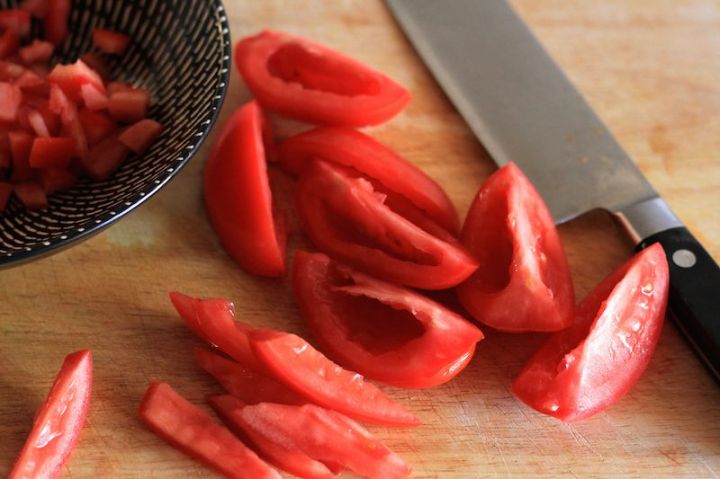
Roma tomatoes are the best for this soup as their flesh will stay firm in the warm soup

There are so many competing views of what healthy food means, it’s quite tiring. Strict dietary rules rarely interest me anymore, but the one view I hold rigidly and unapologetically is that food, “healthy” or “unhealthy”, “good” or “bad”, must taste delicious otherwise I simply won’t eat it. This soup met all my needs. Its delicate flavour allowed the homemade stock to sing. The chewy pearl barley and bright orange pop of pumpkin provided beautiful textural and visual contrast. The chèvre added such a divinely tangy creaminess that I instantly forgot how much it hurt my wallet at the store. I enjoyed this soup for three days straight, for lunch, dinner, lunch, dinner and lunch and launched into the week feeling as fresh and vigorous as a newly sprouted daffodil. This blissful state lasted precisely until Friday when I ate pie and chips for lunch; also delicious, but inciting a very different tenor indeed.

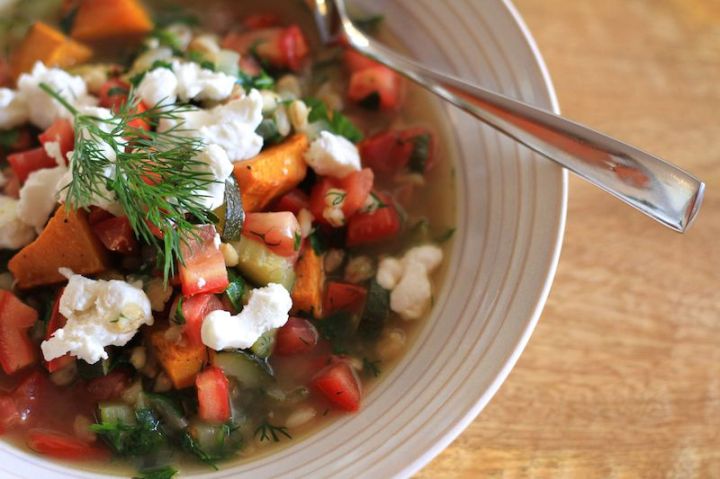
Spring soup - finished with fresh parsley and dill and topped with chèvre

Spring Soup with Barley, Tomato and Herbs

  • Servings: 4 as a meal; 6 as an entree
  • Print
Adapted from Ginny Grant, Cuisine issue #116

1/2 cup pearl barley
500g pumpkin, peeled and roughly diced into 1-2cm cubes
3 Tbsp olive oil
Salt and freshly ground black pepper
1 large onion, finely chopped
3 medium courgettes, roughly diced into 1/2 cm cubes
3 cloves garlic, finely chopped
1 litre chicken stock, homemade if possible
Handful of parsley and another of dill, roughly chopped
4 medium tomatoes, preferably Roma, roughly diced into 1/2 cm cubes
To garnish: mild goat’s cheese (such as chèvre) or toasted pine nuts

Rinse the barley well until the water runs clear. Place in a medium saucepan and cover with cold water and a pinch of salt. Bring to the boil, then lower the heat and simmer until just cooked, about 35-40 minutes. Drain and set to one side.

Preheat the oven to 180°C / 360°F. Sprinkle the diced pumpkin with 1 Tbsp olive oil, salt and pepper and toss to combine. Tumble onto a baking sheet and roast until soft and beginning to colour a little, about 20 minutes. Remove from the oven and set to one side.

Heat the remaining oil in a large saucepan. Add the onions with a pinch of salt and sauté over a medium heat until softened but not coloured. Add the courgettes and sauté until they have also softened. Finally add the garlic and sauté for a further minute. Add the chicken stock and the cooked barley to the pot. Bring to the boil then lower the heat and simmer gently for 20 minutes.

When ready to serve, add the fresh tomatoes and herbs and stir to combine. Test for seasoning and add salt and black pepper as required. Place a few cubes of pumpkin in each bowl then ladle over the soup. Top with more pumpkin and garnish with chèvre, or pine nuts, or simply with a drizzle of olive oil and a grind of pepper.


Filed under: Eat
comments 24

Nana’s Kisses

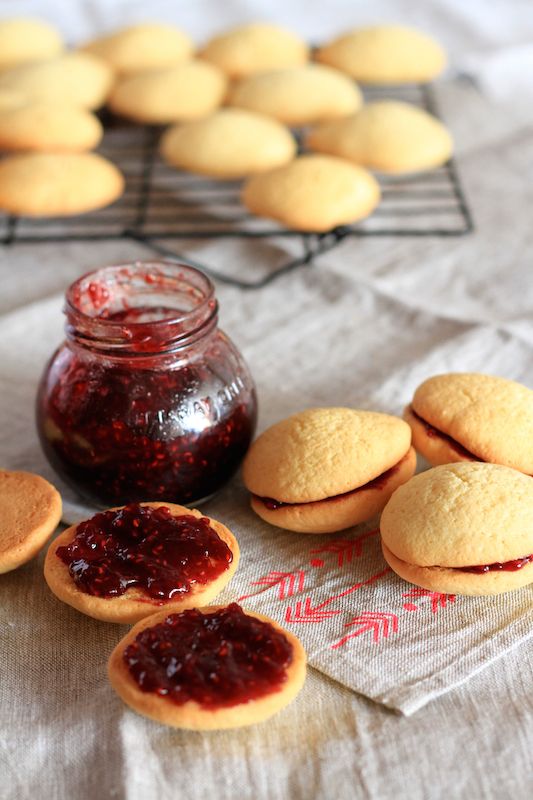
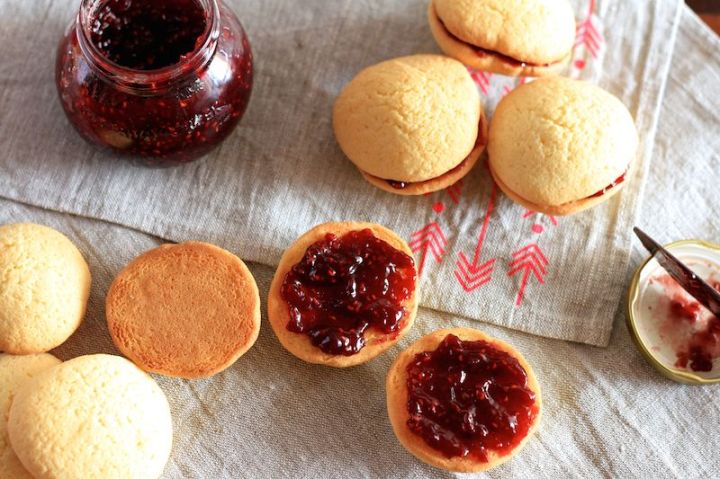
Nana's Kisses, a delectable cookie, light, sweet and jammy

There are many cookies called kisses, including Ginger Kisses, Custard Kisses, Ladies Kisses (Baci di Dama), and untold variations such as these delectable sounding Espresso Chocolate Kisses. The one commonality is that each recipe involves two cookie halves sandwiched together with some sort of cream or frosting. I suppose it is this moist joining of halves that conjures the idea of a kiss, which could suggest, if you were so inclined, that the tantalising “Melting Moment” is simply the brazen cousin to the Kiss.

While this is one (beguiling) line of thinking, not all kisses are passionate. My childhood memories of eating Nana’s Kisses are as innocent as a lamb. Even now, when reflecting on her Kisses, what actually comes to my mind is the idea of kissing Nana’s cheek with its powdery patina and lattice of lines. It is partly to do with the Kisses’ air of yesteryear, the way they look most at home sitting on a floral plate, next to a china teacup and saucer. To me, eating Kisses is a sweetly sentimental act, not unlike the sensation of chaste lips, pressed tenderly, to soft, yielding, grandmother-skin.

Nana's Kisses - a family favourite. Sweet, light cookie halves sandwiched together ("kissing") with tangy raspberry jam.

Most of the recipes for Kisses that I’ve found online are nothing like my Nana’s Kisses. These Kisses are usually too firm and crunchy whereas Nana’s Kisses are as light as a husk weighted down only by the smear of sticky red jam (similar to this recipe). It is the addition of cornflour that makes the batter so light while the proportionally high quantity of raising agent fills the cookie with air. In fact Kisses are so light that it’s not uncommon for them to partially collapse when you bite into them, expelling a puff of powdered sugar into the air.

As children we must have pressed Nana to explain why they were called Kisses, but I can’t remember her exact response. I think it was linked to this tendency towards collapse, which, if you think laterally, bears some resemblance to the feeling of light-headed surrender during a kiss. I highly doubt that Nana would have explained it like this to us children, yet I clearly recall a family story about a dream in which an upstanding male member of our community visited our home. When asked if he would like a Kiss with his coffee, he reacted with embarrassment and outrage, causing an awkward situation requiring awkward explanation. While clearly ludicrous, the dream was only the logical extreme of what we joked about when offering the biscuits to each other. For visitors unversed in our family culture, the polite query, “would you like a Kiss?”, never failed to produce a momentary confusion, despite the twinkle in Nana’s eye.

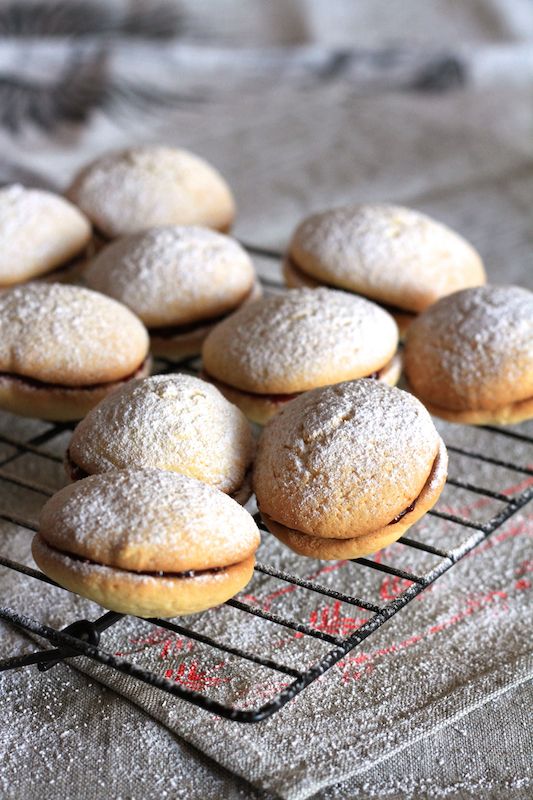
Nana's Kisses - a delightfully ladylike and old-fashioned cookie, perfect for afternoon tea.

This post started in my consciousness as a kind of tribute to my lovely Nana, who turns 88 today, but I can’t seem to get beyond the Kiss/kiss. Well that’s ok. One recipe alone is insufficient for embodying Nana’s personal and culinary legacy for our family, so let’s just call this a start. Kisses are as good a start as any because kisses are simply a joy, are they not, and a grandmother’s kiss is one of the sweetest of all. I should know – I grew up next door to Nana so I got plenty, both of the standard sort of kiss and of Nana’s specialty, the “Butterfly Kiss”, which involved fluttering her eyelashes against our cheeks (grandchildren love Butterfly Kisses!). A loving kiss communicates all that words can’t. Never be too busy for a kiss, in fact, give a kiss today. Happy birthday dear Nana, I’m sending you a birthday kiss right now; did you catch it?

Nana's Kisses

  • Servings: makes 18-20
  • Print

115g butter
115g sugar
115g plain flour
115g cornflour
2 eggs
1/2 tsp baking soda
1 tsp cream of tartar
1/2 cup red jam (raspberry, or my favourite, plum)
1 Tbsp icing sugar (to serve)
Preheat the oven to 205°C / 400°F.

In a large bowl cream the butter and sugar together until fluffy and pale. Beat the eggs in one at a time until well combined.

Whisk together the dry ingredients together in another bowl until free of lumps. Add the dry ingredients to the wet and gently mix until fully combined.

Place teaspoonfuls of mixture onto a baking tray. The cookies will spread and double in size while baking, so ensure they are well spaced on the tray. Bake in the oven for 8-10 minutes until dry to the touch and just beginning to colour on the edges. Remove from the oven and cool on a rack.

Once the cookies are firm and cool, sandwich them together with red jam, allowing each half to find a partner of approximately equal size and shape. Dust with icing sugar to serve. Kisses are best eaten fresh but will keep in a sealed container for 2-3 days. They will keep longer if stored without the jam filling.

Filed under: Eat
comments 26

Lamb Shanks with Pomegranate & Lemon

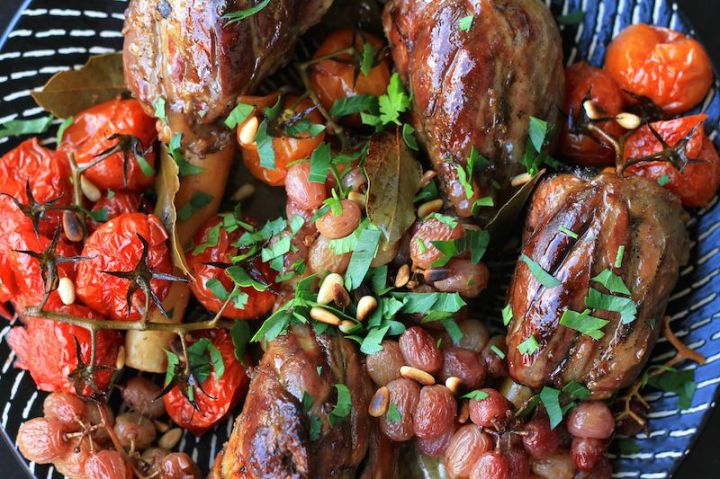
Lamb shanks with pomegranate and lemon (chiaroscuro)

It’s now been over one year since I posted the first meat recipe to this blog. At the time I felt compelled to mark the occasion by giving a full account of my various dietary swings from meat-eater to vegetarian to vegan to junk-food junkie to meat-curious and finally to my current resister-of-labels-but-kind-of-intuitive-eater. It appears that I’m not done yet, as I can’t seem to bring myself to post this second carnivorous recipe without some sort of comment on meat.

On Saturday night Colin and I attended an evening of short films and panel discussion about food sustainability hosted by the Brisbane branch of Youth Food Movement Australia. My flirtations with a meat-free diet have always been more about health than politics, so it was good to think a bit deeper about the intricacies of economics, distribution and sustainability. Putting to one side all the ethical arguments about animal suffering, meat requires significantly more energy, nutrients and water to produce than grains and other vegetable foods. Meat production is a major contributor to soil degradation and pollution, and since Western diets are heavy in meat, our ecological footprint is several times larger than that of people in developing countries.

Some of the panelists stressed that this doesn’t mean that we need to be vegetarian in order to be sustainable. Organic, or better yet, ecological farming works to support biodiversity, protect and enhance soil integrity, and rear animals humanely. As consumers, we need to support such farming practices if we are ever to transform an industry driven by a demand for cheap meat. One of my take home messages is that it’s better to pay a bit more for good quality meat, even if it means you eat less meat overall. My other take home message is that in-vitro meat is scary – and that’s enough said about that.

Lamb shanks with pomegranate and lemon (vintage)

Two weekends ago the Brisbane winter gave a last gasp in the form of steady rain and chilly temperatures – perfect conditions for enjoying the last meaty casserole of the season. We visited friends for dinner and enjoyed Adam’s famous lamb shanks cooked in a rich tomato sauce. Lately he’s been using a pressure cooker to prepare this dish and in a mere 45 minutes the meat had become so tender and succulent that it barely required cutlery or chewing. Guess what’s on my Christmas list now.

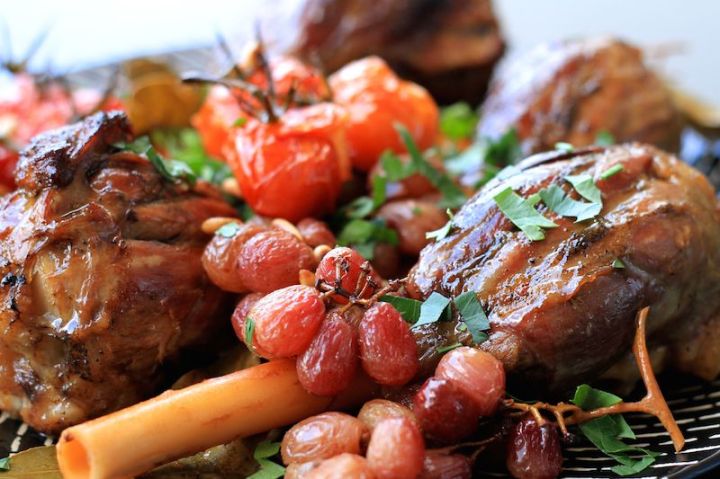
Everyone knows that lamb shanks are a tough cut of meat that require careful cooking to become palatable. Without the magic of a pressure cooker, this usually achieved by a method of long, slow stewing until the meat and connective tissue soften. This is the understanding that I have had for years, but it turns out that it isn’t strictly the case. Lately I’ve been turning to a recipe by Guy Mirabella that involves roasting the shanks at a moderate temperature in only a small amount of liquid. The resulting meat is much firmer than a slow-cooked shank, but we’re talking a sticky toothsome chew, rather than a tough, stringy gnaw. Neither method is better; they are simply two different styles of preparing lamb shanks that both work for different reasons.

Lamb shanks with pomegranate and lemon, ready to eat

The other thing this recipe has going for it is a really interesting flavour profile. I usually pair lemon with white meat or fish, but the bright acid note works really well here against the earthiness of the shanks. The wine and pomegranate molasses (or marsala, in Guy’s original version of the recipe) provide fruitiness, and the grapes and tomatoes become like a rustic sweet-and-sour chutney once roasted. The toasted pine nuts lend little bursts of oily astringency that help to cut through the richness of the buttery sauce. Overall, the dish feels boldly Mediterranean; a perfect dinner to straddle the chill of winter and the rapidly coming spring.

Lamb shanks with pomegranate and lemon (close up of sticky roasted shank)

Lamb Shanks with Pomegranate & Lemon

Adapted from Guy Mirabella’s Hungry

6-8 lamb shanks (French trimmed shanks aren’t necessary, but look great once cooked)
Zest and juice of 1 lemon
Salt and black pepper
1/3 cup olive oil
4 sprigs rosemary or 6 bay leaves
4 garlic cloves, peeled but left whole
100g butter, cubed
500g red seedless grapes, separated into small clusters
8 small tomatoes
2 cups dry white wine
2 Tbsp pomegranate molasses
Handful parsley, roughly chopped
1/4 cup pine nuts, toasted

Preheat the oven to 180°C / 350°F.

Rinse the lamb shanks and dry with paper towels. Trim off any excess fat. Rub the lemon zest and juice into the shanks and season well with salt and freshly ground black pepper.

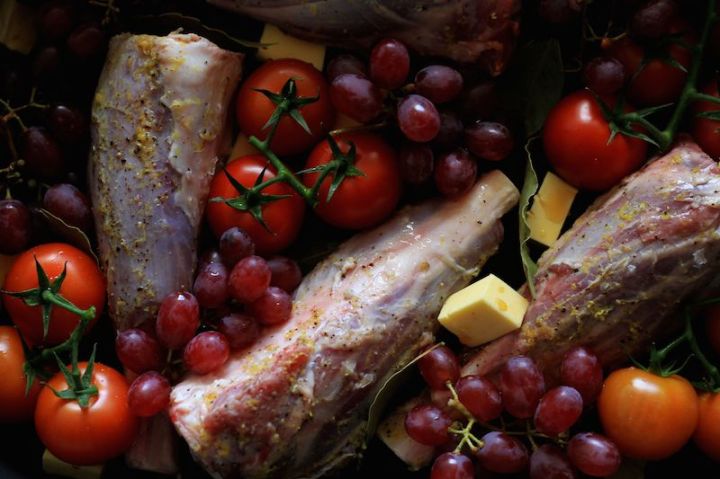
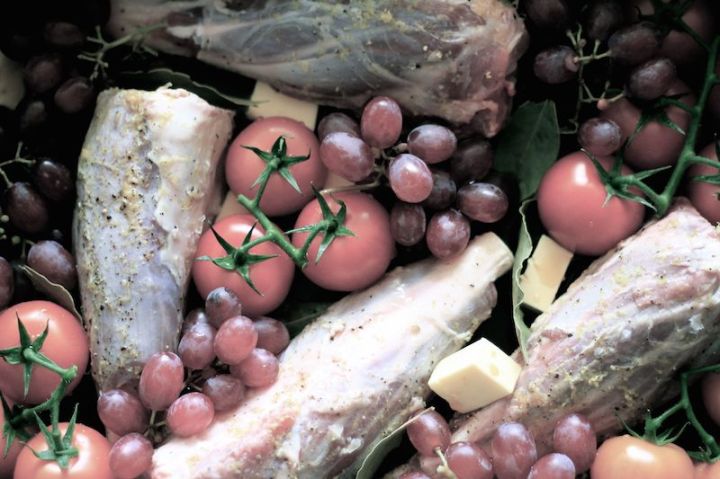
Pour the oil into a large, deep roasting pan. Place the shanks into the pan. Scatter over the rosemary or bay leaves, garlic cloves and butter and position the grapes and tomatoes around the shanks. Mix together the wine and pomegranate molasses. Pour half into the pan, reserving the other half to one side. Cover the pan tightly with foil and place in the oven.

Roast for 45 minutes then remove from the oven. Turn the shanks over, replace the foil and place back in the oven for another 45 minutes. Remove the foil, baste the shanks and roast uncovered for a further 45 minutes, or until the meat is beginning to pull away from the bone. During this time the shanks will turn a deep brown colour, so keep an eye on them and turn them over again if it looks as though they are colouring too much.

Once cooked, remove the shanks, tomatoes and grapes to a serving platter and cover with foil to keep warm. Add the reserved wine and molasses to the roasting pan and place over a high heat (or transfer liquid to a saucepan). Bring to a boil and simmer to reduce and thicken the sauce, about 10 minutes.

Pour the sauce over the shanks, sprinkle over the chopped parsley and pine nuts. Serve with mash and greens.

Filed under: Eat