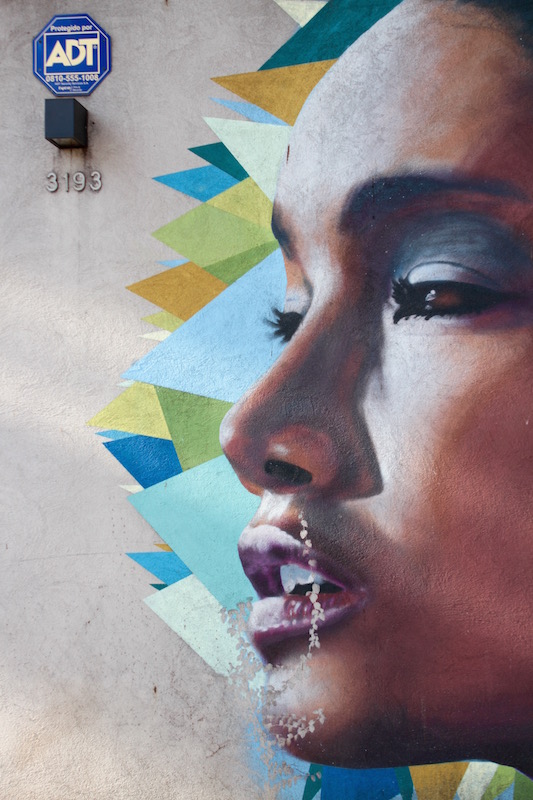
Above: Cropped section of large mural by Primo, in Villa Urquiza, Buenos Aires
One of the things that we most enjoyed about Buenos Aires was its incredible street art scene. According to Matt Fox-Tucker (founder of BA Street Art), street art is accepted and supported by the local community as a legitimate art form. There is no need for artists to obtain a permit from authorities and the only requirement is to seek consent from the property owner. This freedom attracts street artists to Buenos Aires from all over the world.
BA Street Art was founded to support the growth of street art in Buenos Aires. In addition to running tours, the organisation works with artists to commission murals, helps to develop collaborative relationships between artists and property owners, runs workshops and operates an art gallery featuring work by Latin American street artists. The organisation is working particularly hard to develop the barrios of Villa Urquiza and Coghlan as centres for street art in the city. During Argentina’s military dictatorship many buildings in these neighbourhoods were abandoned or damaged, but over the past 10 years (in large part, thanks to the efforts of BA Street Art) these same buildings have been reclaimed as spaces for art – to spectacular effect.
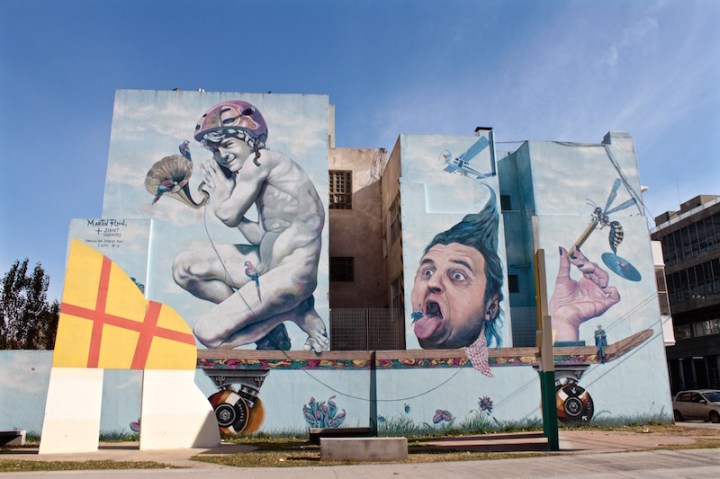
On the day of our tour we took the subway to Colegiales and met up with our tour guide, Anderson, a Brazilian architect who had recently moved to Buenos Aires. We were joined by two young French women (medical students on holiday), a tall, enigmatic Peruvian man with a silent German companion, and an older couple from Mexico City, both psychologists. After coffee and introductions, we took the train even further west to Villa Urquiza where the tour began with the stunning mural below. This surrealist mural was created by Martin Ron and at 412 m² it’s the largest mural in Buenos Aires. To give you some idea of scale, I’m 162 (5’4″) which makes me as tall as the top of the skateboard wheel. BA Street Art organised this project, which was painted over 16 days (for more details about the project, read this):
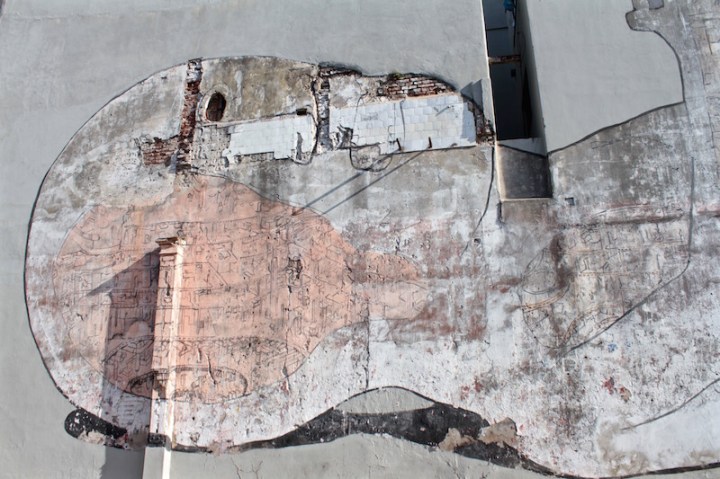
On the building next door is another huge mural painted by the Italian artist, Blu. The mural is nearly 10 years old now and is decaying badly, but it is typical of Blu’s mind-twisting work (which reminds me of Tool music videos). It depicts a gigantic baby with an interior world that reveals the machinations of a bustling factory; a metaphor for the corruption of innocence by exploitative humanity:
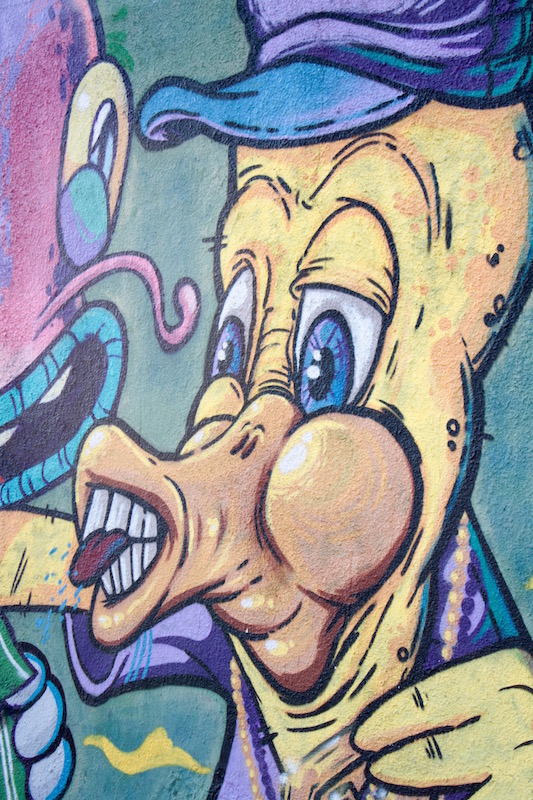
Few artworks were as overtly political as Blu’s however, and most were created to add beauty, colour and imagination to the city streets. The picture below captures an excerpt of a large mural painted by five artists, with each character symbolising an artist. The Donald Duck-esque character below represents the Spanish artist Grito:
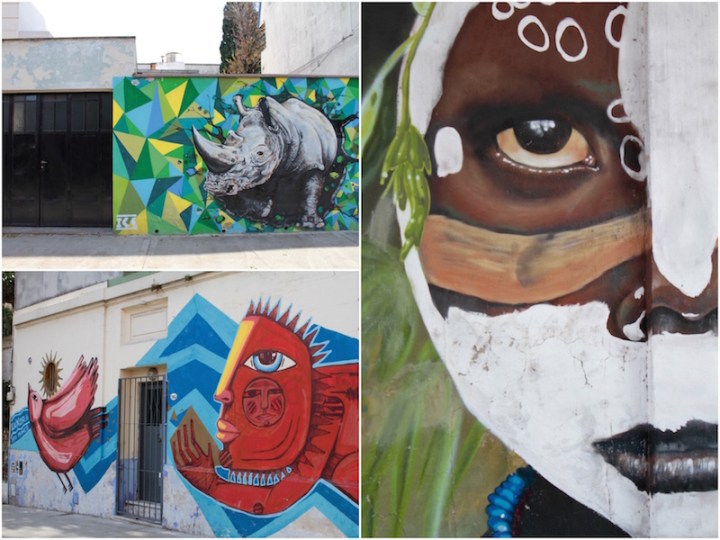
The collage below shows works by Ice (the 3D rhino), Luxor (the red bird) and by Primo (the young African tribeswoman). I found the work by Primo to be especially compelling – the depth of expression in the eyes of the woman is amazing. Primo also painted the mural of the African woman at the beginning of this post. I’ve cropped that image to show the most beautiful parts of the mural: the soulful eyes, smooth skin, and the impression of an ivy plant which happened to be growing on the wall at the time the painting was created.
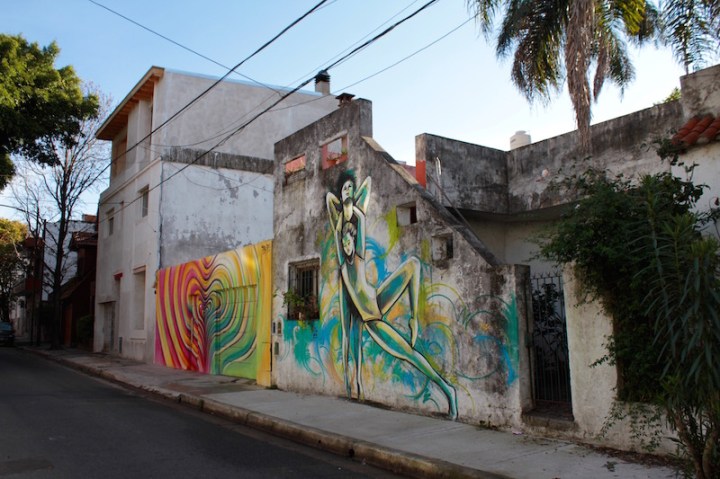
One of my favourite murals was the one below of the dancing couple by Italian artist Alice Pasquini. The building itself was fascinating with the angular shapes, rough plasterwork and trailing plants, and the colours and sweeping lines of the artwork complement this canvas beautifully. To the left of this mural is another piece, “Heartbeat”, by the Argentinian artist, Alfredo Segatori.
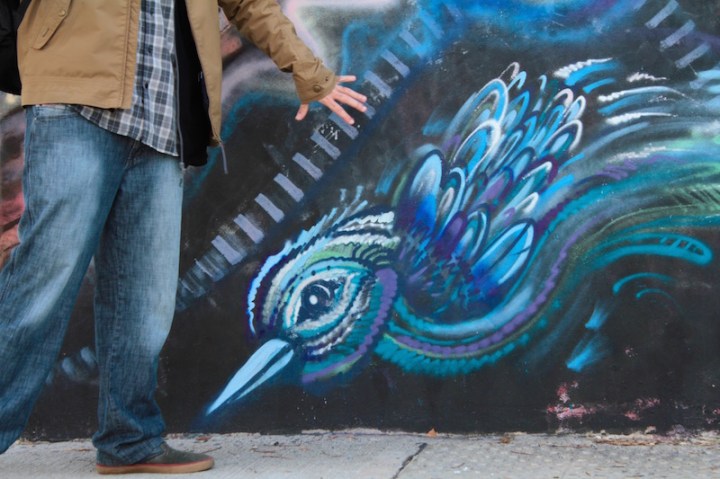
Our patient guide, Anderson, kept the group entertained with stories and managed to keep us moving despite our predilection for taking photos. Here we stopped at a mural by Nomada while Anderson provided details about various painting techniques used by street artists. One DIY method involved lodging a dog hair into the nozzle of the can, which allows the artist to achieve a particular effect.
We were thrilled to see a large and beautiful mural by Australian artist, Fintan Magee, who grew up in Brisbane. His murals and paintings often focus on environmental issues and the displacement of populations, and he applies a technique that looks like water dripping from the artwork. This particular mural references the 2011 Brisbane floods (which he and his family experienced first hand) as well as the devastating floods in La Plata and Buenos Aires in 2013:

Our last stop on the tour took in a long wall with multiple murals painted on it. This one by El Marian shows a homeless man and his dog, perfectly capturing their deep bond:

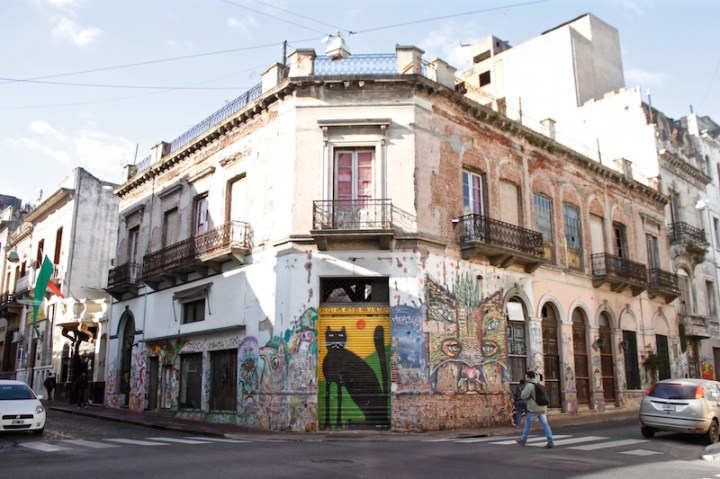
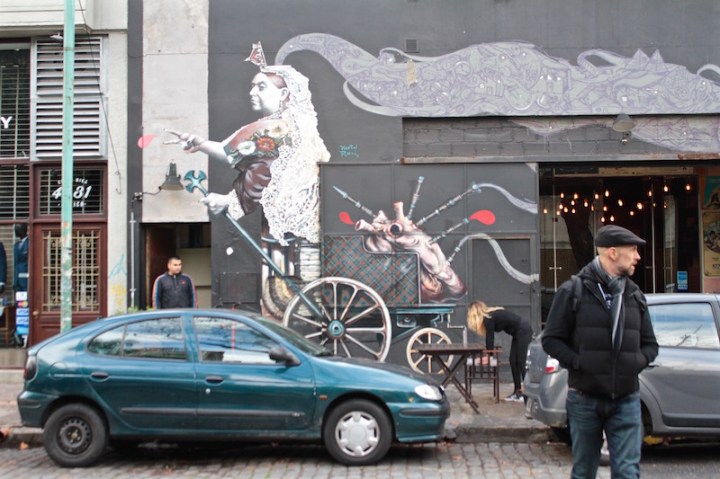
The tour with BA Street Art was fabulous and I highly recommend contacting them if you are planning a trip to Buenos Aires. We found the tour so inspiring that when we ended up with an extra half day in the city (due to missing our flight to Mendoza) we taxied to Palermo Soho, another area of the city known for street art. I can’t tell you anything about the pieces that we saw there, but if anyone can identify the artists, please let me know:
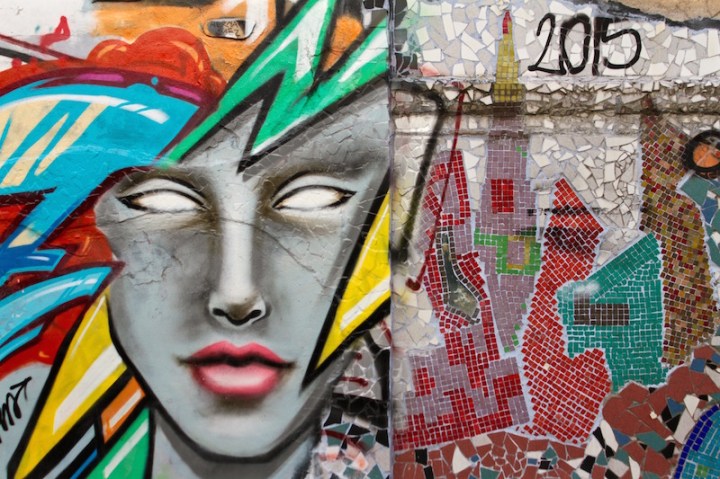

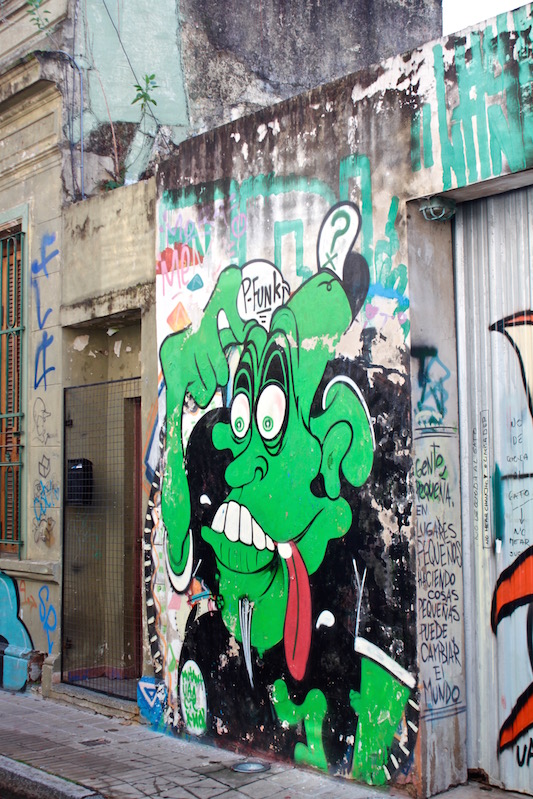
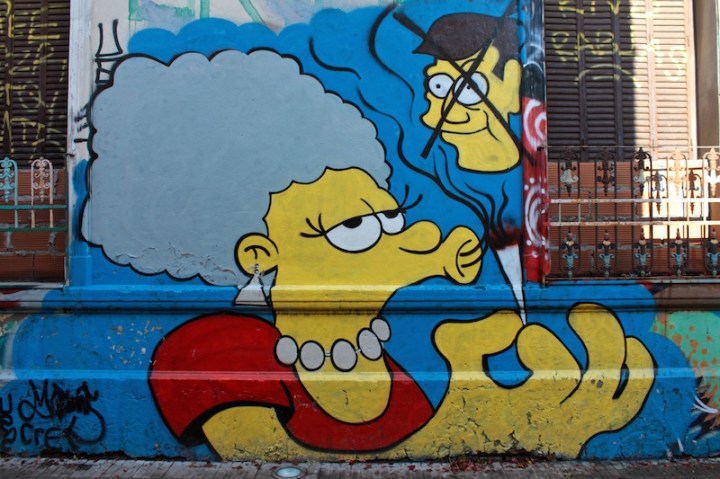

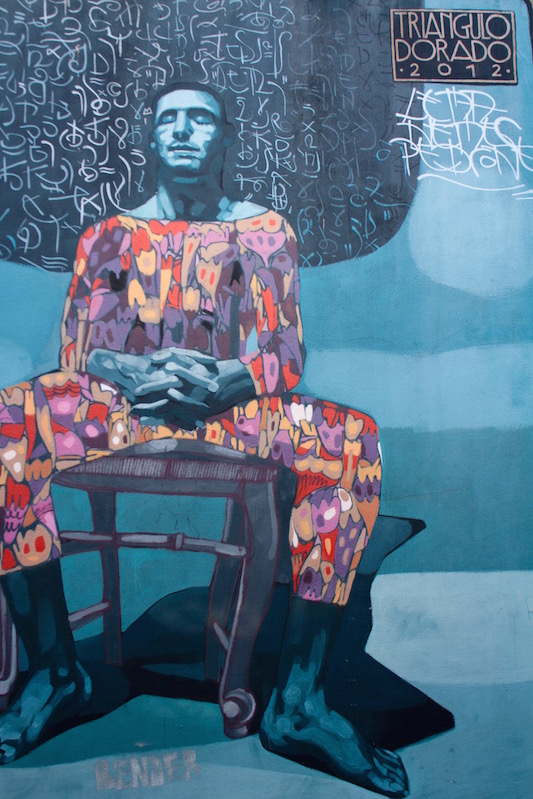
I can identify the artist for the final image below – Triangulo Dorado, a trio of street artists who conveniently signed this mural. For more photos of street art in Santiago de Chile, click here. For general travel notes regarding Buenos Aires, click here.











 Chez Moi