comments 7

Food for Friends: Tahini Cookies

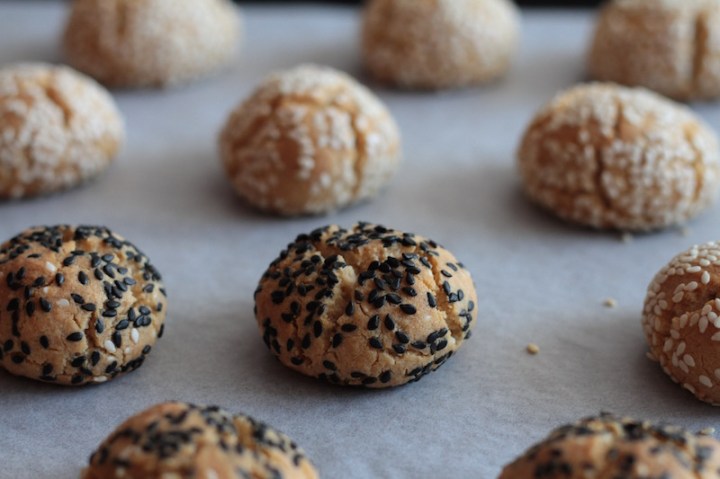
Tahini Cookies fresh from the oven

Tahini Cookies are tender and melting; almost shortbread-ish if it weren’t for the sesame seeds that pop and crackle between your teeth. They are sweet with sugar and honey but somehow savoury and salty too. A generous proportion of tahini lends a warm, spicy richness that is mysterious and yet totally comforting. They are liable to crumble a little with each bite, but you will find that your tongue chases each escaping fragment and that your fingertips, indented with sesame seeds, will be licked, rather than brushed, clean. 
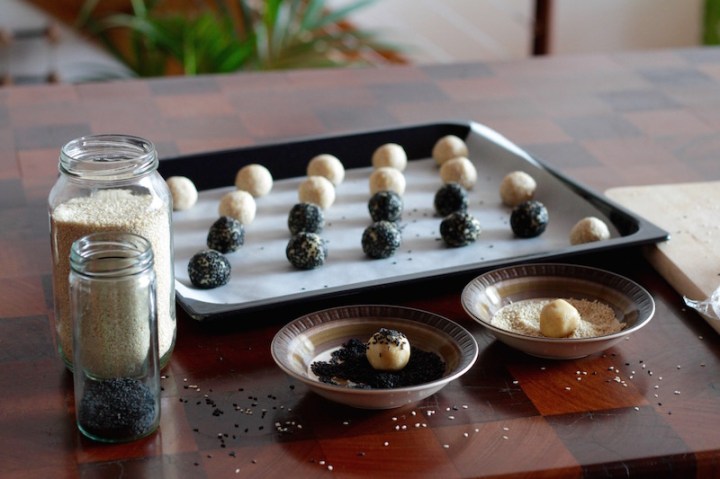
Preparing tahini cookies - rolling little balls of dough in sesame seeds

wrote about Tahini Cookies over three years ago when I first tried them, but at the time I simply linked to the blog where I had found the recipe. Since then, I have made them many times. I’ve taken them to potluck dinners and garden parties, and shared them frequently with colleagues at work. I once made a triple batch for a fundraising bake sale where they were one of the first items to sell out. Small bags of cookies have found their way into friend’s handbags or been stashed outside neighbour’s front doors. Colin has been known to raid the biscuit tin to take samples to his friends. 
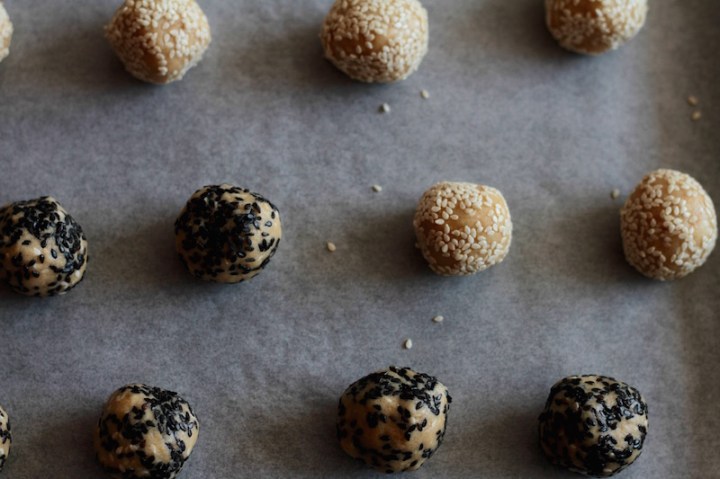
Tahini Cookies - rolled in sesame seeds then baked until crisp

This generosity originates in the conviction that Tahini Cookies are good, and that such goodness must be shared – hence this post, Round Two for the promotion of Tahini Cookies. I must confess that I’m not entirely altruistic though. For every one I’ve given away, I’ve probably eaten five or six myself.
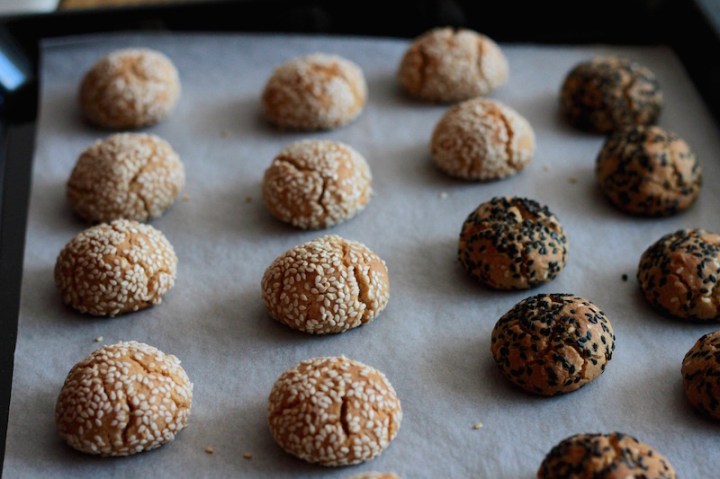
Tahini Cookies freshly baked 2

Tahini Cookies look humble and unassuming. There’s no flash, no wow; they’re simply small, brown and rustic – until you eat one. For those used to seeing tahini in savoury iterations only, the thought of sweet tahini can be somewhat distasteful. However, think halva; the sweet, sesame confection that is made with tahini. When fresh, the cookies have a texture that is reminiscent of halva.
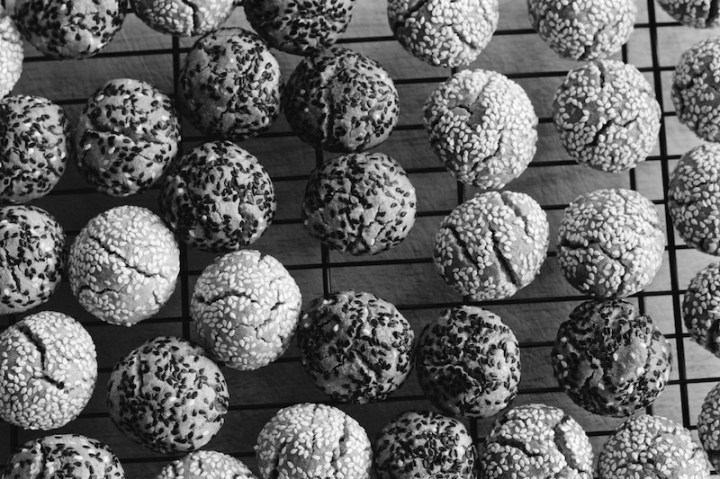
Tahini Cookies cooling - monotone

Tahini Cookies are delicious served with coffee, but crumble them over vanilla ice cream and you will find yourself in heaven as the warm, salty-sweet cookie melds with cold, vanilla creaminess. If you want to win friends, then these cookies are for you. Each time I make them, I am asked for the recipe, and if there is ever a way to objectively quantify the success of cooking, then this could be it.
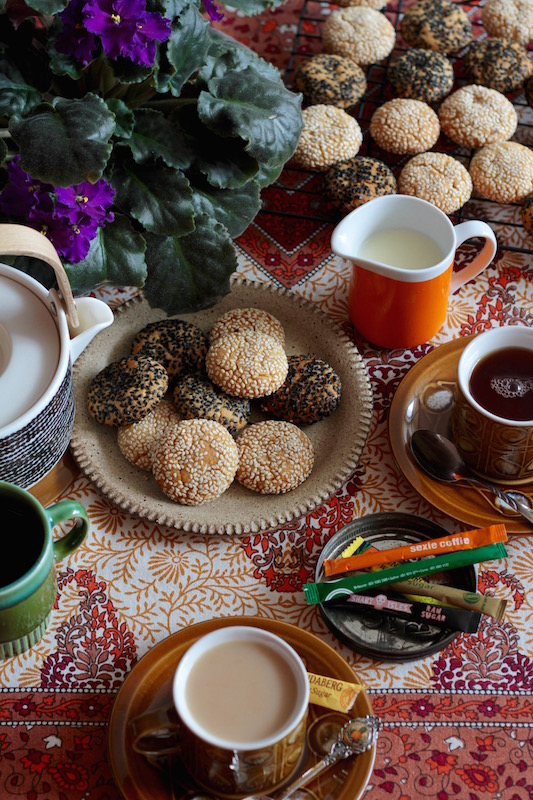
Tahini Cookies for morning tea 3

I am by no means the first to wax lyrical about the joys of tahini and tahini cookies. Ailsa Ross considered tahini (including tahini cookies) to be the highlight of her kibbutz experience. Annelies Zijderveld writes of tahini that “it’s not often that I give myself over to an ingredient so completely” and of tahini cookies, that “they will be the first cookies to be eaten up even when a chocolate cookie is also on the plate”. Tahini cookies also inspired Annelies to write this stellar poem and Edwina Shaw has used Tahini Cookies to overcome procrastination. It is strange to think that a brown, sludgy paste could inspire such intense emotions, but there it is. Make these cookies and taste for yourself.
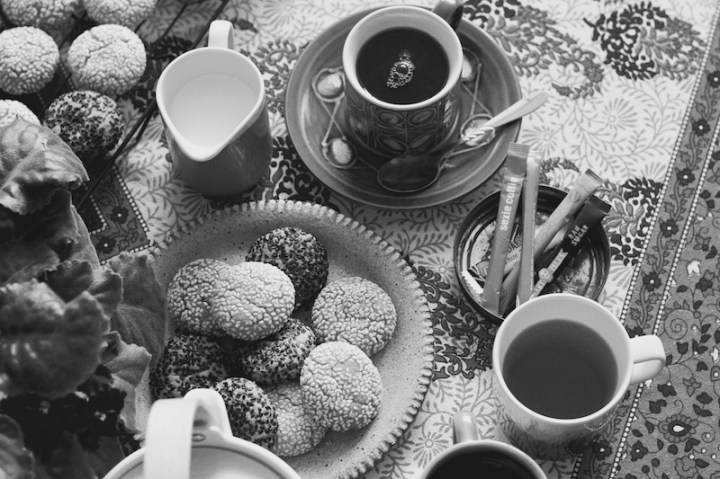
Tahnini Cookies for afternoon tea - monotone

Tahini Cookies

  • Servings: makes about 20 cookies
  • Print
From A Sweet Spoonful

1 1/4 cups plain flour
1/2 tsp baking powder
1/4 tsp salt
115g unsalted butter, softened
1/2 cup sugar
1/2 cup tahini
1 Tbsp runny honey
1 tsp vanilla extract
2 Tbsp sesame seeds
About 1/4 cup in total of white and/or black sesame seeds, for coating the cookies
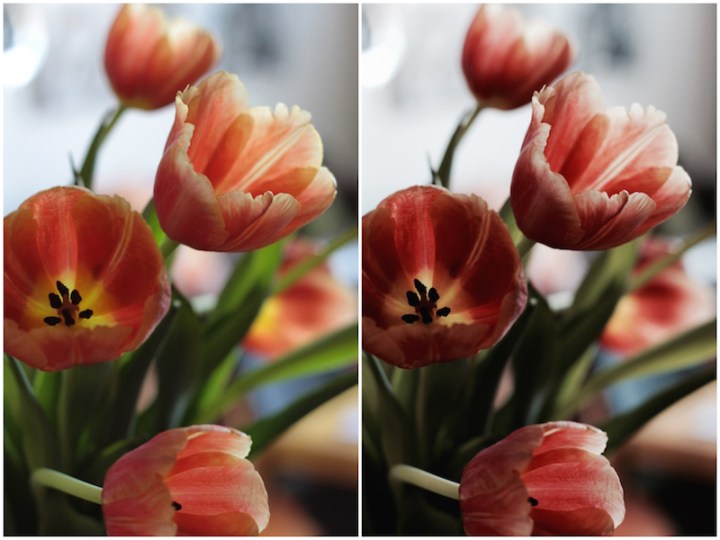
Measure the flour, baking powder, and salt into a medium bowl and whisk to combine and aerate.

Beat the butter and sugar with an electric mixer at medium-high speed until pale and fluffy, about 3 minutes. Add the tahini, honey, vanilla extract, and 2 Tbsp sesame seeds to the bowl and beat to combine. Reduce the speed to low and add the flour mixture in 2 batches, mixing until the flour is fully incorporated.

Remove the dough from the bowl and place it on a sheet of plastic wrap. Gather the plastic together, press it into a disk and chill in the fridge until firm, at least 1 hour. You can skip the chilling step; however, the cookies will spread more during baking, forming a flatter, slightly drier cookie. Both are good, but the chilled dough produces a slightly better result, in my opinion.

Preheat the oven to 180°C / 350°F and prepare a large baking tray with parchment paper. Pour the 1/4 cup sesame seeds into a small bowl (or bowls, if using both black and white seeds). Using a teaspoon, break off enough dough to form small balls about 2cm in diameter. Roll the balls in the sesame seeds and use your palms to press the seeds firmly into the dough. Place the balls of dough on the baking tray about 5cm apart. Bake until the cookies are golden and deeply cracked on top, about 12 to 15 minutes. The cookies are very fragile when hot, so leave them to cool on the tray for about 10 minutes before transferring to a rack to cool completely.

Filed under: Eat
comments 21

Small things: Flowers & Fur

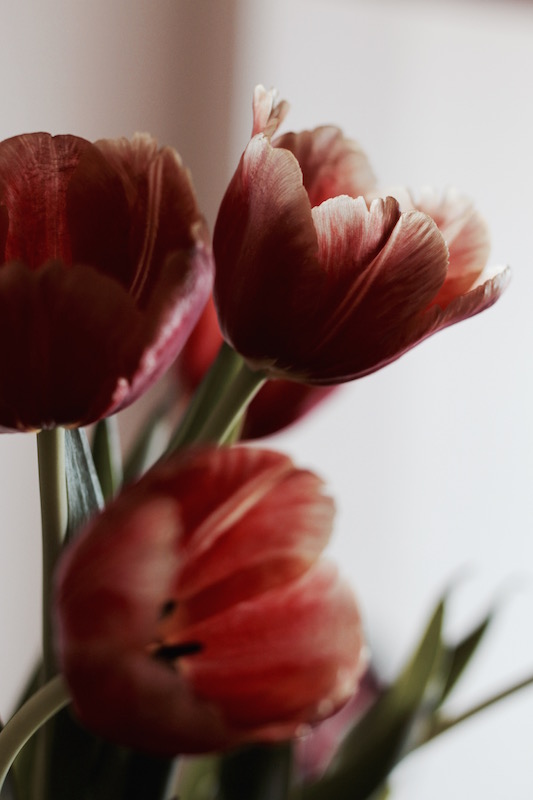
Orange spring tulips

I‘ve always had a soft spot for tulips with their waxy petals and globular shape. I like their air of notoriety too, although it’s difficult to connect a cellophane-wrapped bunch from the supermarket with fortunes made and lost, all for the want of the rarest specimens. Still, I hardly ever buy flowers for my home, so handing over $10 for a bunch of tight orange blooms felt like a treat, even if far from a mania. The occasion for flowers was a weekend at home alone. Colin had flown to New Zealand for a work trip and on Saturday morning I was stocking up supplies for the three-day Labour weekend. So, the usual staples went into the trolley, plus a little this and that; some exotic looking yellow squash, a bar of chilli chocolate, and the tulips.

I’m always a little surprised by the offers of social events that come my way every time I’m on my own – it’s truly sweet, but I actually relish the opportunity to be alone for a while. Maybe it’s the ease of a long-term relationship – I miss him when we’re apart, but we’re each our own person. Anyway, this time I wasn’t alone because I had the company of Miss Macy Gray, the most delightful little Maltese-Poodle cross that ever was. Macy belongs to friends who were away at a wedding, so she came to stay for a girls weekend. Macy and I had long walks along the river each afternoon, hot chips with Maree on the lawn at Southbank, slow walks each dawn (slow, because she had to sniff everything), and in between, she would sleep, follow me around the house or jump up for a snuggle if I sat down.

I spent much of the weekend cooking, trialling new recipes (like socca, or chickpea pancakes) and preparing staples like chicken stock and cubes of pizza sauce for the freezer. I had an amazing dinner one night with friends at London Fields, sampling an array of strange but delicious meats including roasted bone marrow, shaved beef tongue and pork belly (a first for me). I read a book, did a little yoga and didn’t switch on the TV once. I also took many photographs. A cute puppy with melting brown eyes and a bunch of tulips that unfurled over the course of the weekend provided new points of inspiration. I realised that I had gotten out of the habit of having my camera at the ready to photograph my daily life. It took a little space to get it back: a small thing really, but rare nonetheless.

Macy Gray - Maltese Poodle cross

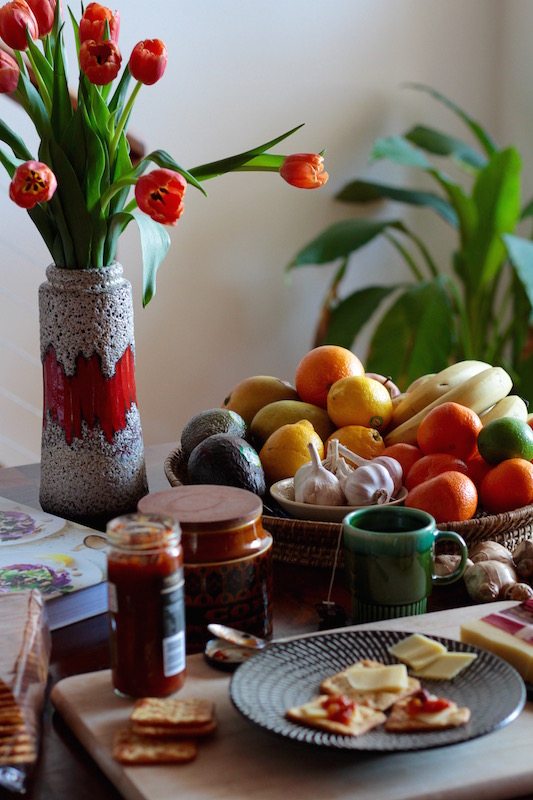
Crackers and cheese - weekend at home

Macy Gray - Maltese Poodle cross - Moodle

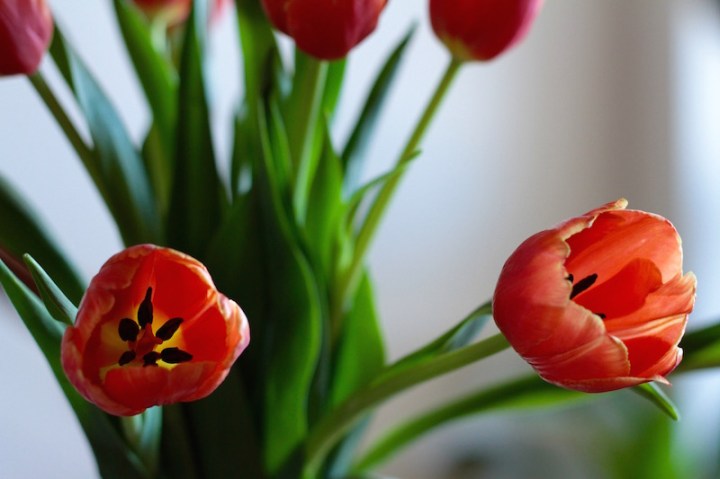
Bright orange spring tulips

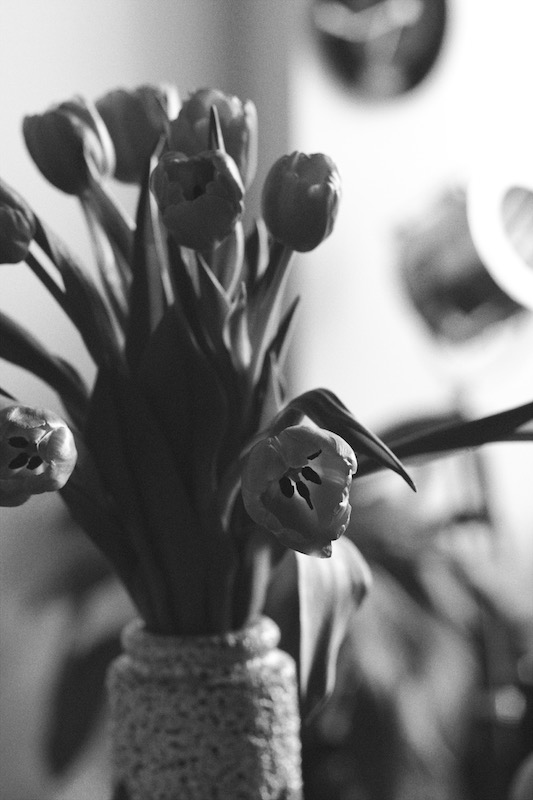
Tulips - Monochrome

Fresh flowers for a weekend at home - bright orange spring tulips

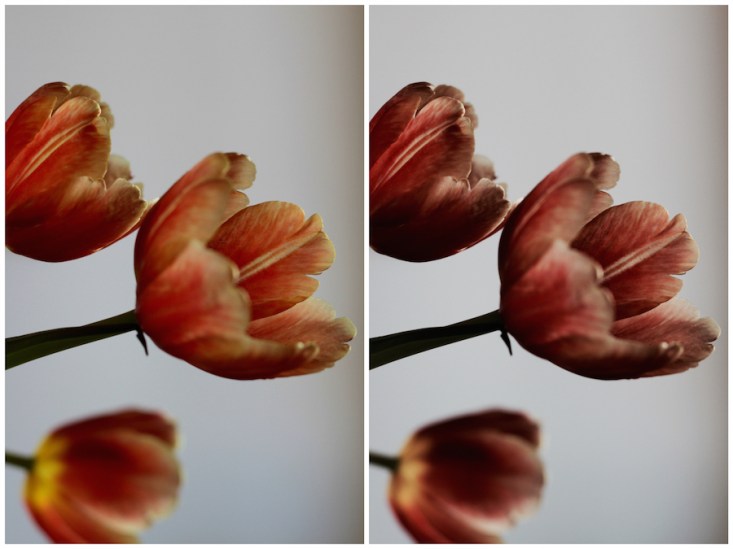
Tulips 3

comments 6

Socca for Spring

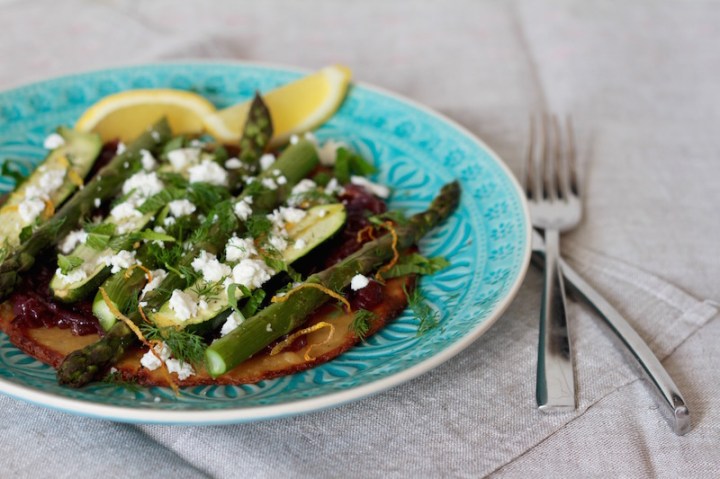
Chickpea pancake with caramelised onion, roasted vegetables and herbs

The food photos in my my Instagram feed have been dominated by baked goods for (ahem) quite some time. It’s been a big year for cakes and other baking on the blog and I haven’t posted anything remotely green or vegetable-focused since the pickled radishes in March and the recipes for two summer salads in February. It’s not like I subsist on cake, though what bliss that would be; merely that my recent foodie moments have tended to be sweet and baked. I only share recipes here that I absolutely love and it seems that I just haven’t been very adventurous in the vegetable department lately.

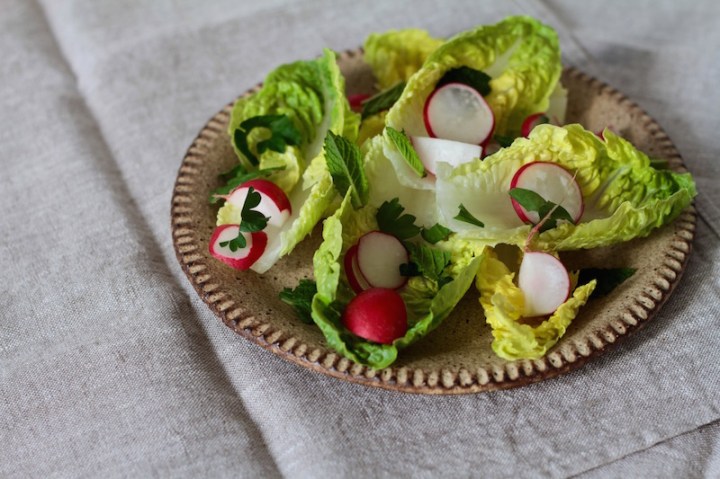
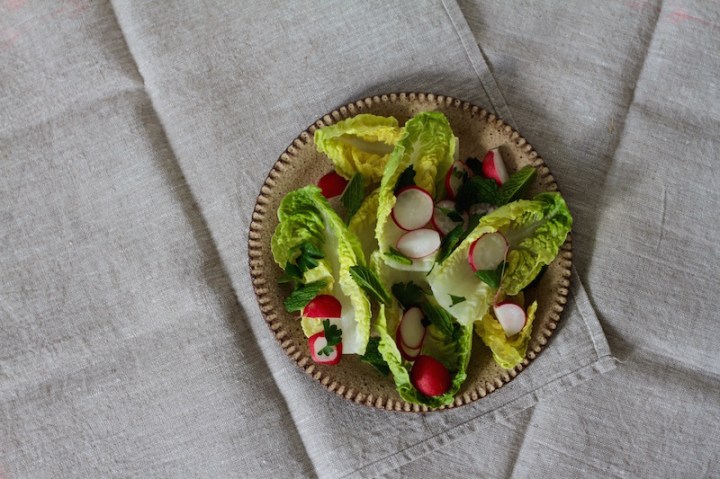
Spring salad with cos lettuce, radishes and herbs

In an effort to swing back to my usual interest in vegetables (and more balanced blog offerings), I decided to invest in a new cookbook. It’s hard not to be inspired by Sarah Britten’s new book, My New Roots (or her blog of the same name) with its bright, soft photographs and vibrant, colourful food. You’ll never catch me advocating dietary labels or extremes in any form, and Sarah is much the same. Her food is mostly vegetarian, mostly vegan in fact, and mostly gluten-free. She’s squarely focused on seasonal, plant-based wholefoods but it all comes off as innovative and exciting rather than pious and restrictive.

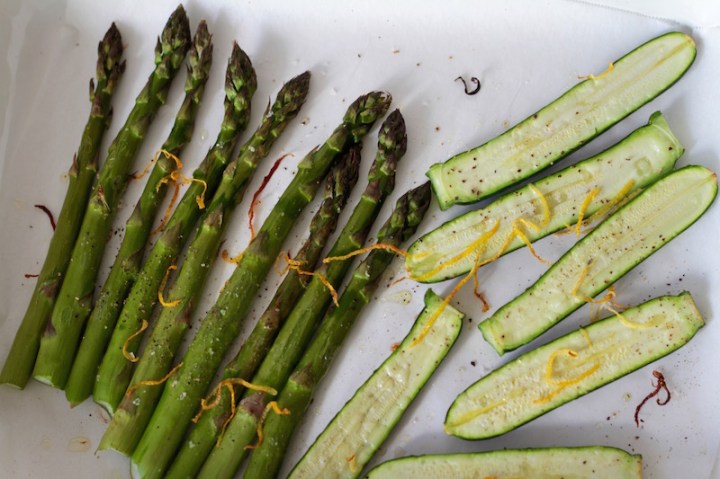
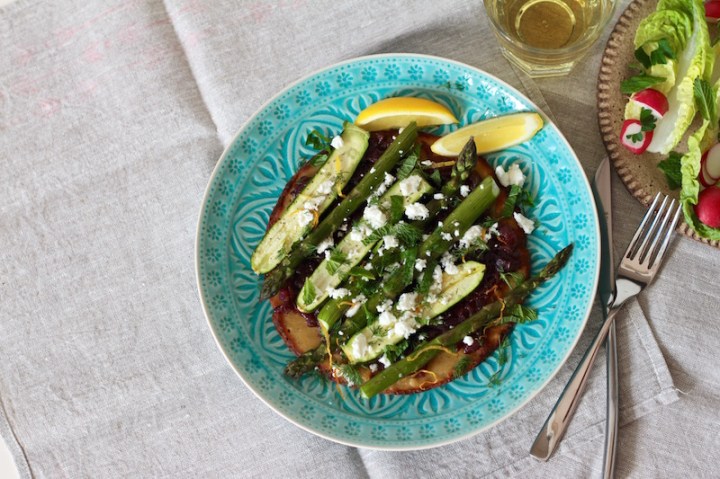
Roasted asparagus and courgettes with lemon zest

Every recipe I’ve tried so far has been deliciously different, even when no animal products whatsoever are included. When I prepare vegetarian food (which makes up the majority of my diet) most of the time I simply cook or assemble the dish and then add feta. Is the flavour missing a little something? Add feta. Could it be more delicious? Add feta. To this end, I always have a big tub of goat feta in the fridge as it just has this magical way of enhancing most food with its savoury, piquant tang. It’s become a habit because, well, feta is awesome, but it also feels a little lazy. It’s nice to be shown an alternative way to the same happy tummy.

Chickpea pancake with caramelised onion, roasted vegetables and herbs

Now as it happens, the recipe I’m posting here does feature feta, but I can tell you that I have happily left it out altogether or substituted a swipe of labne and/or a sprinkle of toasted pine nuts. Sarah’s recipe is a concept more than anything. To celebrate spring, she features asparagus, caramelised onions and herbs piled upon socca (more about this soon) to construct a gorgeous, fresh, pizza-esque plate. My version is barely changed – I’ve added courgettes to the asparagus, roasted the vegetables instead of grilling them, and freshened the dish with lemon zest and juice. It’s flexible. I can just see a late summer version using roasted eggplant, capsicum and basil pesto.

Making socca - chickpea pancakes

Now to the other new discovery – socca – a savoury pancake made from chickpea flour (sometimes sold as besan flour in Indian grocery stores) mixed with seasonings, oil and water. It’s gluten-free, if that’s important to you, and when eaten hot and freshly cooked it is completely addictive with a madly crispy texture and a spicy, peppery flavour. Sarah’s version uses ghee as the fat and is cooked in a frying pan. I had trouble with my socca sticking when cooked this way, but some wider reading revealed that it is traditionally made with olive oil and cooked in a wood-fired oven (its origins are from Nice, France). I’ve had the most success with cooking it my heavy roasting dish inside a hot oven so that’s how I do it now. I like David Lebovitz’s tip to add a little ground cumin to the batter to mimic the smokiness of the traditional method. Pairing it with chilled rosé as a pre-dinner nibble is also a great suggestion.

Cos lettuce, radishes and herbs - spring salad to go with socca

Socca alone is so awesome that you might demolish it all before you remember to create your little spring pizza. That’s ok – here’s to inspiration, not restriction!

Chickpea pancake with caramelised onion, roasted vegetables and herbs

Socca (Savoury Chickpea Pancakes)

Adapted from Sarah Britten My New Roots and David Lebovitz

1 cup chickpea (besan) flour
3/4 tsp salt
1/2 tsp freshly ground black pepper
1/4 tsp ground cumin
1 1/4 cups warm water
3 Tbsp melted ghee or olive oil

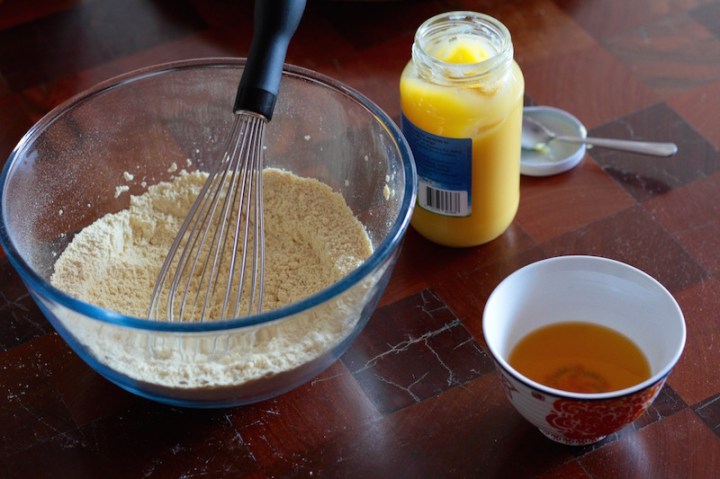
Measure the chickpea flour, salt, pepper and cumin into a large bowl and whisk together to ensure there are no lumps. Pour in the water and ghee or olive oil and whisk together until fully combined. Cover the bowl with a clean tea towel and allow to soak at room temperature for at least two hours. This soaking time is important – chickpea flour is made from ground, raw chickpeas so you need to soak it to make it more digestible, just as you would with whole chickpeas. In fact, Sarah recommends preparing the batter in the morning to soak all day before cooking it for dinner. Note the mixture will separate while sitting – simply whisk it back together before cooking.

When ready to cook the socca, choose a heavy frying pan (cast iron is ideal) or any other oven proof dish, and place it in the oven. Preheat the oven (with the pan inside) to at least 220°C / 430°F,  or even higher if your oven can take it. Mine gets to 230ºC.

When the pan is thoroughly heated through, remove from the oven, coat the bottom with a little ghee or olive oil then pour in enough batter to coat the bottom evenly but thinly (a thin pancake is much tastier than a thick one). Place the pan back into the oven and cook until the pancake is opaque on top and starting to brown around the edges, about 5-8 minutes. If you wish, the pancake can be flipped and placed back in the oven to allow the top to brown and crisp slightly. Remove the socca to a plate and repeat with the remaining batter. Eat it as soon as possible, while still hot, cut into strips as a nibble, or topped with vegetables as a more substantial dish.

Socca with Caramelised Onion, Asparagus & Lemon

Adapted from Sarah Britten My New Roots

4 medium red onions
2 tsp ghee, coconut oil or olive oil
2 tsp balsamic vinegar
2 bunches asparagus
4 small courgettes (zucchini)
1 lemon
Herbs, such as parsley, dill and mint
Sharp feta (such as goat or sheep feta) – optional
Socca

Peel and thinly slice the onions. Heat some ghee, coconut oil or olive oil in a large heavy bottomed saucepan and add the onions with a hefty pinch of salt. Cook over a medium-low heat for about 25 minutes, stirring occasionally, until the onions are soft and caramelised. Add the balsamic vinegar towards the end to help lift the extra tasty bits off the bottom of the pan. Set aside to cool.

Preheat the oven to 200°C / 400°F. Prepare the vegetables to be roasted. Trim the asparagus and cut the courgettes into halves lengthwise. Toss the vegetables with a little oil, salt and pepper, and the zest of one lemon and arrange in a single layer on an oven tray. Slide into the oven and roast for about 15 minutes. Alternatively, grill the vegetables on a barbecue or grill plate until they are lightly charred and tender.

To assemble, place the socca (or slice of socca – the size of the pancake depends on the size of the pan it was cooked in) on a plate. Spread with caramelised onions, and top with vegetables, chopped herbs, crumbled feta and a squeeze of lemon. Serve with salad.

Filed under: Eat
comments 12

Road Trip

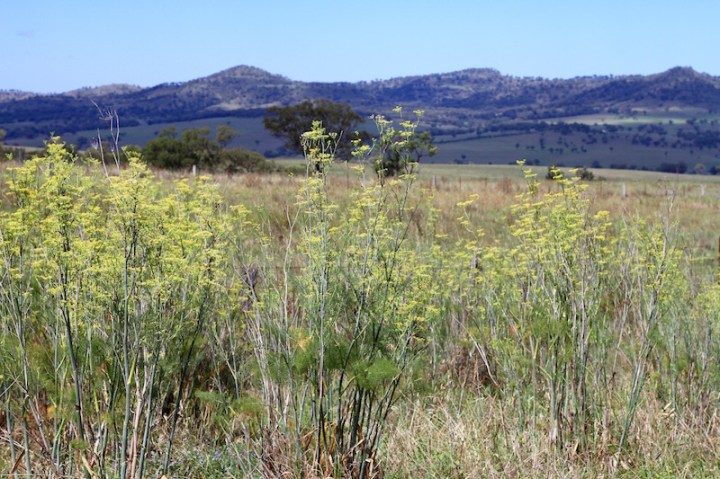
South of Scone, New South Wales

We’ve done some solid road trips since moving to Australia. We’ve driven as far south as Mudgee and the Hunter Valley in New South Wales (both trips about 10 hours drive from Brisbane), and as far north as Yeppoon in Queensland (about eight hours drive). Not a bad effort for New Zealanders, considering that we would never have considered driving such distances back home. Australia is big; 7.692 million square kilometres big, and I’m still amazed by the distances people are prepared to drive for the sake of a holiday, to get to work each day or just to get to the beach. At a mere 268, 021 square kilometres, New Zealand can fit into Australia 28.7 times. In the 35 years that I lived there I was never more than 20 minutes away from the sea. I never once drove the 8 hour trip to our capital city – if I needed to go to Wellington, I flew.

It’s all a matter of perception. Back in NZ the four hour drive to get home seemed to drag, but we were always impatient to get to our destination. Faced with the vast expanse of Australia (and vast it feels) we have comfortably pushed our boundaries. At first it was tiring, but I’ve come to love these long road trips: conversations have time to get intense and there is time for silent reflection too. We’ll pit-stop in small towns to fill up the car, buy more chewing gum and get coffee from the local McCafe (usually the most reliable source of decent coffee in small-town Australia). Stereo blaring, we sing our lungs out to rock anthems and power ballads as the sun glints off the windscreen and the kilometres melt away.

The key to maximising your road trip experience is to prepare. I bake muffins the night before (usually these ones) and ensure we’ve got plenty of fruit and water within easy reach. Colin loads USB sticks with music. We discuss and plan the route we’re going to take, picking out lunch stops or maybe pre-booking an overnight stay. We get up early to pack the car, hit the road, beat the traffic.

If we have time we always take the long way around. This means tolerating bumpy country roads but there’s more to see than travelling via smoother, busier highways. We’ll stop in tiny towns to visit quaint shops and use the dodgy public loos. I spend much of my time drinking up the landscapes, and sometimes I’ll convince Colin to pull over on an isolated stretch of road so I can take photos of the view. It’s nice to take our time as we journey, to breathe and transition, constructing a sense of distance that is as much psychological as physical. Space, time, a change from the ordinary – it only takes me a few hours on the road to feel like I’m already on holiday.

Note: most of these photos were taken last summer on our trip from Brisbane to the Mudgee wine region in rural New South Wales. 

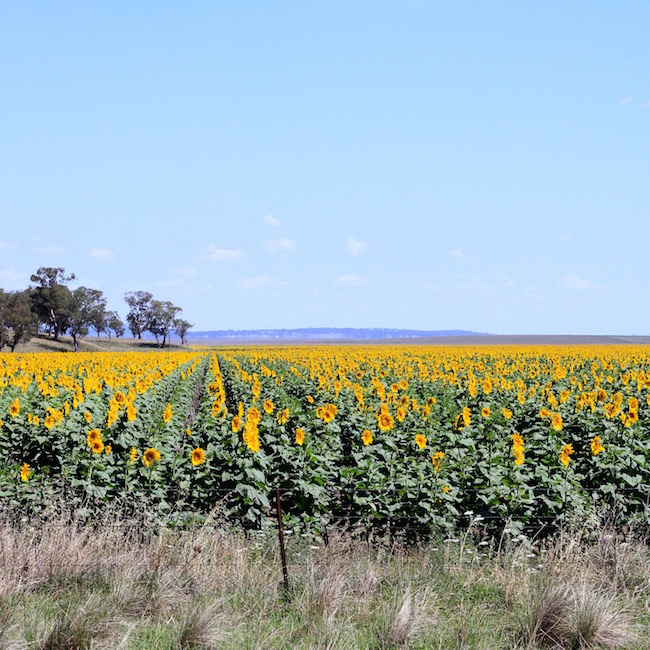
Sunflower field south of Tamworth New South Wales

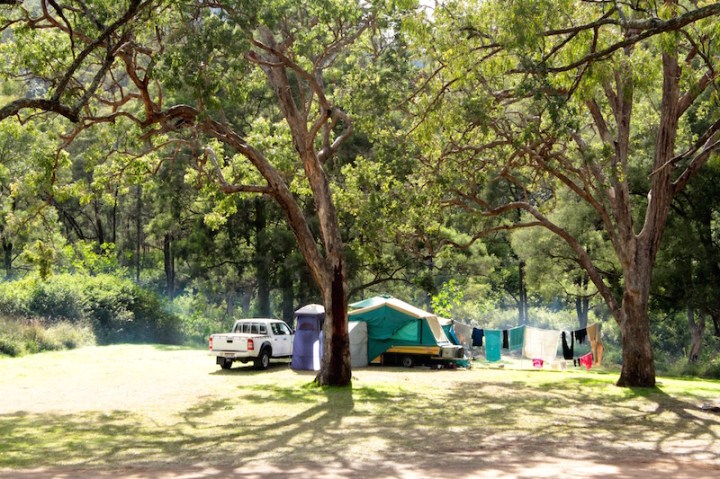
Rural camp site on the way to Toowoomba

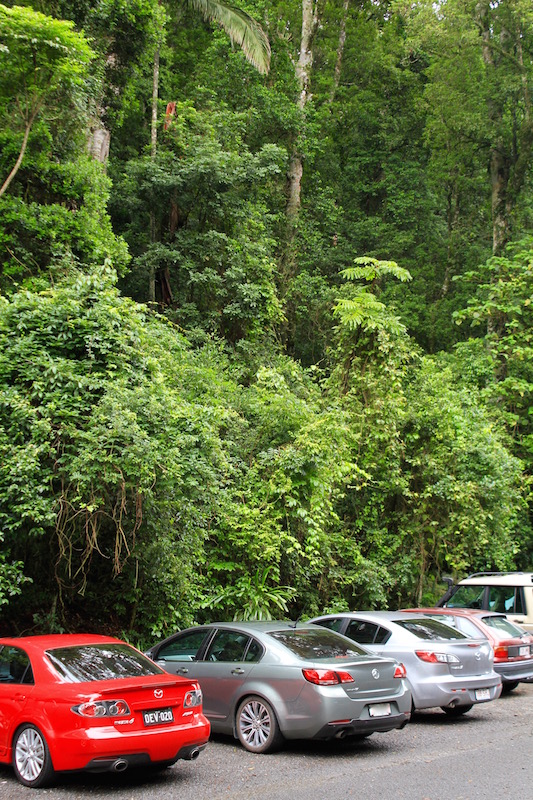
Pit stop on the Great Dividing Range

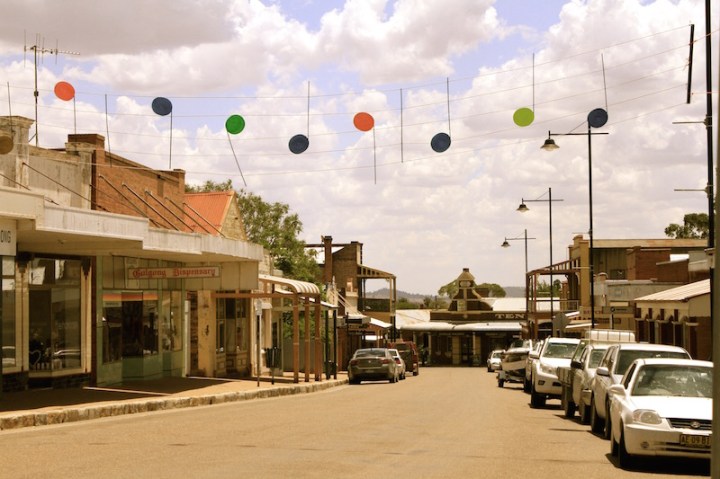
Gulgong NSW at Christmas time

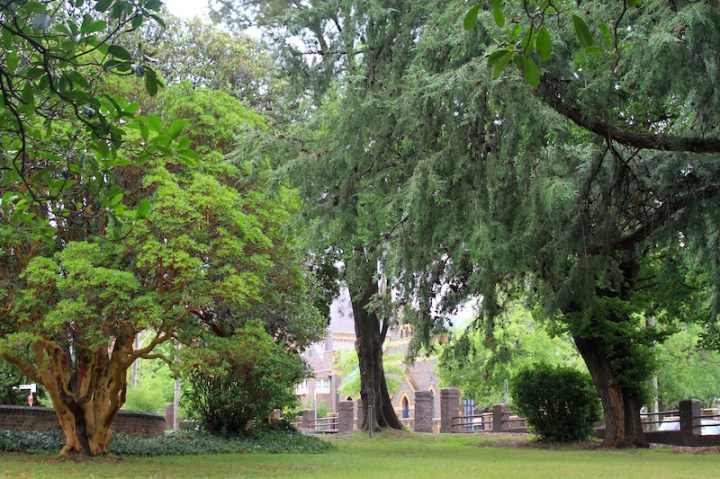
Church grounds in beautiful green Armidale, New South Wales

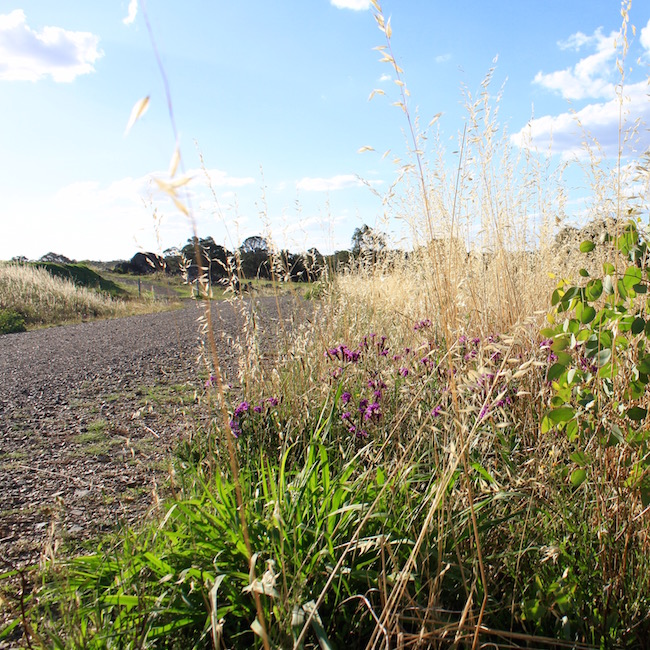
Roadside wild flowers in Uralla NSW

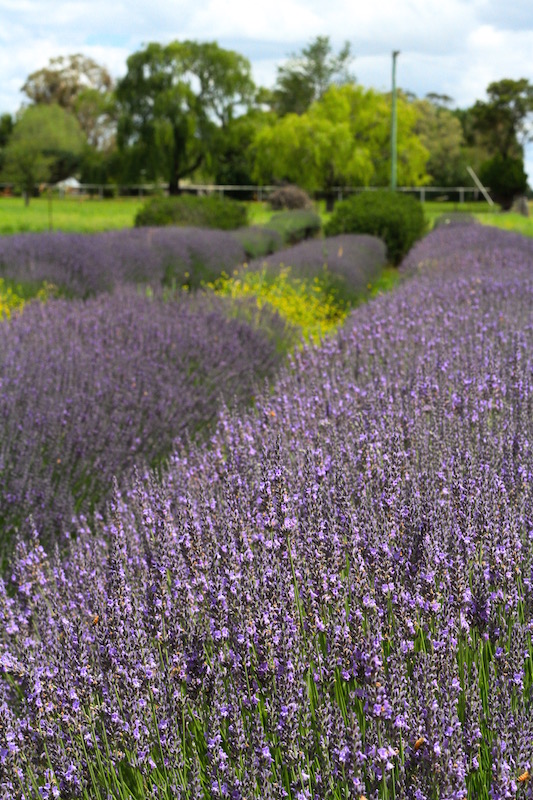
Lavender field outside Glen Innes in northern NSW

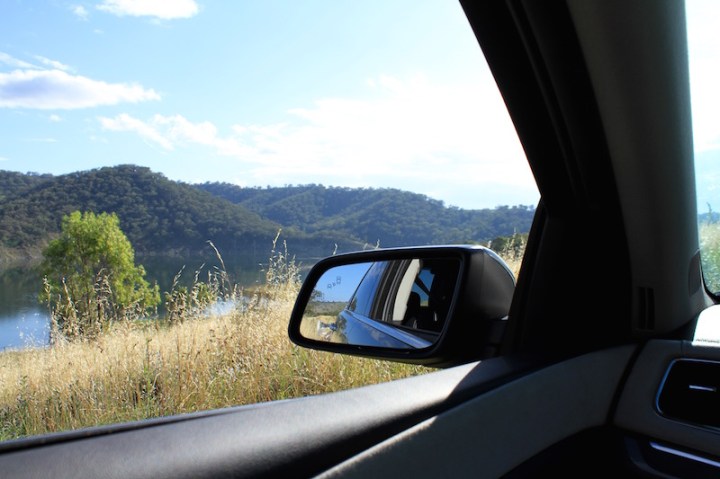
Lake Windamere, south of Mudgee New South Wales

Taking the long way - country road south of Tamworth NSW