comments 3

Time for tea (in Myanmar)

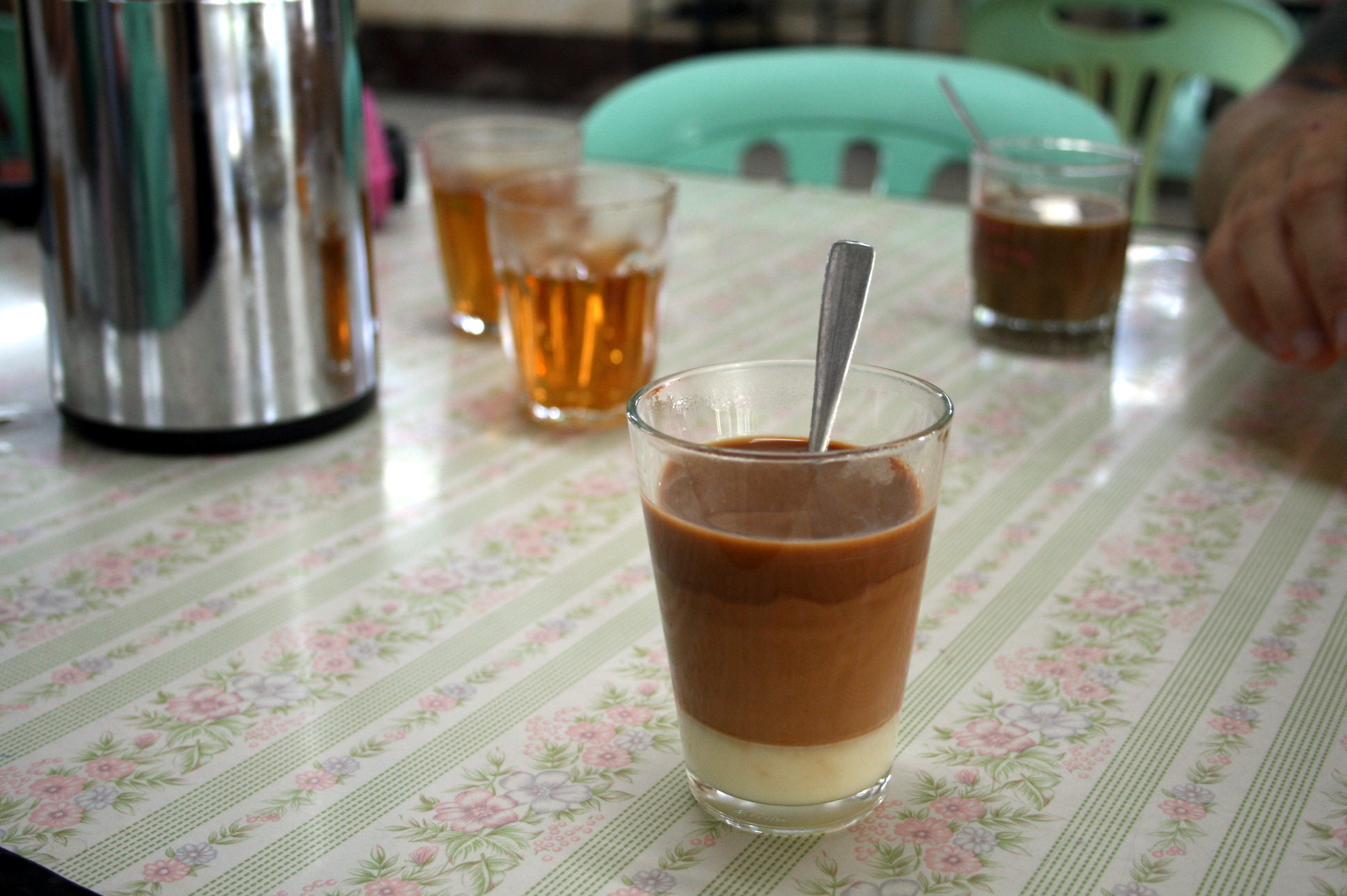
Burmese tea,  how the locals drink it – very strong, and served with sweetened, condensed milk. It reminded me of Indian Masala tea, but without the addition of spices. As in Laos, it was served with complementary green tea.

One of the curiosities of traveling through South-East Asia is that if you enter Thailand over land (as we did, by boat), you are issued with a 15-day tourist visa.  If you fly in, you automatically qualify for a 30-day visa, but if you organise a visa over the Internet before you enter the country, you can easily obtain a 60- or 90-day visa.

We didn’t find out about the 60- or 90-day visas until it was too late, so we were stuck with 15-days.  It is possible to arrange extensions (for a fee) by going to the Immigration Department in Chiang Mai or Bangkok, but in our haste to escape to Pai, we didn’t think about organising this before we left.  When in Pai, we had to make up our minds whether to a) go back to Chiang Mai before the visas ran out, b) wait until we got to Bangkok, and hope that we could organise an extension before they ran out, c) gulp, and pay the fine for overstaying at the airport when we left, or d) make a trip to the northern town of Mae Sai, where we could go over the border into Myanmar (Burma), renewing our Thai visas for another 15 days when we returned.

Clearly, we chose option d.  Many tourists get sucked into the lifestyle in Pai and end up staying far longer than they had intended, so such “visa runs” are common.  It was easy to book tickets on a mini-bus for the 7 hour trip to Mae Sai.  The bus left at 5.30am so that it could do a round trip, returning passengers to their safe little haven (Pai) in the same day.

The trip seemed to pass blessedly quickly, despite being crammed in like sardines and only making two stops.  (I think my absorption in my current read, the “Talented Mr Ripley” trilogy had something to do with this).  At the border, our fellow travelers headed over straight away  as they had about 45 minutes to get to Myanmar and back to the bus.  Colin and I had elected to stay overnight in Mae Sai, so we found our hostel, settled in, and then headed to the border.
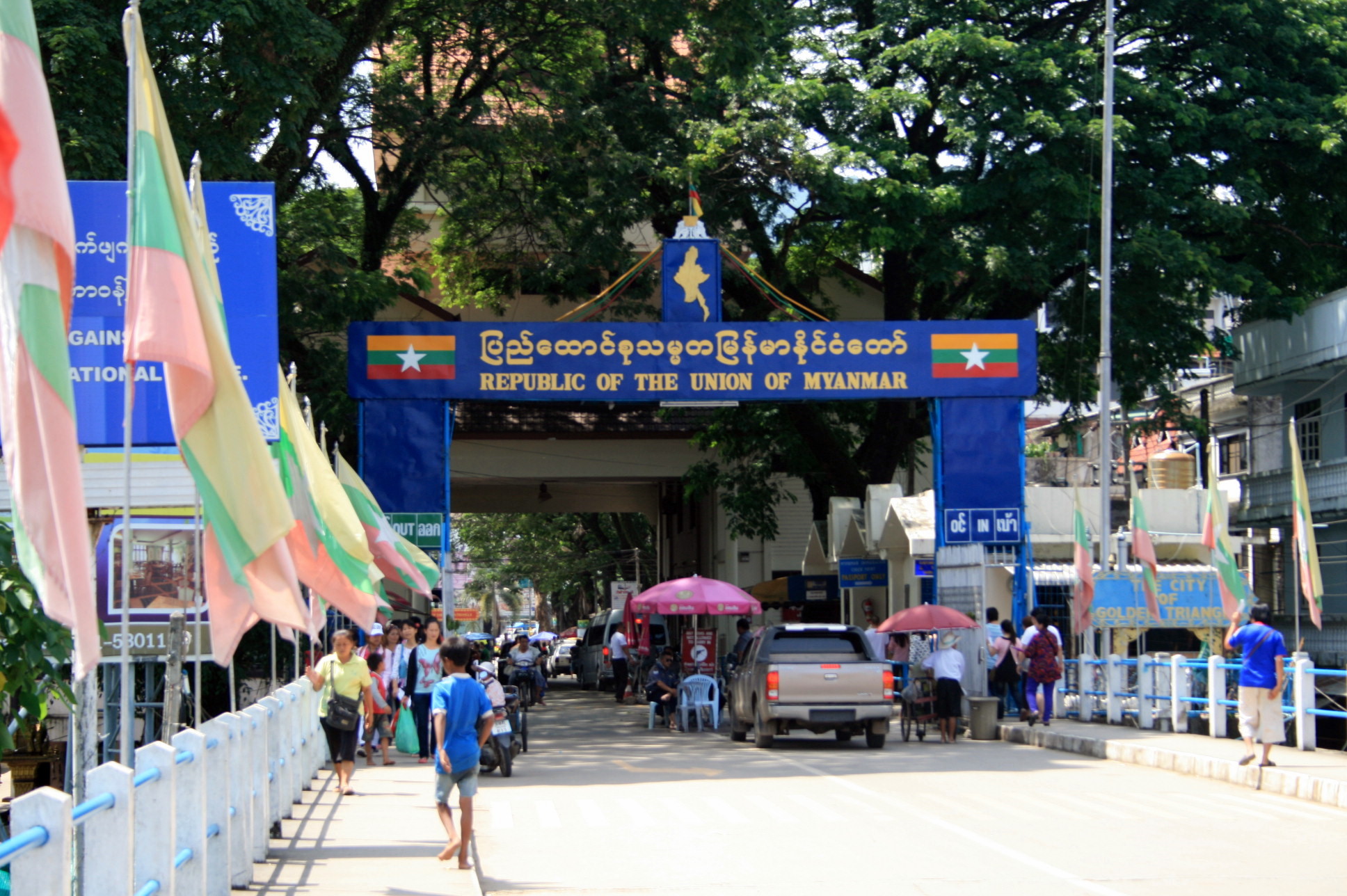
Heading over the bridge, towards the Myanmar border.
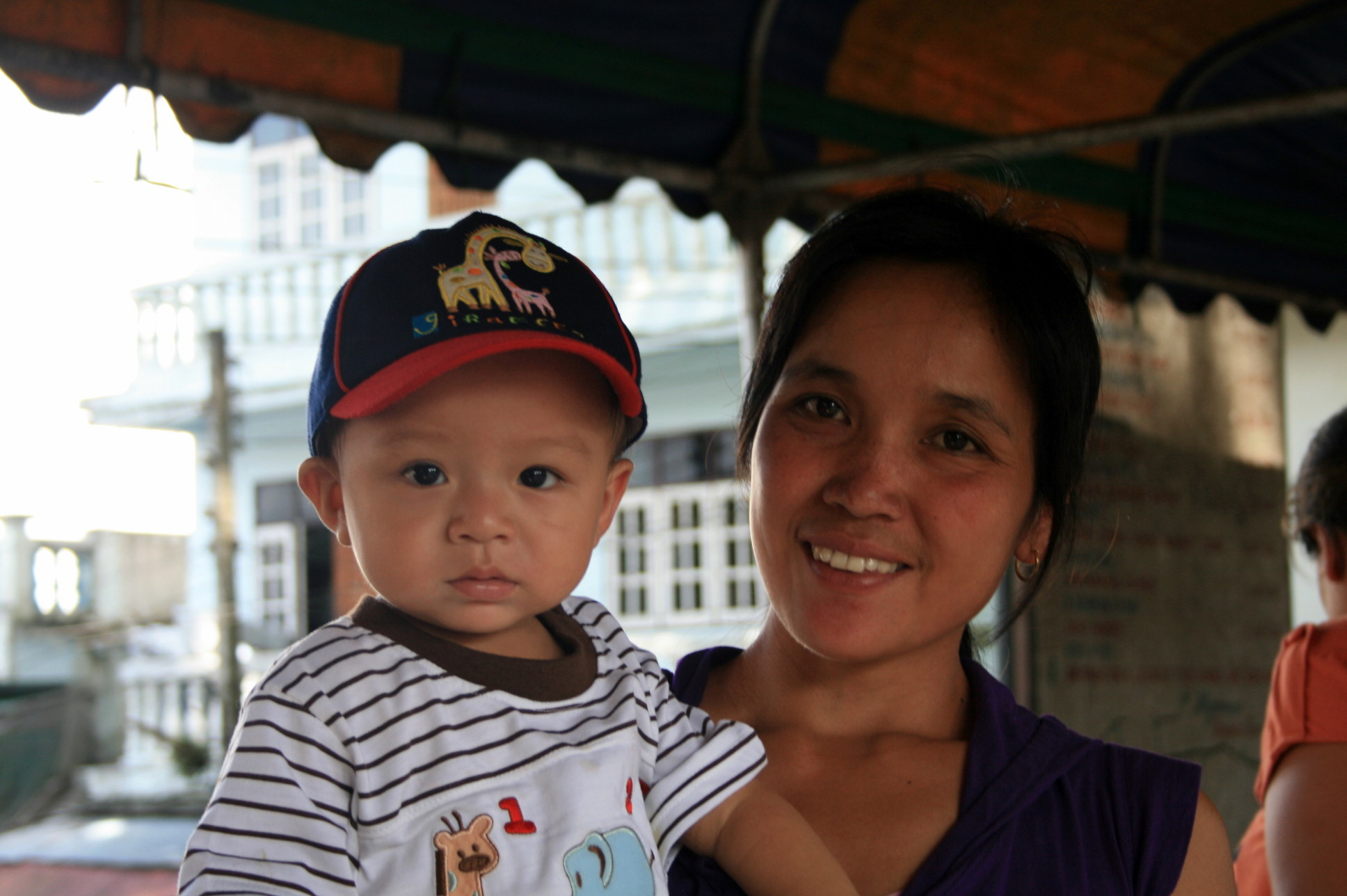
The border crossing is very busy, as it is a major trading point between the two countries. Many Thai people (like this woman and her son) visit the town of Tachileik to shop for bargains at the Chinese market. Thai shopkeepers purchase goods in Tachileik because they can more than double their money back over the border. We bought a small bag of cashews in Myanmar for 30 Baht, and later that day, saw a similar size bag in Thailand for 120 Baht.

Just over the border, is Tachileik, “City of the Golden Triangle”.

The Golden Triangle refers to the three-country border where Thailand, Myanmar and Laos meet, historically known for its thriving trade in opium. The opium trade is much more heavily policed now, especially in Thailand, but where there is a will, there is a way, and this activity still goes on (although is more centred on methamphetamine now).  The border between Thailand and Myanmar doesn’t exactly pose much of an obstacle for smugglers, as the photo below shows.  The poverty of the hill-tribes in both Myanmar and Thailand, the corruption of authorities, and general lawlessness of this border area also support the drug trade.

The river Mae Nam Sai, which forms the border – Burma to the left; Thailand to the right.

Crossing into Myanmar involved a stop at Passport Control, where our passports were removed, and we were issued with a permit that allowed us to visit Myanmar for 14 days.  In reality, this permit doesn’t allow you to travel very far into Myanmar without applying for difficult-to-obtain further permits.  For most travelers to Myanmar, applying for a visa prior to flying into one of the two main cities is the safest and most convenient way to travel.

Tachileik is described as “a seedy frontier smuggling and gambling town” in Lonely Planet, and it really is just that.  As we entered the town, I hung back to take a couple of photographs, while Colin was approached by three men vying with each other to ask, “you want woman?  I can take you to woman?”.  When Colin laughed and said he was with his wife, I received embarrassed smiles, although I only discovered the reason for it later.  Seconds later, an older man struck up a conversation with us, wanting to know if we wanted to gamble or buy alcohol.  We declined his offer, but he seemed like such a nice grandfatherly-type, that I asked him where we could buy a cup of the famous Burmese tea.

Danny took us to a tea-shop nearby which he said he frequented every morning.  He then entertained us with all manner of interesting stories.  Danny is a retired marine engineer, who claimed to have invented the hybrid engine, and romantically, had sacrificed marriage and a family for his first love, philosophy.  He spent several years working illegally in America, which is where he developed his excellent grasp of English.  On attempting to illegally enter the US a second time, he was arrested on the beach where his boat landed, jailed, and sent back to Myanmar.
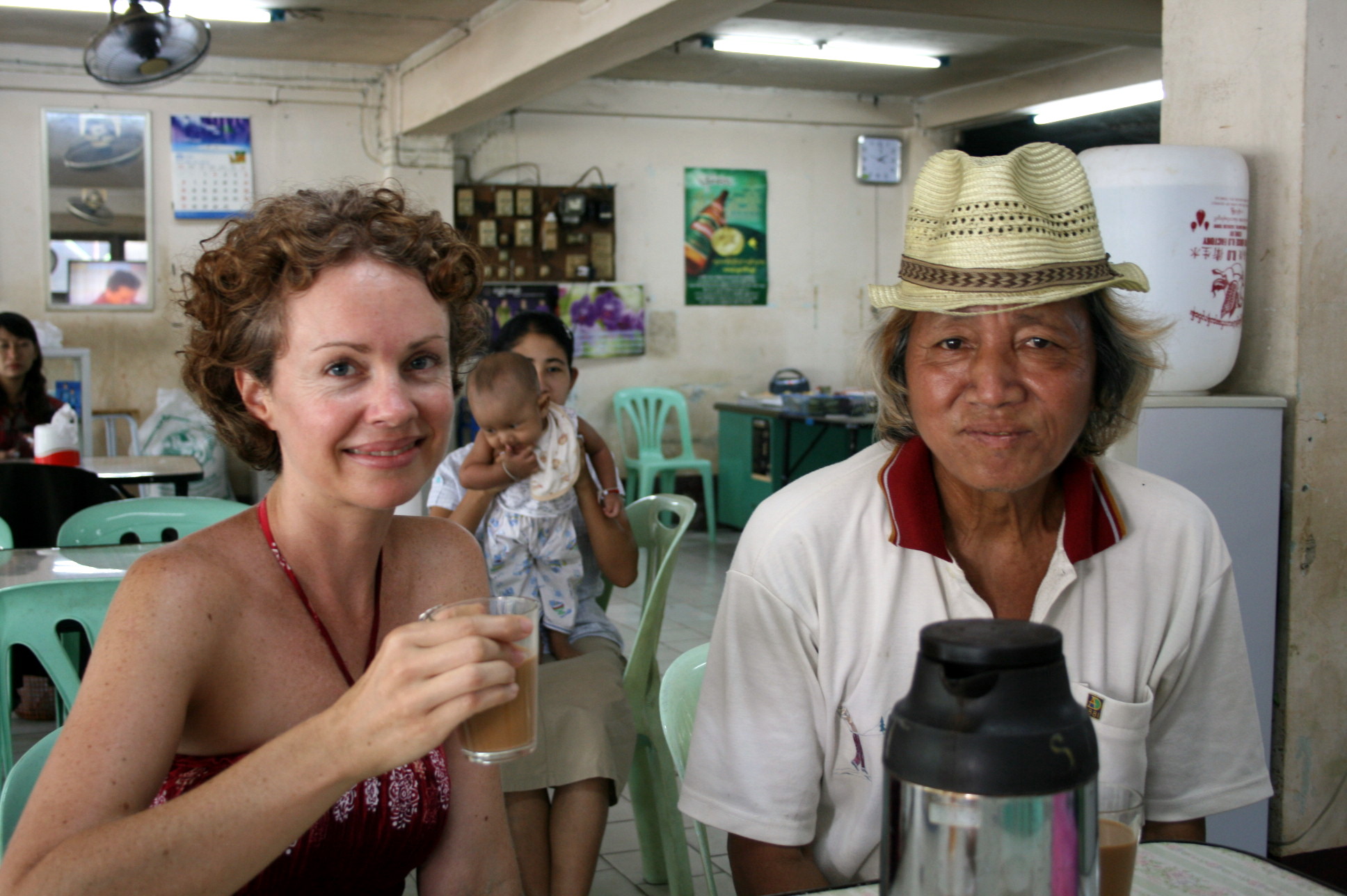
With Danny – a colourful character indeed!  His teeth were pretty colourful too, stained a red-brown from the betel leaves chewed by many people in Myanmar (the leaves are a mild stimulant).

After tea, I agreed to buy a couple of cans of Myanmar beer at a duty free shop (itself the weirdest mix of typical duty-free-glitz set in a background of a dirty, decaying building).  Danny then suggested that I might like to sample some local perfume, which he said was “made without alcohol”.  He took me to a shop and I actually did purchase a small bottle because it smelt lovely, and cost only 27 Baht, just over $1 NZ.  While there, I asked the proprietor if she could give me my change in Myanmar Kyat, as I have saved a small amount of local money from every country we have visited.  The Baht is actually the currency of choice in Tachileik, but I was given a 50,000 Kyat note as a souvenir (equivalent to about 2 Thai Baht, or  less than 10 cents NZ).

After we left Danny with a generous tip, we decided to spend some time looking around the market.  Colin’s “same, same, but different” Prada sunglasses that he had bought for a few dollars in Vang Vieng had collapsed while crossing the border, so he was ripe to be pounced upon by two young men at a sunglasses stall.  While Colin modeled glasses and joked with them, two other men tried to sell me cartons of cigarettes, and then (with a twinkle), Viagra.  This caused a lot of laughter and jokes, with the men highly amused when I pretended to misunderstand, and then to be shy.  They had both “Indian” Viagra, as well as “genuine” Viagra, and even a potion that they claimed was “Lady Viagra”, which depicted a scantily clad vamp on the box.  Colin soon got in on the action, and his animated portrayal of why he didn’t need Viagra caused raucous outbursts (if you know Colin, you get the picture!).
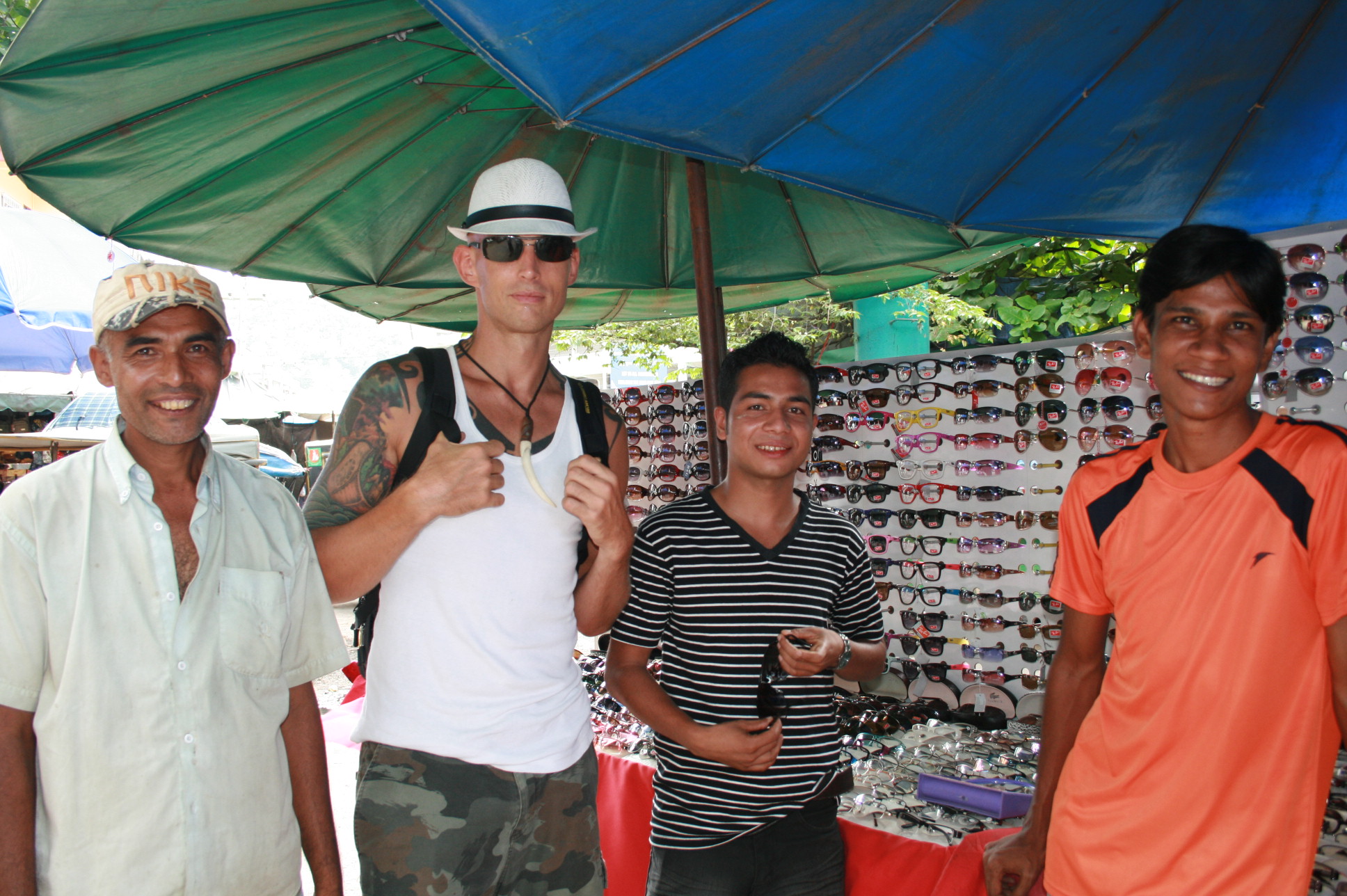
Colin with his new sunglasses. The two young guys ran the sunglasses stall, but the man on the left was just a random who got in on the fun. The cigarette and Viagra sellers declined to be in the picture, claiming (I think) that it was illegal for their wares to be photographed.

After this, the man in the left of the picture showed us around the market.  A bit like Danny, he just somehow became our guide.  He too was full of interesting stories, and had a beautiful smile and gentle manner.  He was also clearly poor, and we knew he would probably ask us for money at some point.  We spent a pleasant hour with him, wandering through the markets in the sun, sampling little potato samosa from a stall (very delicious), and chatting to stall owners.  It was handy having a local guide so we could find out more about the more unusual items for sale, such as dried tiger intestine and deer heart (both used for medicine).

Around 4pm we decided we should head back to Thailand in plenty of time before the border closed (taking into account also, that Myanmar is half an hour ahead of Thailand).  We said goodbye to our guide after giving him some money, which he claimed he needed to bribe an official so he could get into Thailand to work.  In the market we had encountered quite a few beggars, and there were many more as we walked back towards the border – lots of elderly men and women, people with serious physical disabilities, women with young babies, and lots and lots of kids.  We were soon completely cleaned out of coins and small notes, and it was hard saying no to the final few we passed.  Myanmar has one of the least developed economies in the world, and there were far more beggars here than anywhere else we have visited.

At the border, our passports were returned, then we had to pass through Thai immigration again.
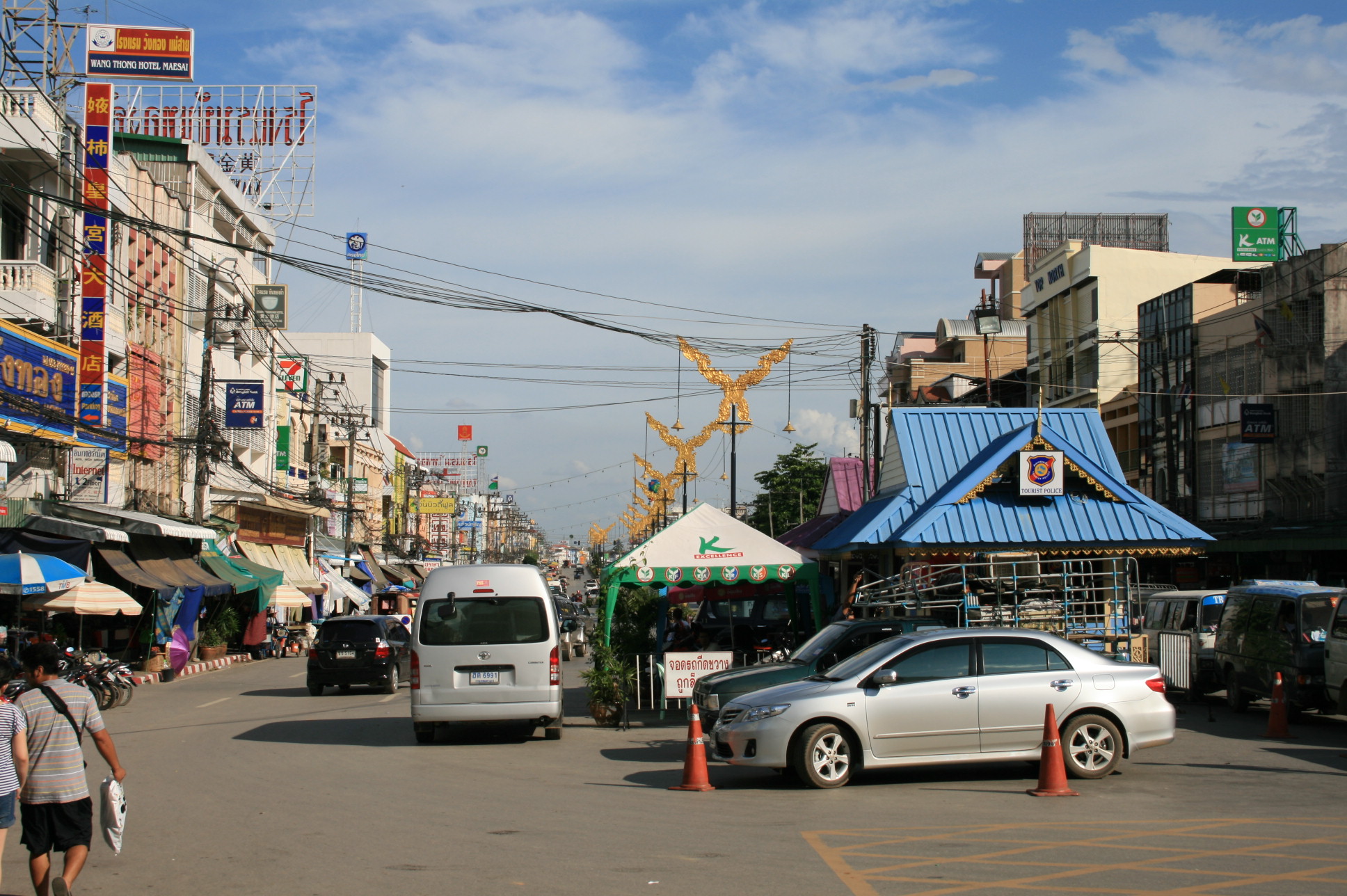
Back in the Thai town of Mae Sai, which was  obviously more affluent than Tachileik.

After wandering through the stalls on the Thai side of the border for a while, we took a tuk-tuk back to our hotel and went in search of dinner. Bed wasn’t too far away, as we were tired from an early start to the day, and several hours walking around in the hot sun (Pai had been much cooler).  Unfortunately, we had a very broken nights sleep due to a loud karaoke bar across the street…

The next day we ate something disgusting that resembled breakfast, then caught a local bus for the 90-minute trip to Chiang Rai.  On route, the bus was stopped twice by armed Thai police, who first searched passengers for illegal items, then the second time, examined their identity cards.  At the second checkpoint, a young Burmese man was removed from the bus.  Colin and I weren’t searched or questioned at either point, which felt unfair.  In fact, the only attention we got was when a woman police officer wanted to have a look at Colin’s tattoos, which she said were “beautiful”.  A bit surreal, given that her Glock was only inches away from us!

As many of you know, Colin and I have seriously considered extending our trip by another month or so.  If we had, we would have gone to Myanmar.  We’ve stuck to our original three-months for several reasons, the main one being that the monsoon will be in full force in Myanmar in June, July and August.  But I’m happy that I got to go to Myanmar after all, even if it was only for a few hours.  It definitely whetted our appetites…
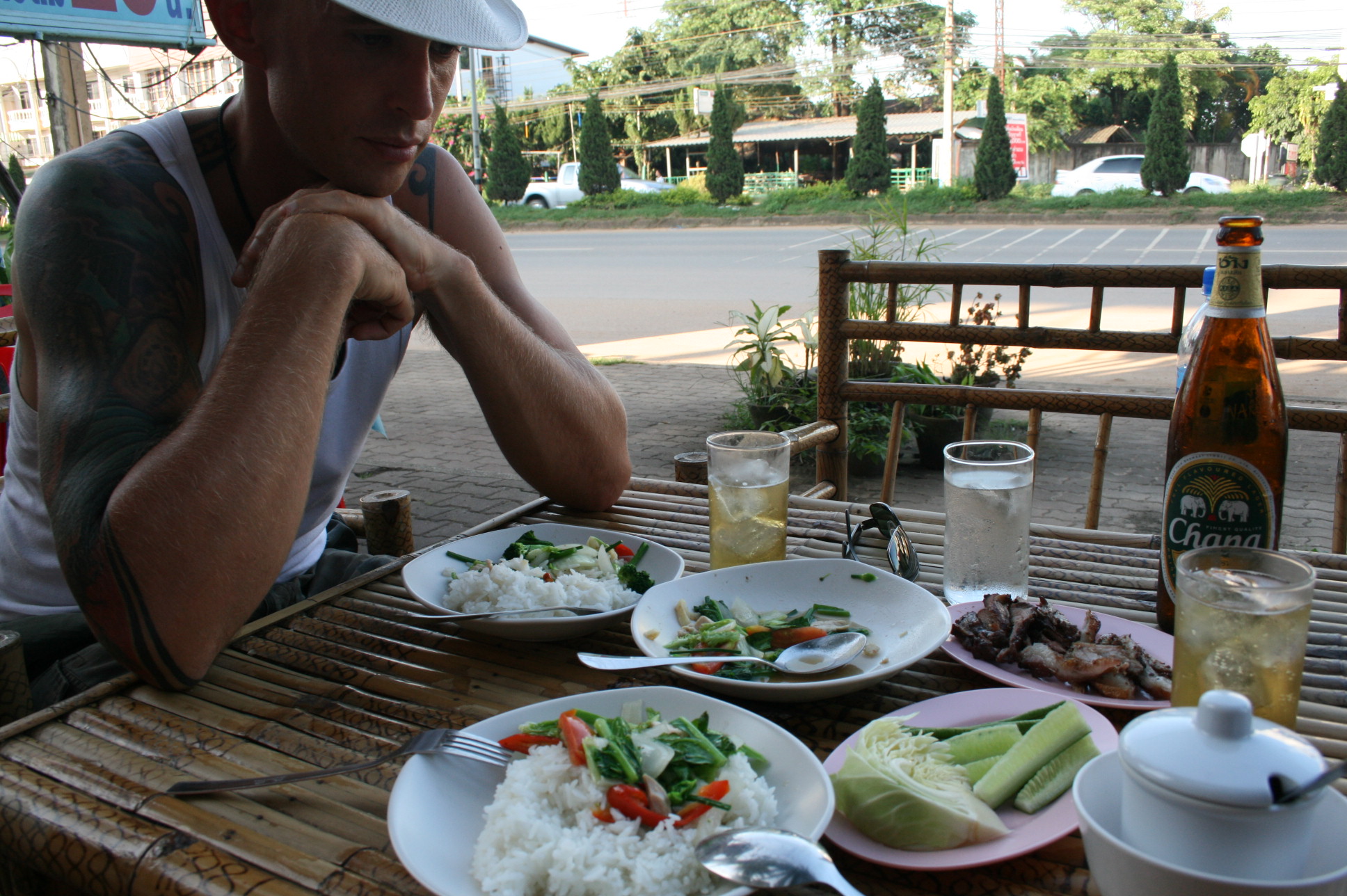
Stir-fried vegetables, a small plate of barbequed pork, rice, and Chang (with ice). Simple, tasty, and swiftly consumed.

comments 3

Guilt-free gluttony

Colin and I love food that is both tasty and nutritious.  Satisfying our taste-buds at the same time as feeling like we are being good to our bodies is the way we like to eat most of the time (i.e. those times when we are not engaged in hedonistic over-indulgence, comfort-eating, nervous twitching, social pressures to be polite or to have adventurous palates, and so on and so forth…etc, etc).

When traveling, it can be quite difficult to maintain a balanced diet.  We usually try to save a bit of money by choosing accommodation that includes breakfast.  Occasionally the breakfasts are outstanding; most are basic, but acceptable; but the worst involve eggs fried to a crisp in copious oil, white bread halfheartedly toasted, and instant coffee served with powdered “Coffee Mate”, which does not contain any dairy products, being comprised of 61% glucose syrup, 34% vegetable oil, and “nature identical flavour”.  It’s also difficult to eat well when we are on the move.  The food on offer at bus-stops or on boats often revolves around packaged, processed food, or fried rice and noodles from a dodgy-looking kitchen.  We’ve taken to bringing along our own snacks on the road, but one cannot live on roasted peanuts alone – well not for too long, anyway.

The meals where we have more choice about what to ingest have gone a long way towards balancing out such stodge, but we were still very excited to get to Pai and see brown rice on the menu of nearly every restaurant.  God bless the hippies!!!  (If only they could rule the world, McDonalds might not exist.  But then I suppose that leather shoes would be unavailable and work and school would be optional.  Actually, I could live with that.)  Tofu, falafel, salad, and vegetable juice are everywhere to be had in Pai, and for a week, our hearts, minds and stomachs (not to mention, our colons) basked in wholesome and tasty fare.

Phad Krathiem Prik-Thai, or stir-fried tofu and vegetables with fried garlic. The garlic is actually pre-fried to an intense crisp and sprinkled over the vegetables at the end. This was the first dish I ate in Pai, and I had it 4 times in total, relishing the simple flavours and chewy rice. It also cost only 30 baht, which is about $1.25 NZ, so I could order a beer too.  (Wait, does beer cancel out the brown rice?)

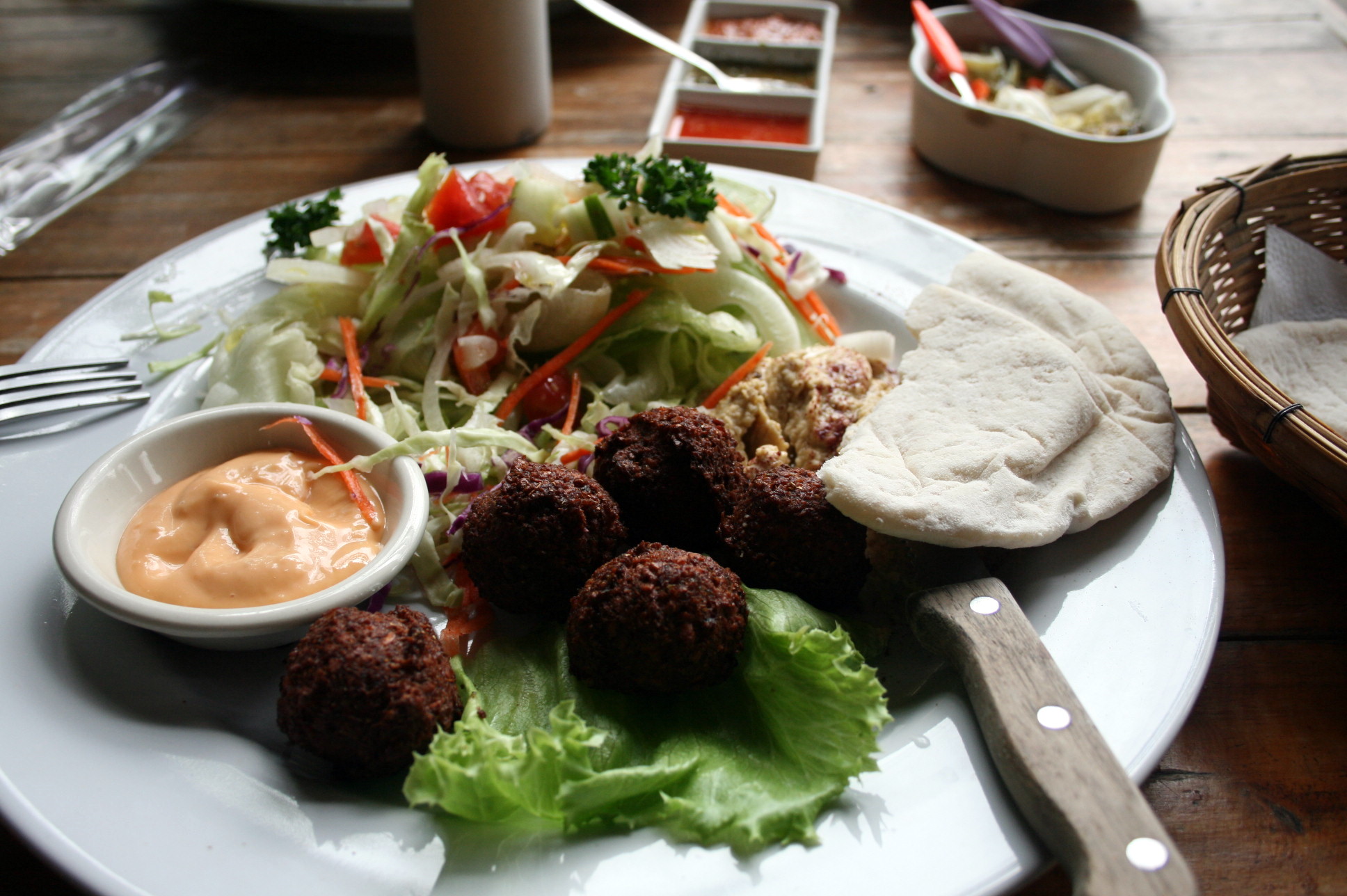
Falafel plate – really, really good falafel, with warm pita, gorgeous hummus drizzled with olive oil and sumac and mixed salad. On the side were provided yoghurt and mint sauce for drizzling, and a variety of pickled vegetables – eggplant, capsicum, cabbage and mild chilli.

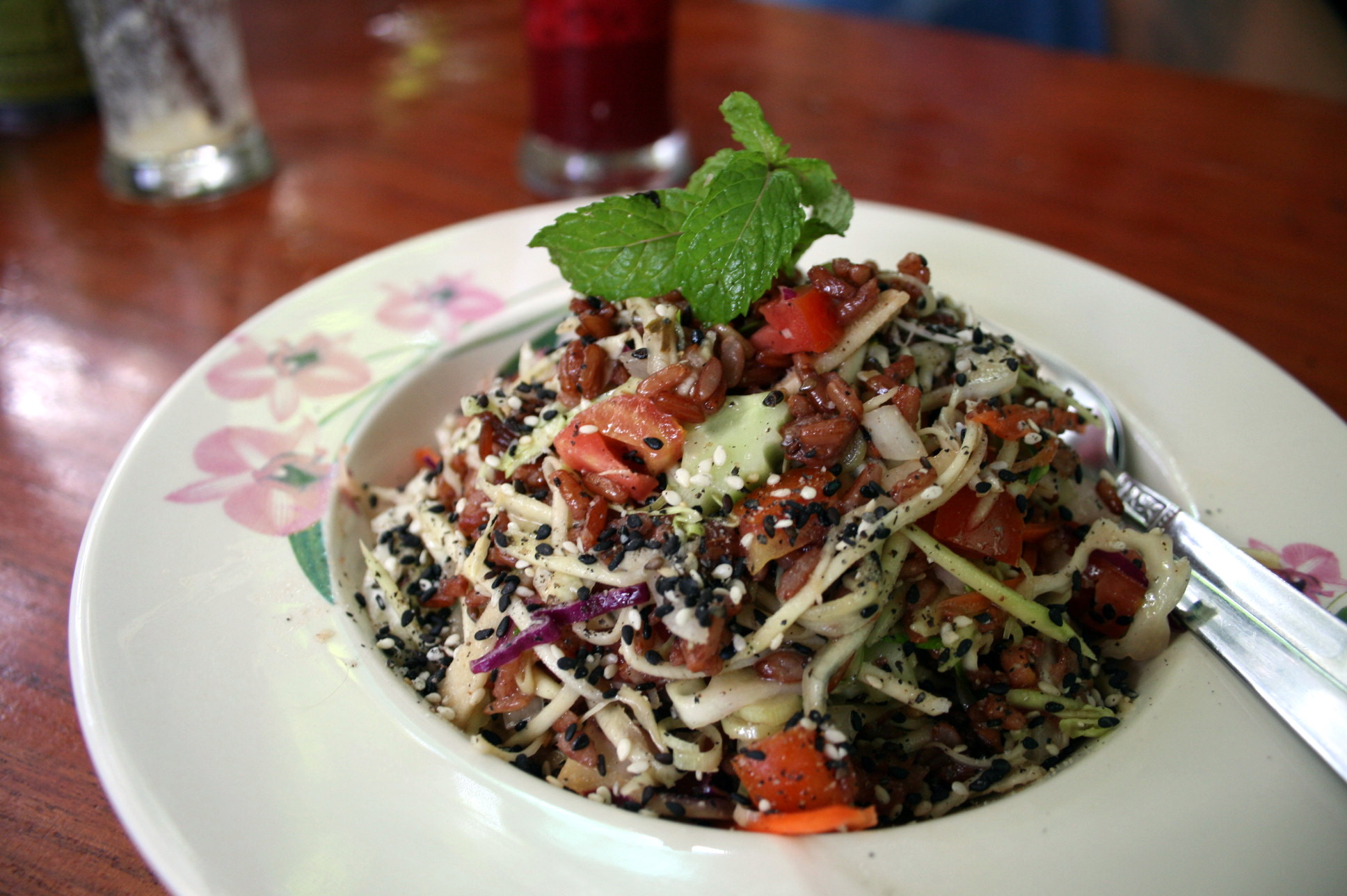
Rice and vegetable salad, eaten while surrounded by a forest of wheatgrass in various stages of growth (no, I didn’t try a wheatgrass shot – the small rat we saw sniffing around the trays put me off). The salad has a base of brown rice and shredded green papaya. A variety of sliced vegetables were added (cucumber, tomato), and herbs (mint, coriander).  The total was tossed in a very gingery and lemon-grassy dressing, and sprinkled with black and white sesame seeds.  Consumed with mango lassi and a beetroot and apple juice.

Phad Hau-Pee, or “Boiled and Fried Banana Flower with Vegetables”. I have eaten banana flower several times in Asia. It’s usually finely sliced and used in salads, where it is almost flavourless, but adds a pleasing fiborous, crunchy texture, not unlike the soft part of a lemon grass stem. This dish, a local speciality of Pai, tansformed banana flower into a vegetable that resembled button mushrooms – in colour, as well as texture and flavour. This formed a nice, chewy contrast to the other crunchy vegetables in the stir-fry.

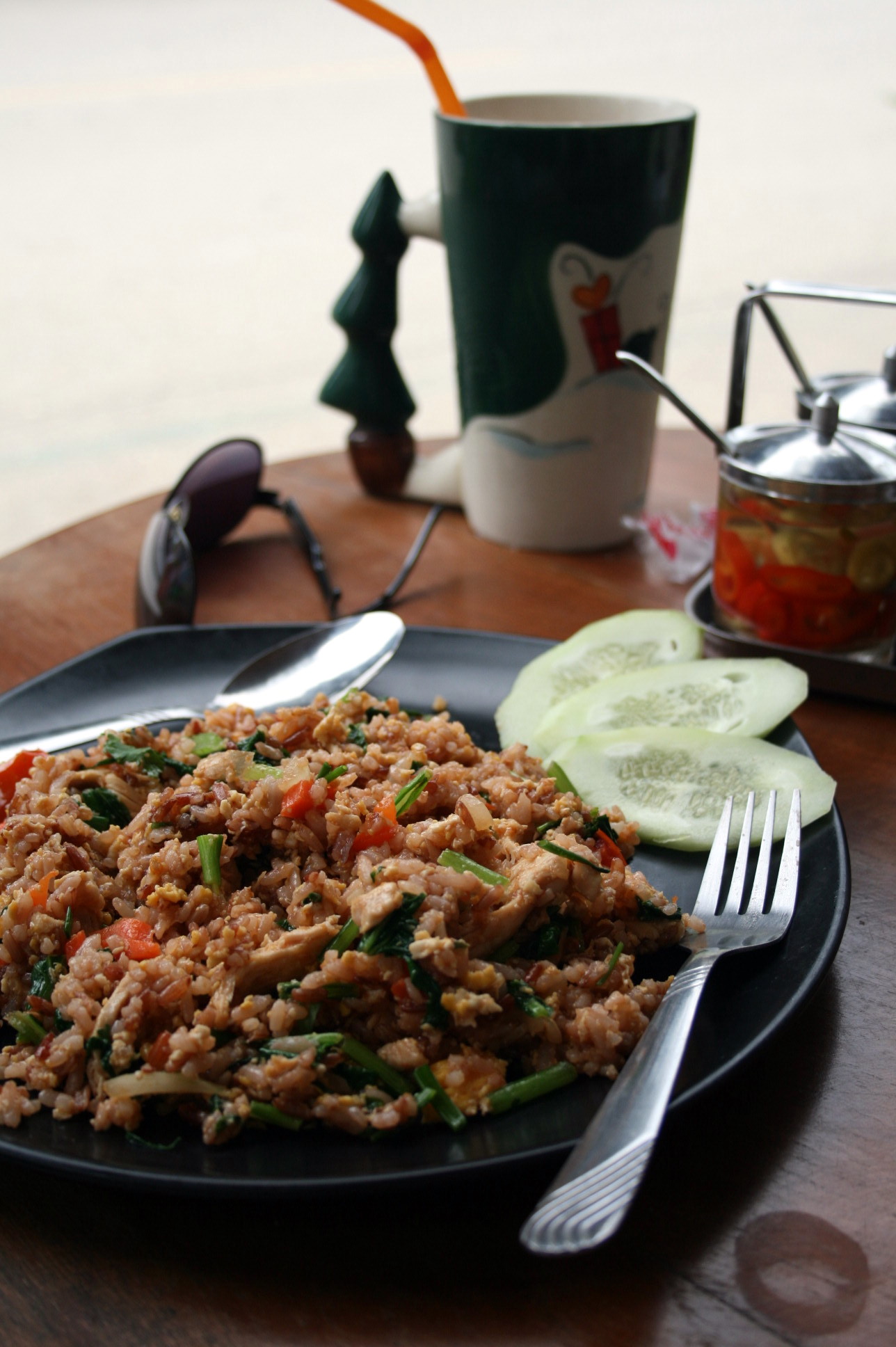
Khao Pad Mou – fried rice with chicken and vegetables. Yes, more brown rice, this time enhanced with a bit of frying and the addition of, well, chicken and vegetables. Nutritious food and psychological comfort in each bite 🙂

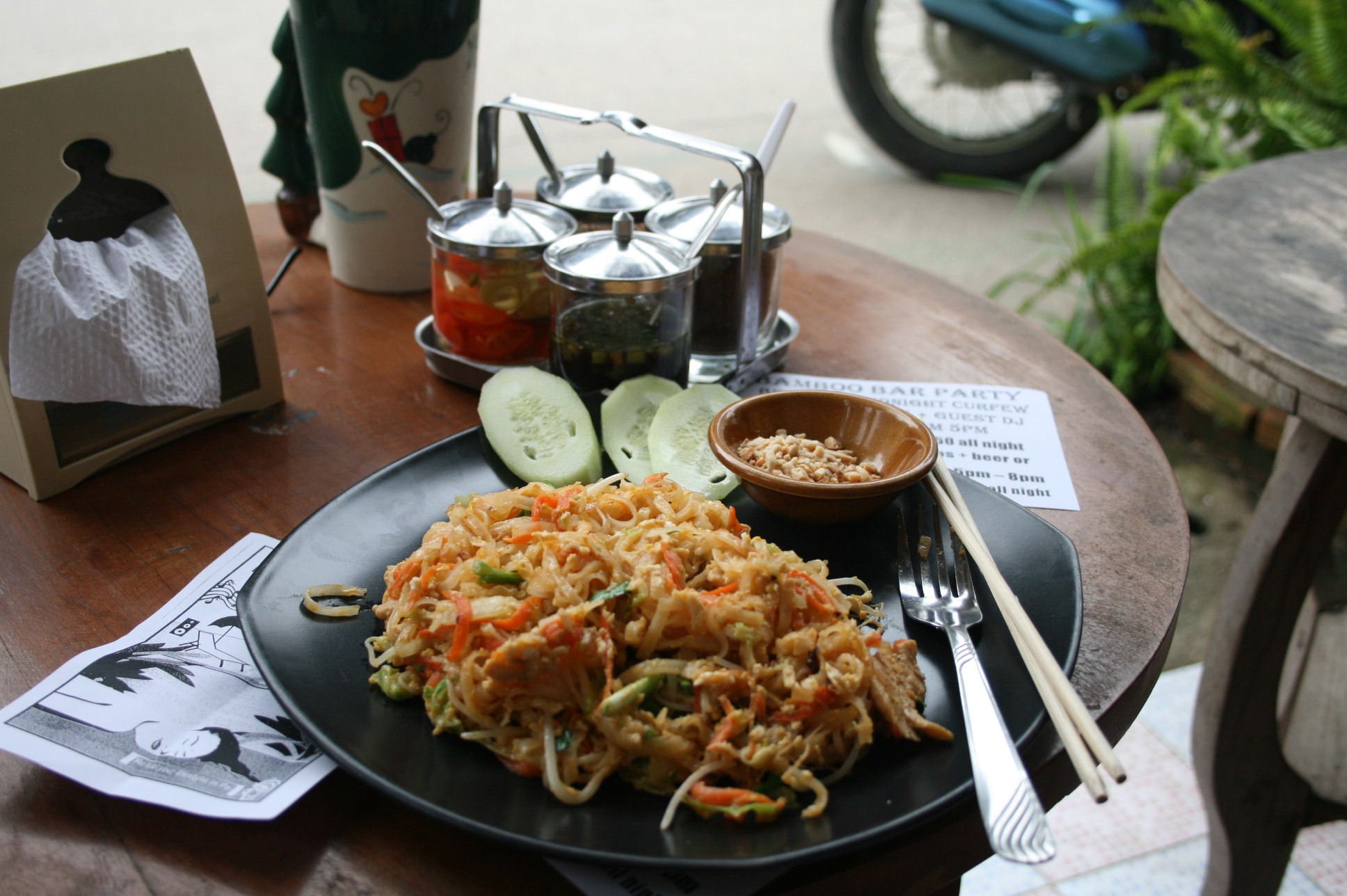
Vegetarian Phad Thai – ok, Phad Thai is a bit cliche in terms of Thai food, but there is a reason for this. I just love the soft rice noodles, crunchy bean sprouts, slivers of eggs, and the topping of crunchy crushed peanuts and lime. Usually there is chilli too, but not in this version. I added some chilli to mine from the innocent little jars behind the plate. I first thought they were quite mild, and added some more, not realising that it had a delayed effect…fire, pain and sweat followed, and I now have more respect for Thai chilli.

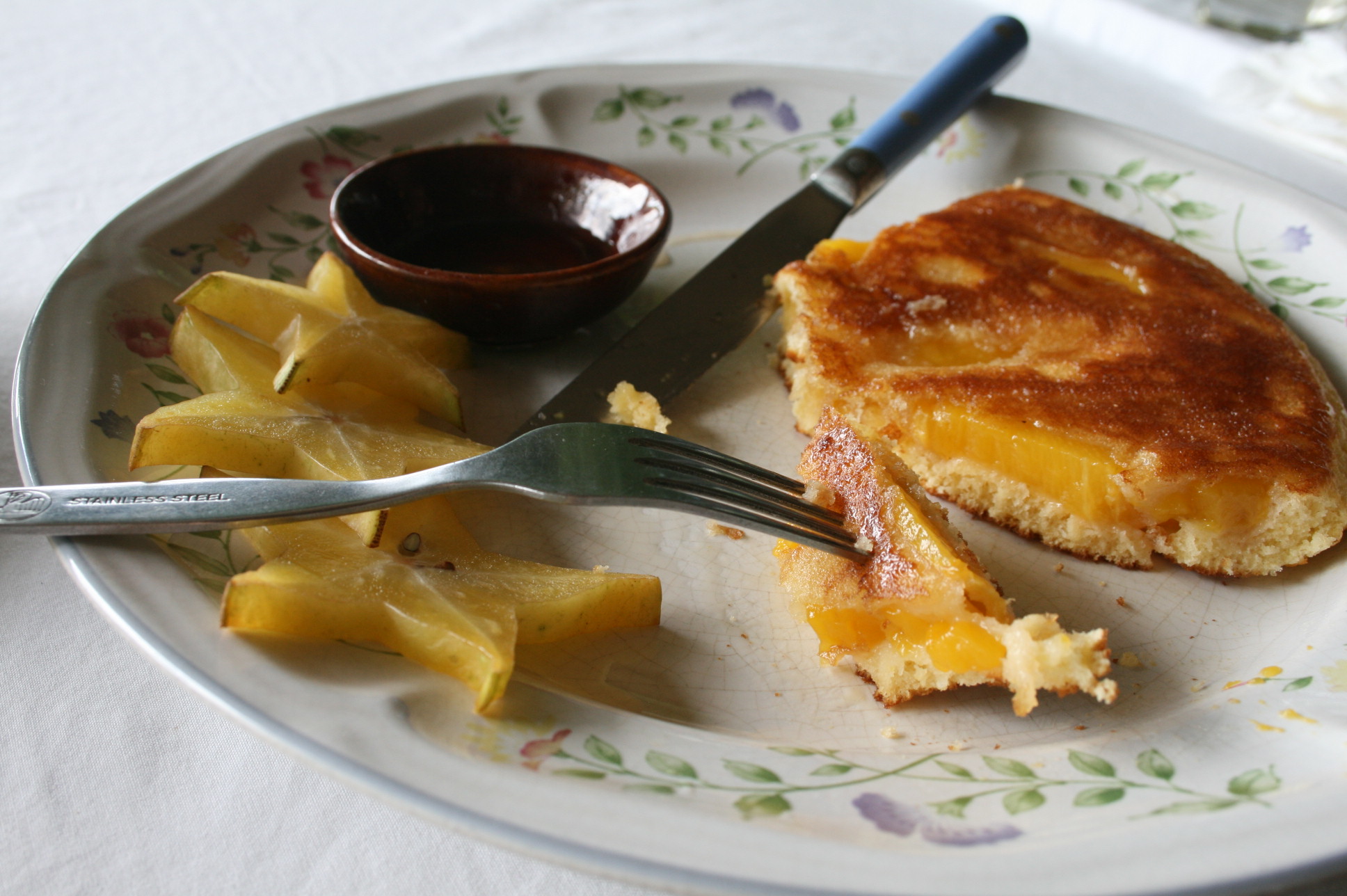
Even hippies like treats, so our Pai kai also consisted of this delightful mango pancake from the kitchen at our hotel. Soft, ripe, sweet mango, fluffy pancake, drizzled with mild runny honey that was sucked up by the hot pancake…it was a beautiful, beautiful thing. Fortunately, Colin had ordered a banana and chocolate pancake at the same time so I got to eat 80% of this one. Divine. We had one again the next day (shared with impressive civility, I must say).

Can you just make out the small glass in the lower left-hand of this photo? In it is the nicest mojito I have ever tasted. It was made with plenty of sour lime juice and crushed mint, but the best part was the sugar that was added – raw, brown sugar that didn’t fully melt, so that one or two crystals of crunchy caramel made it into each mouthful.  The photo also shows Colin just about to be thrashed….

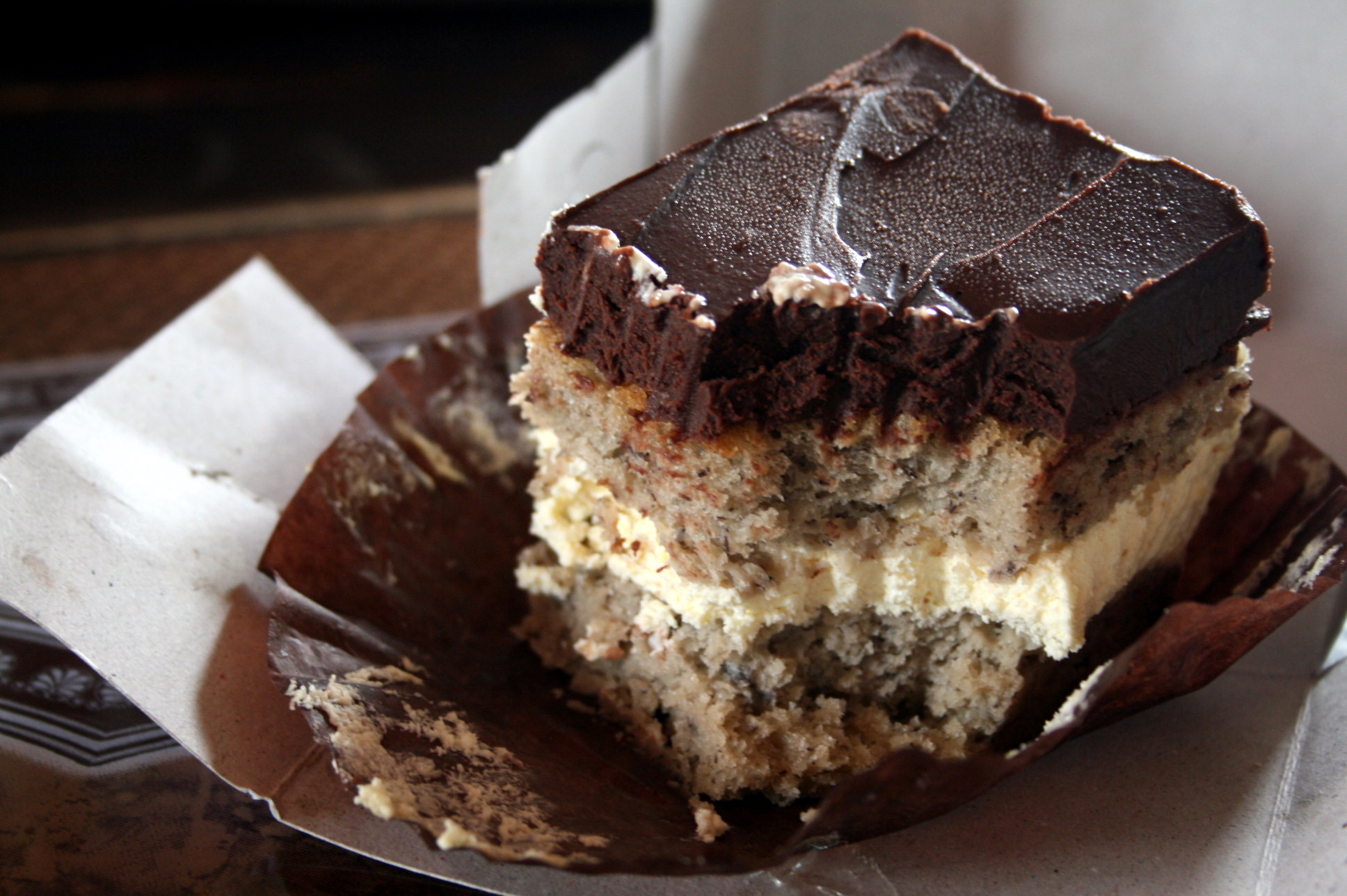
Still on the “all in moderation including moderation” buzz, this is another Pai specialty that made my knees weaken and Colin’s lip tremble (as I insisted that he save me the last two bites). It’s a dense banana cake topped with a thick coat of rich, smooth ganache, and sandwiched with a cream cheese filling.  It’s the slight sourness of the cream cheese that elevates all this richness and sweetness into Perfection. The cake is from the Muslim Bakery, one of the flashest eateries in town. The bakery is festooned with garish baskets of fake flowers and hanging grapes, but the goodies on offer are more than able to hold their own.

comments 6

Peace, love, and Pai

The day we arrived in Thailand we took a mini-bus to Chiang Mai, five hours from the border crossing at Chiang Khong.  We were excited to go to Chiang Mai, a city much-loved by Western tourists, and known for it’s food, shopping and trekking.  However, as we approached the city, we felt distinctly underwhelmed by the sight of traffic, highways and buildings.  This feeling only intensified, and conversations with our mini-bus-mates revealed that we were all experiencing a dose of culture-shock to be in a city again after the green and silent expanses of Laos.

Rationalising that we needed to give the city a chance to reveal its charms, we spent the next two days walking the streets and sampling the offerings at a few eateries.  Maybe it was just us and our state of mind, but we could not get excited about Chiang Mai.  The tourist attractions seemed cheesy, we didn’t find any food that was particularly good, and we heard that many of the treks on offer were badly organised and seemed to exploit the hill-tribe communities.  In the two days we were there I didn’t take one photograph, which for this snap-happy girl was a clear indication that something was amiss.  We decided to abandon Chiang Mai in favour of Pai, a small town in the hills north-west of Chiang Mai, only three hours away.

Pai is basically a little hippie town filled with beards, dreadlocks and tattoos, and that’s just the local Thai residents.  Everyone here, tourists and locals alike, is a little bit ting-tong (local slang for “crazy”), which makes for a great deal of colour and humour.  The locals are really funny and friendly: street vendors demand that Colin removes his shirt so they can see his tattoos, bar owners join you for a drink and encourage you to come back for open-mic-night, hotel staff beg you to eat their mango pancakes, and dogs curl up for a nap right in the middle of the quiet streets.

Peace, love and tofu abound in Pai.  We stayed here for seven nights, hanging out, making friends, eating well (more on this in the next post), and listening to live music in little candle-lit bars most nights.  Colin found a kickboxing school, and I took several yoga classes with a 66-year-old Thai woman with an impressive Bridge, red hair down to her bum, a studio with a seriously wonky floor, and two vegetarian dogs.  These classes, and a couple of forceful massages from the indomitable Mamalon (“Soft is No Good!!!”), have helped to get rid of my little traveling kinks.  Hopefully I am now well fortified, because we still have to face Bangkok in just a few days time…

Typical street view. Pai is full of funky little cafes, shops and restaurants.

Pai: Oh My, totally the right choice. This is the view from the balcony of our bungalow on our first morning.

Who knew that petrol stations could be so cute?!  This mini station is self-serve, and caters to the many motorbike- and scooter-riders in Pai.  Many tourists hire scooters here, because they’re cheap and you don’t need a license.  It’s really easy to spot the tourists with no riding experience – they’re the ones wobbling around the corners at 3km/hour.

Pai is full of little bars that frequently have live acoustic music in the evenings. Nothing like a bit of softly re-interpreted Janis Joplin delivered by a Funky Miss to give you that warm, fuzzy, glad-to-be-alive feeling.

At another of the many small bars dotted round town, listening to a blues band and sipping a red wine as the rain softly dripped around us.

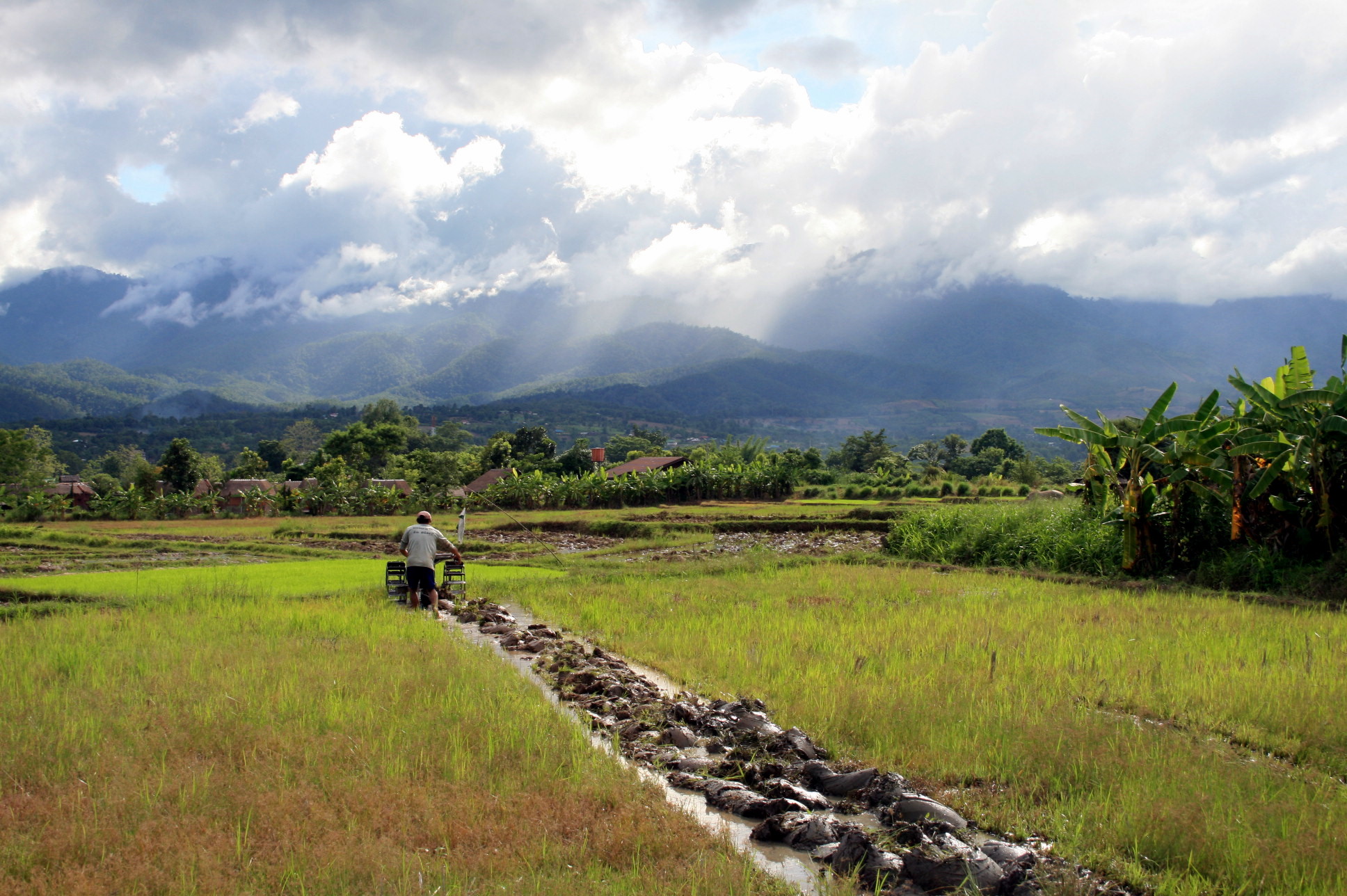
Rice paddies surrounding Colin’s kickboxing gym.  I’m not sure how he was able to concentrate on his technique in the presence of this view.

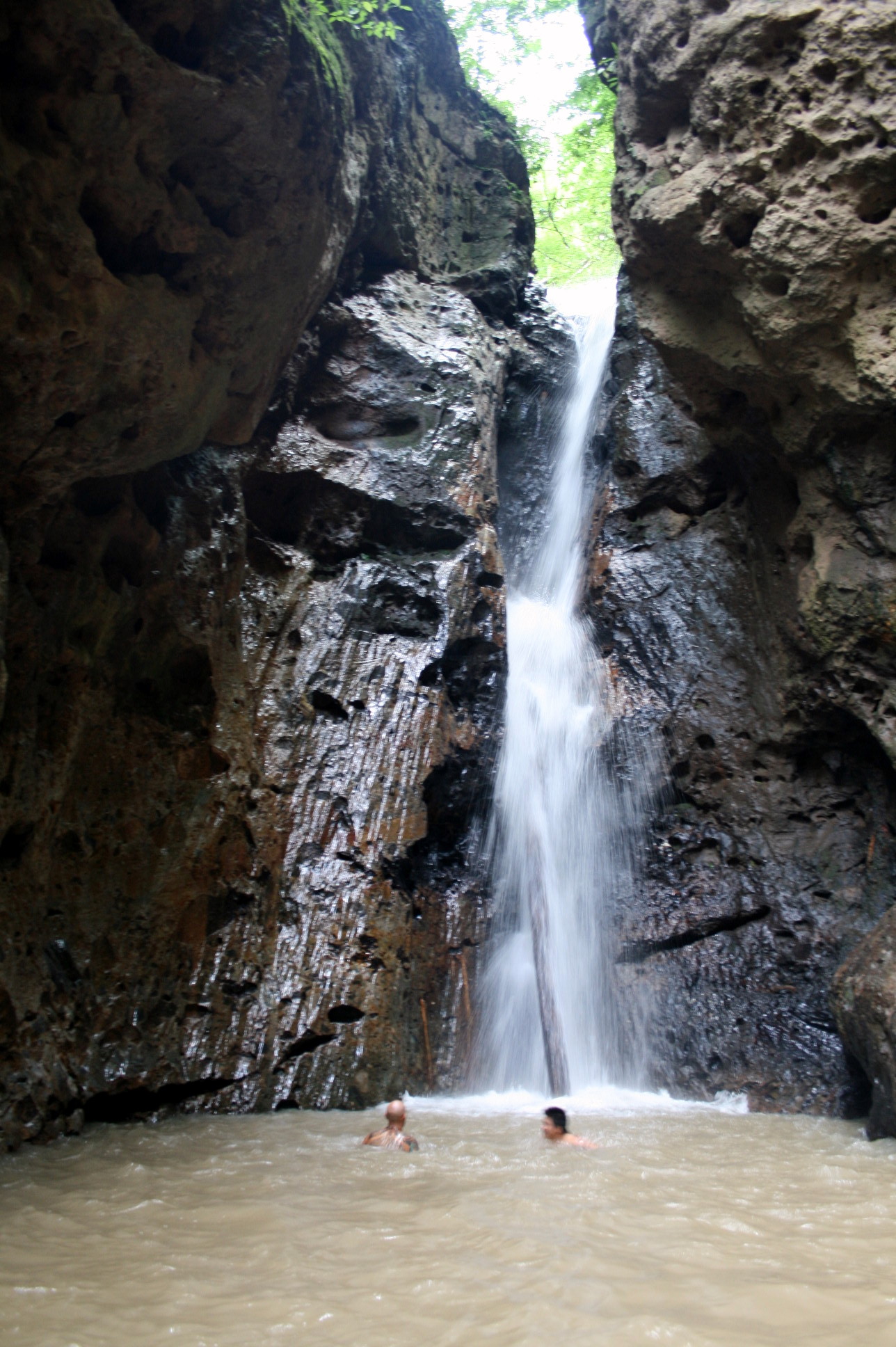
Colin’s kickboxing instructor invited us to join him on a motorbike ride out to see some of the waterfalls in the surrounding area.  The temperature is starting to fall a little now, and we can easily cope with a fan only in our room at night.  But the days can still be very hot at times, and it was lovely to cool off at this waterfall.

Another waterfall further out of town. 

With the lovely Annika, who we first met on the bus to Pai.

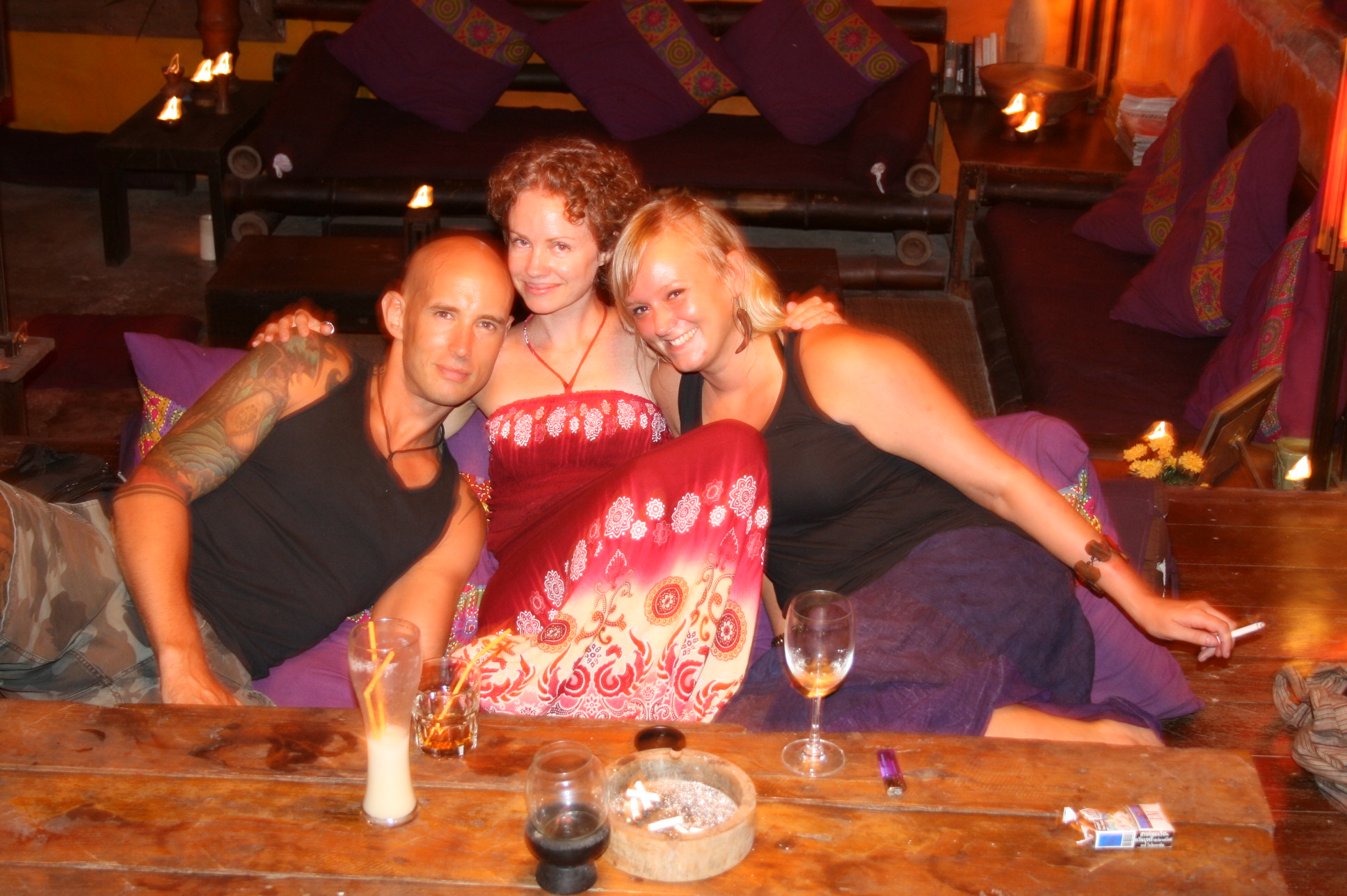
Pose-off with Camilla and Annika, amidst ruminations on growing old gracefully.

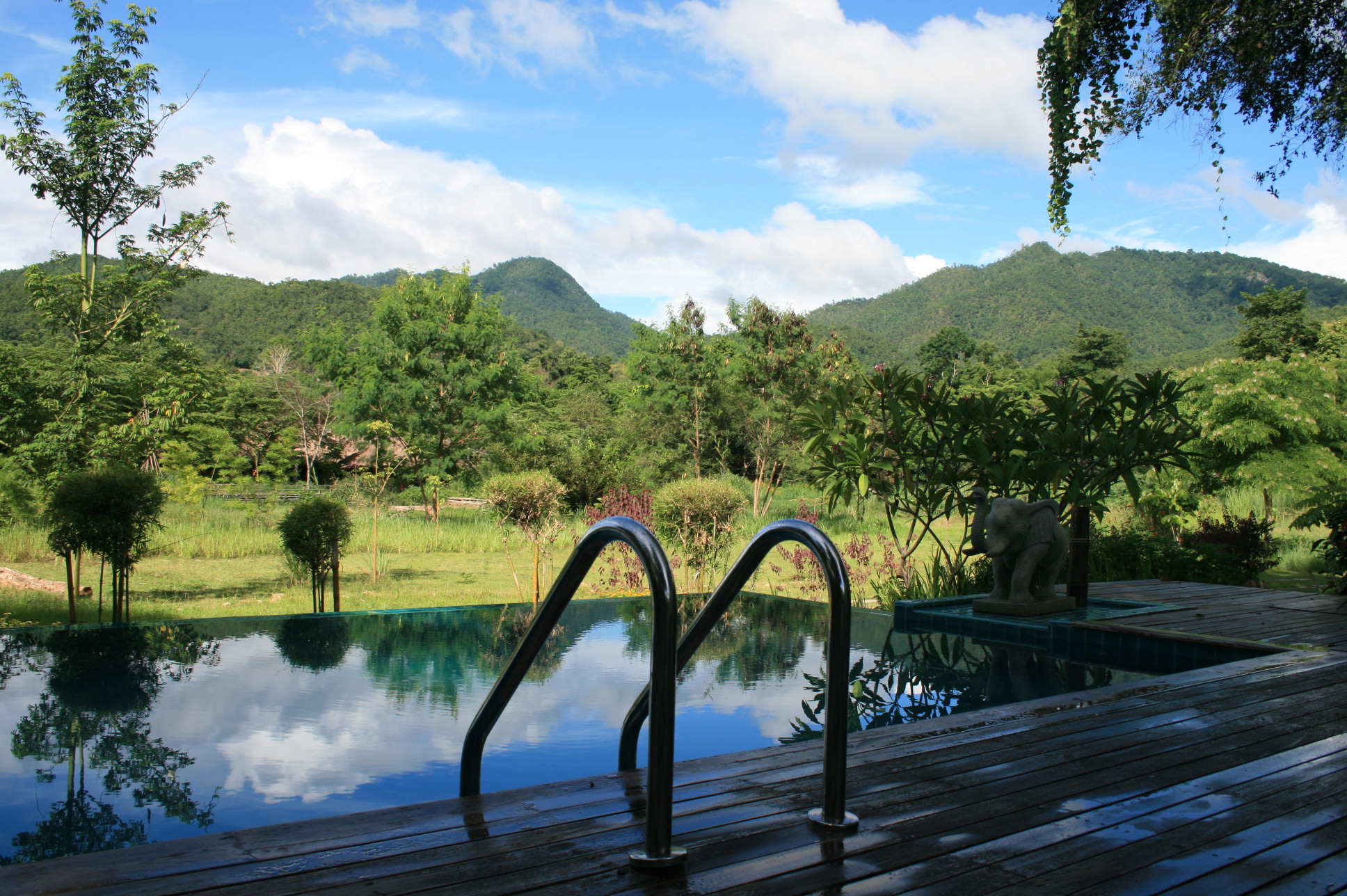
The blissful little salt-water pool at our hotel.

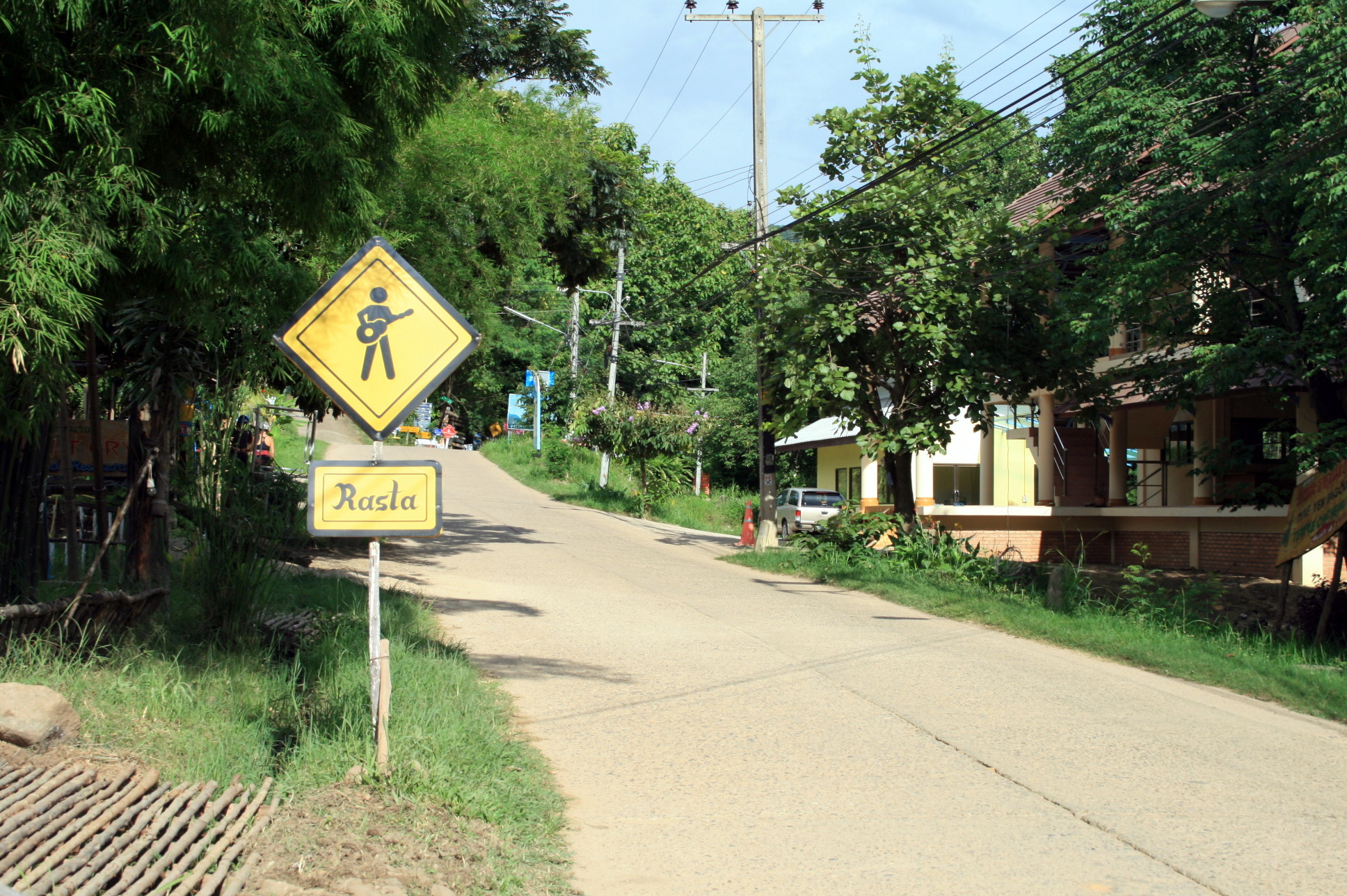
Reggae bar ahead.

comments 2

Final images: Laos

Just because I still miss Laos, here are a few final memories that didn’t make it into any of the earlier posts.

Wat Si Saket in Vientiane. This temple contains over two thousand small Buddha (abouttwo inches tall) in hundreds of niches in the walls. Around 300 larger Buddha statues are seated in front. They are made from a variety of materials, and are fashioned in surprisingly diverse styles.

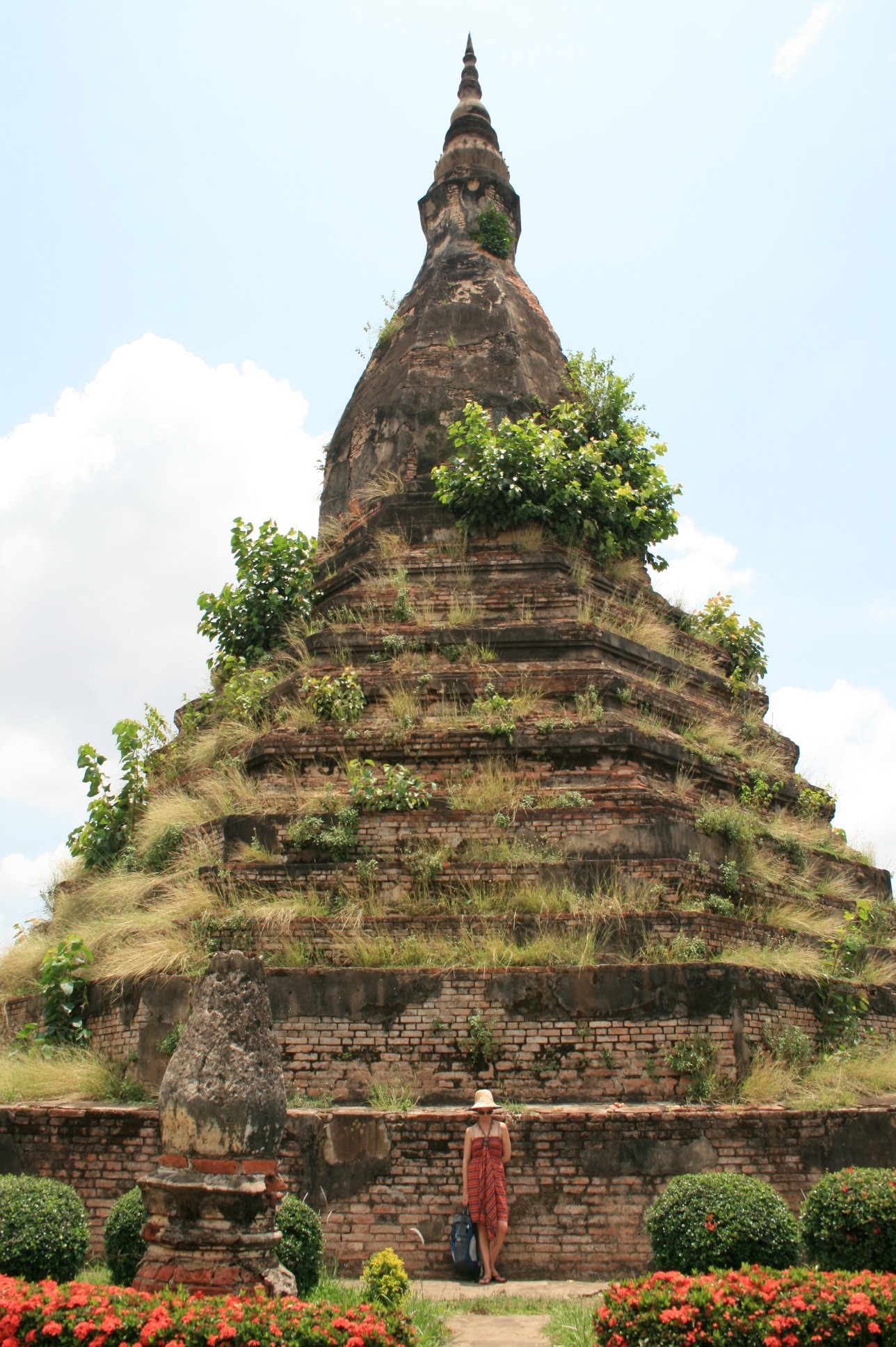
Old stupa, now the centre of a roundabout in Vientiane

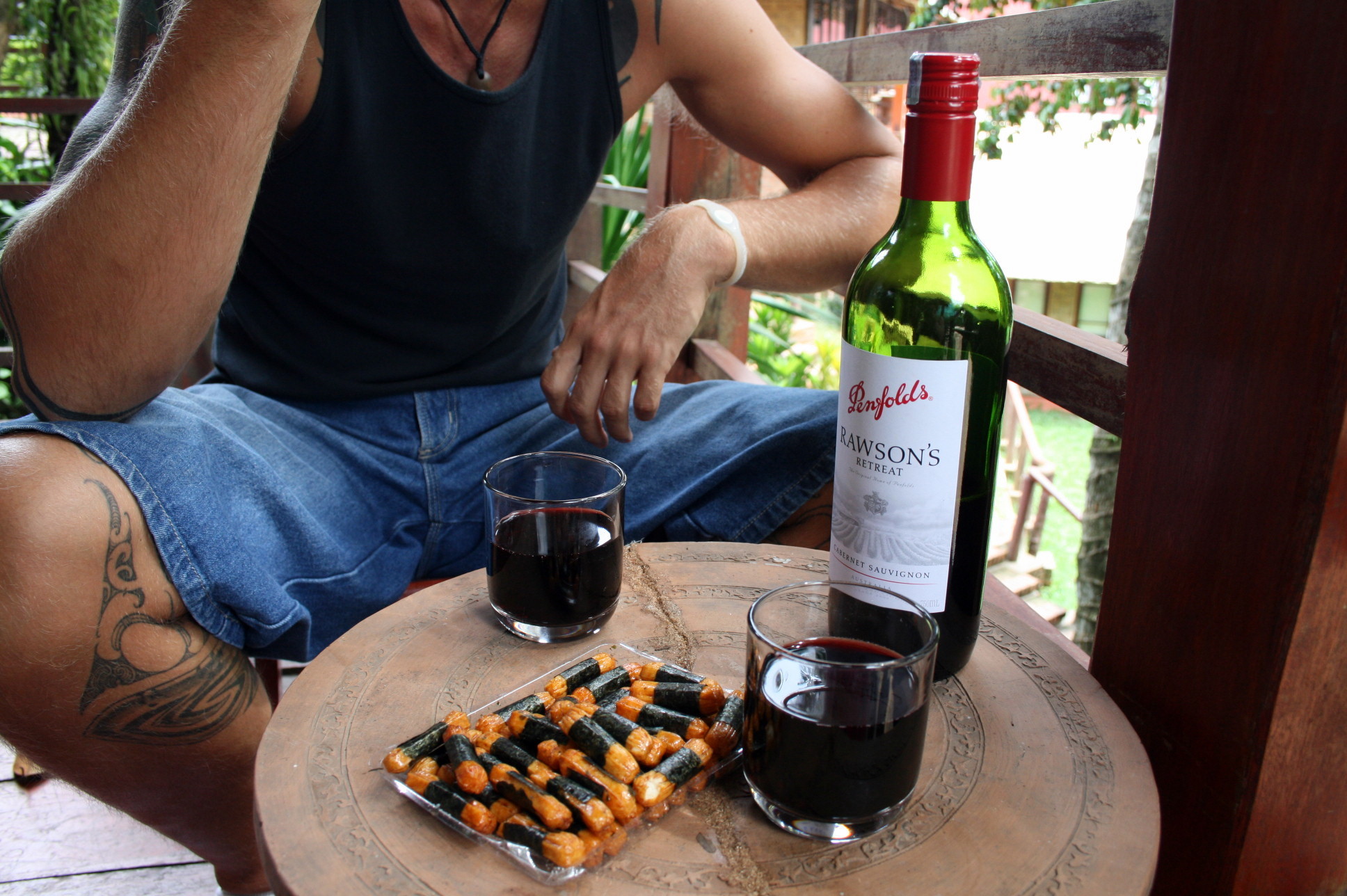
Celebrating our arrival in Vang Vieng – Japanese crackers and a tasty cabernet sauvignon, purchased at Vientiane airport (and strangely, not consumed on the spot, but saved for a special occasion.  And yes, the end of a bus-trip in Laos is most definitely a special occasion).

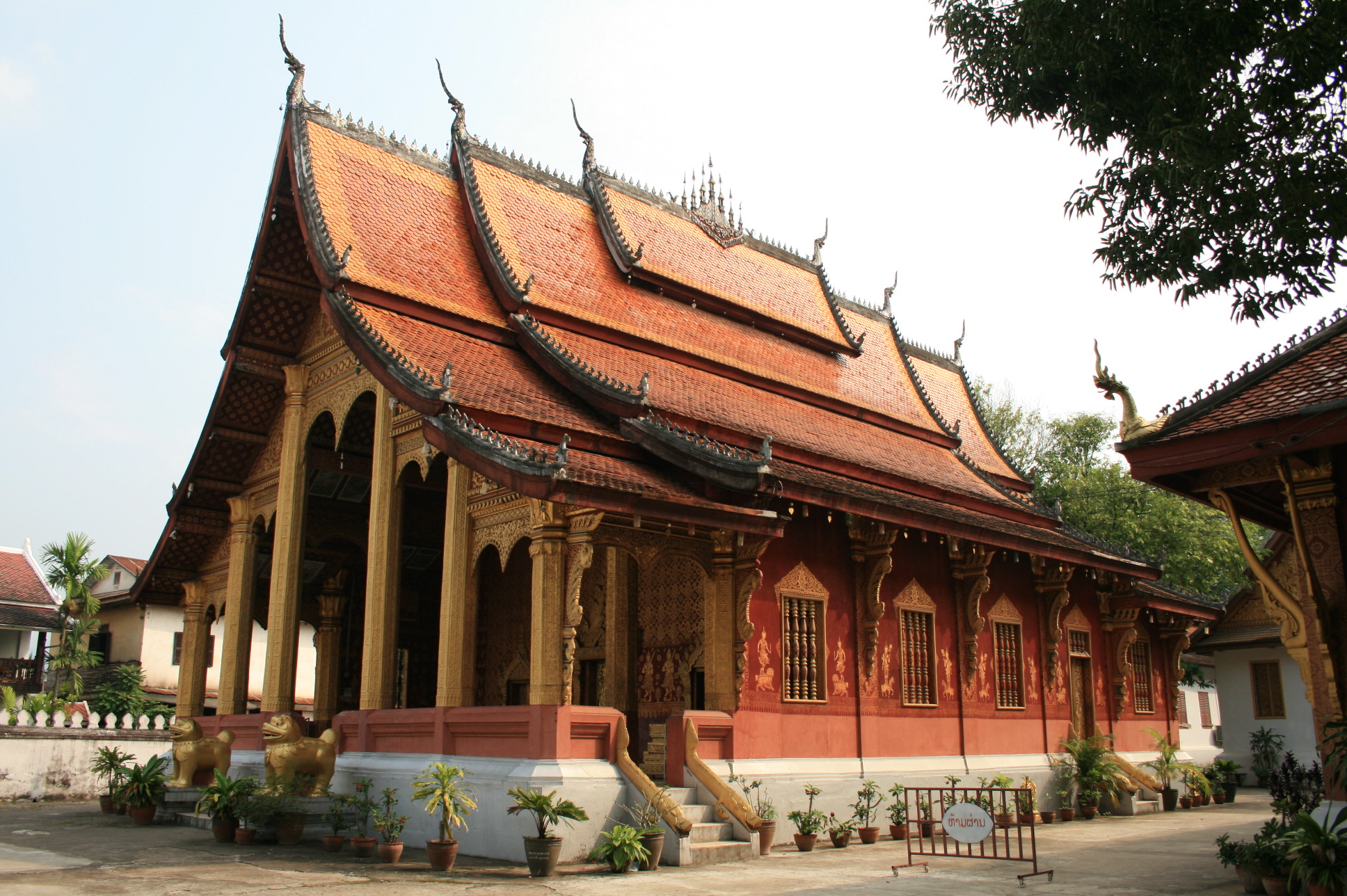
Temples are everywhere in Laos, and especially so in Luang Prabang, which has 34. This temple has fairly typical architecture in terms of the shape of the roof and the decorative lattices.

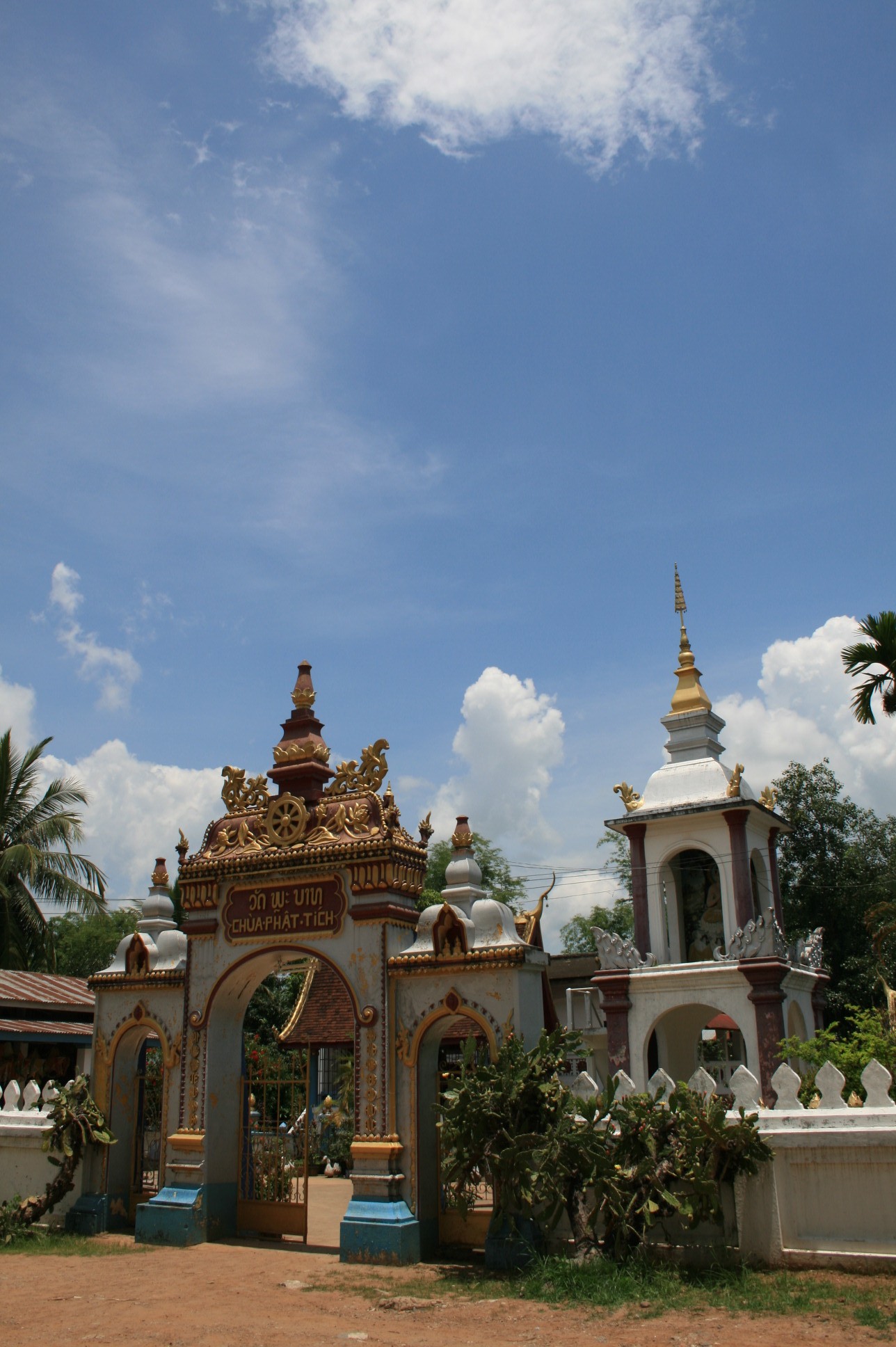
Wat Chu Phat, on the outskirts of Luang Prabang.  This is just the gateway into the temple grounds, but it shows quite a different style of temple than most others we had seen.

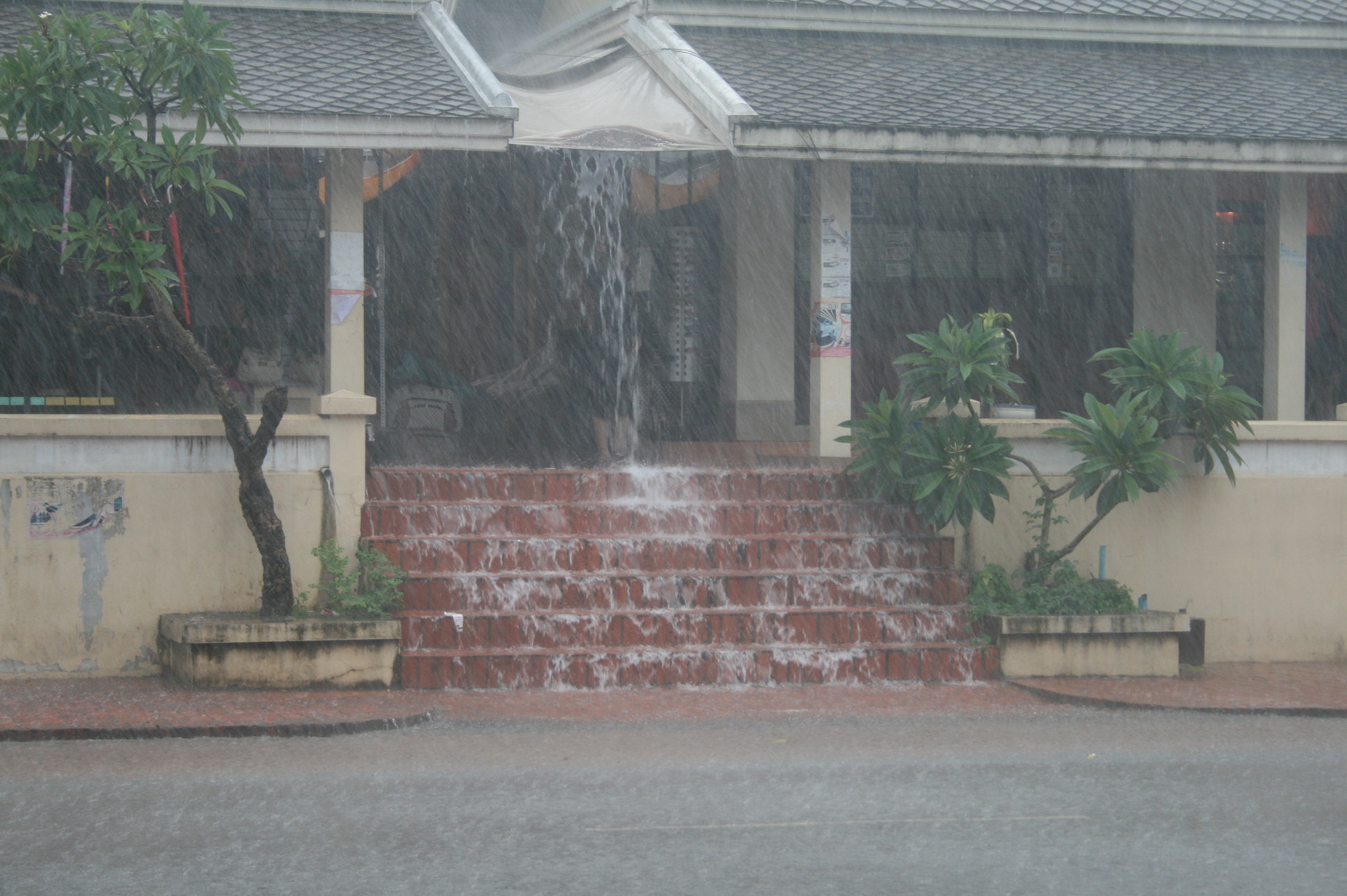
Oh, so this is what is meant by monsoon season?  At the time I took this photo, we were sheltering in a shop front after having been soaked to the skin in 2 minutes flat while riding our bicycles.  As the storm approached us, I had boldly claimed that “a bit of rain won’t bother me”, but this was before the streets started to become rivers, and steps waterfalls.

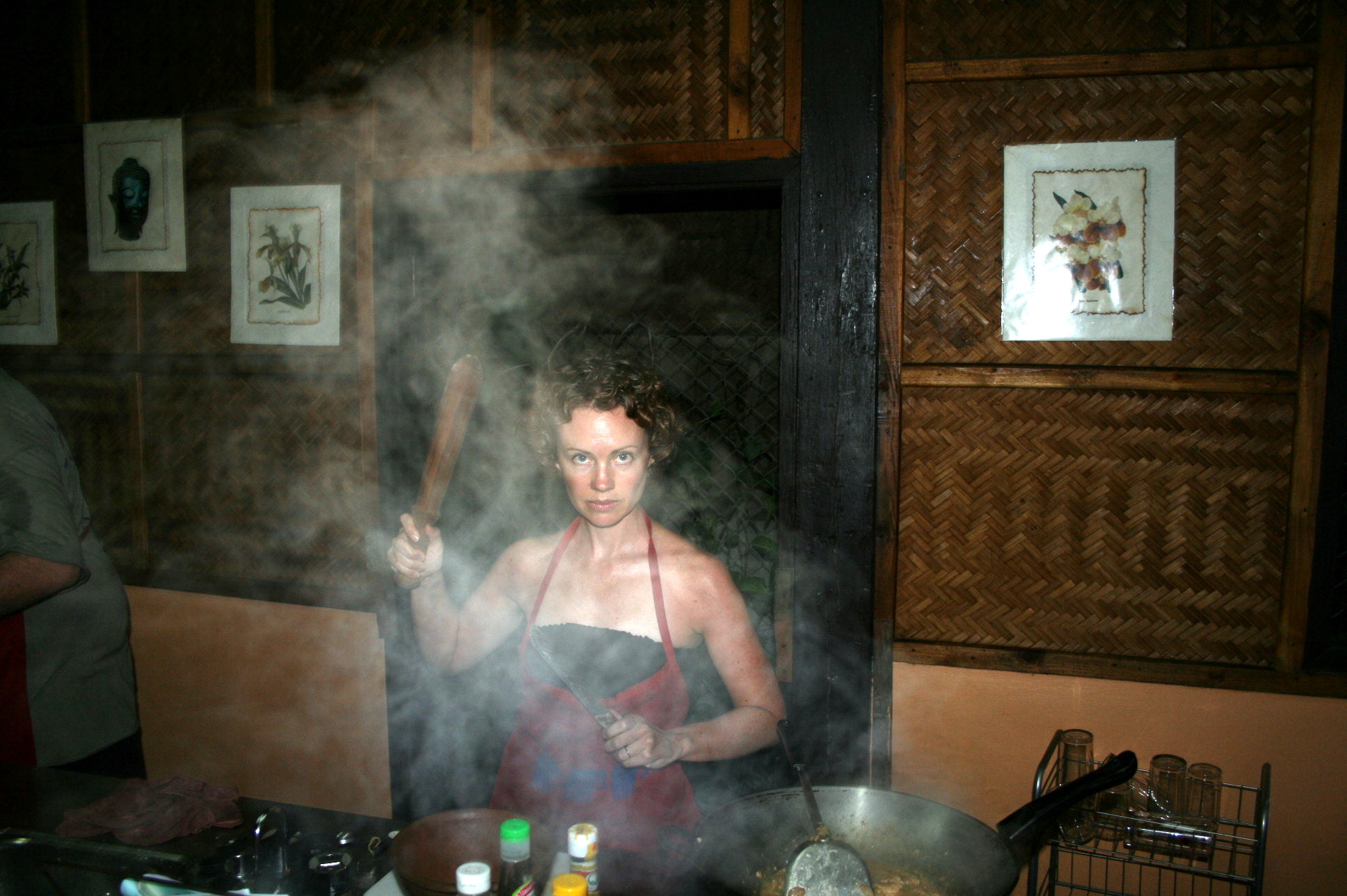
Don’t mess with a woman holding a knife in one hand and a baton in the other (actually, it was a giant pestle). At a cooking course in Luang Prabang

Great spot for a snooze

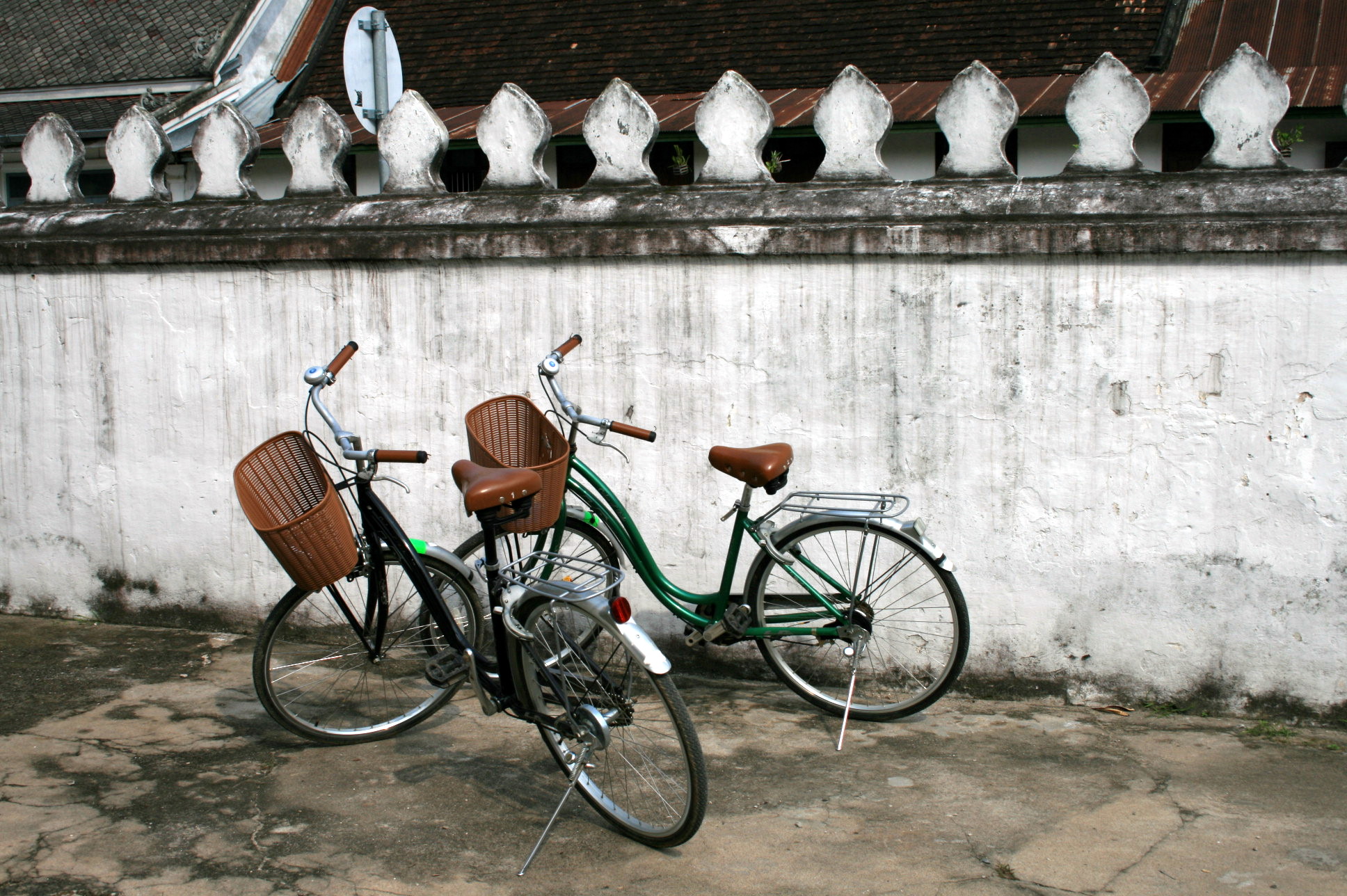
What is it about riding bicycles that makes you feel like a kid again?  Tinkly bells help, but so does the breeze on your face.  All the bikes we used in Laos tended to have dodgy brakes, and helmets are not available, so I was always a fairly sedate rider, unlike Colin, whose attempt to jump the bike up over the curb (BMX style) made for a spectacular tumble.

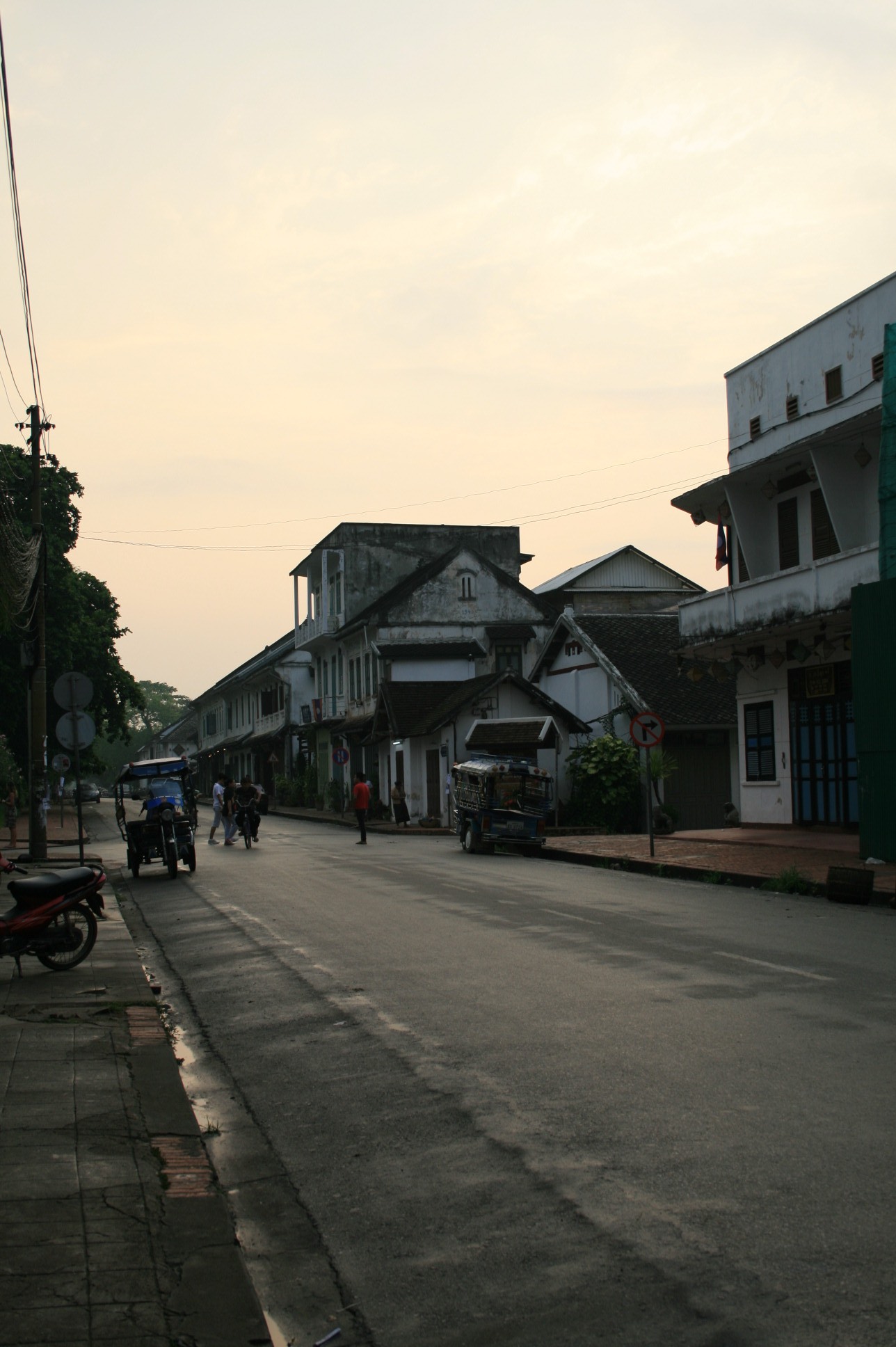
The main street of Luang Prabang, at dawn.