comment 0

Three nights in Phnom Penh

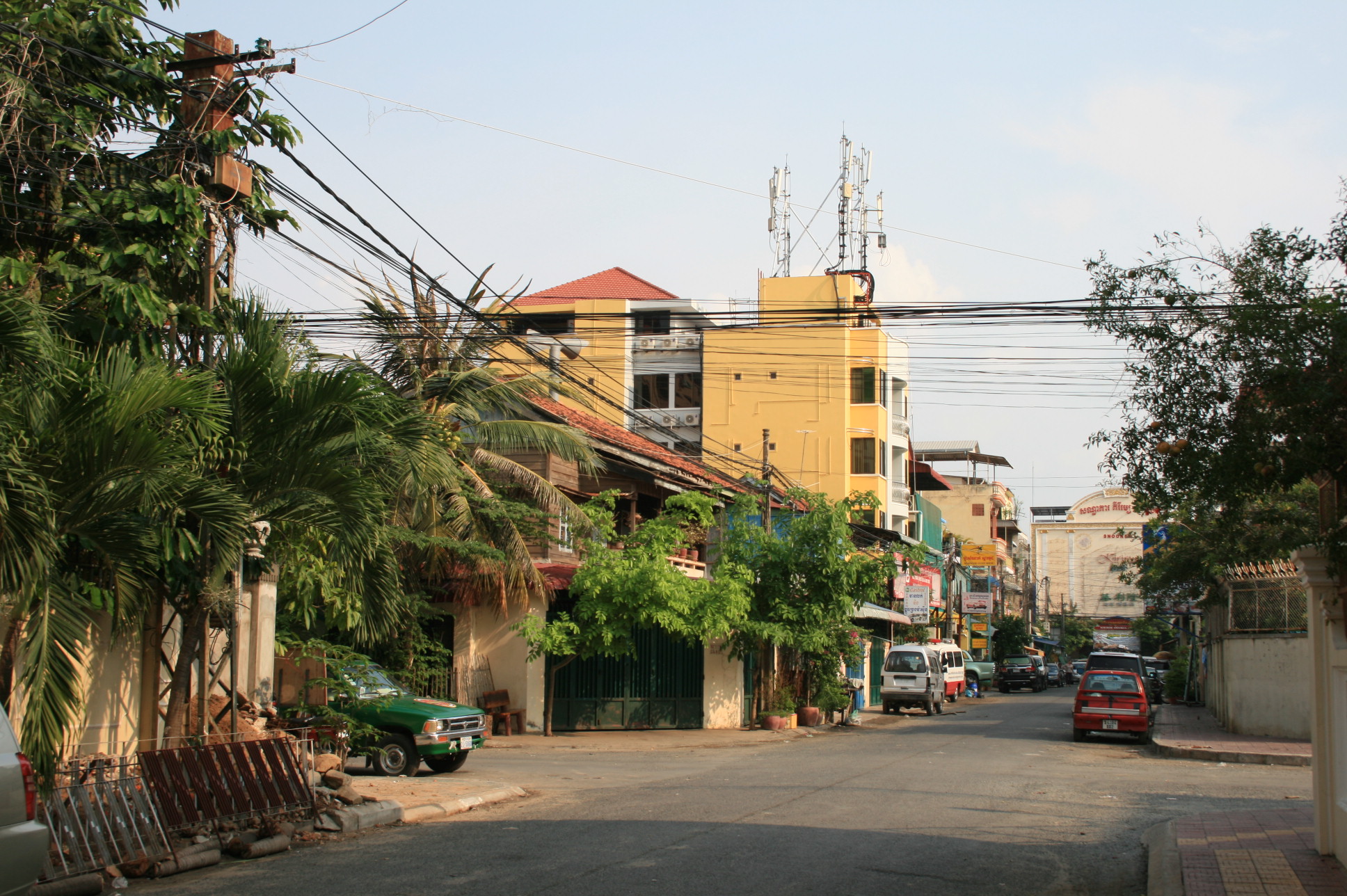
Quiet streets in the Monivong West area, where we stayed

Three nights hasn’t been enough time to really get a feel for Phnom Penh.  On our first full day in the city we visited the Killing Fields at Choeung Ek, a necessary stop for all tourists.  Like many New Zealanders, I didn’t know much at all about the Khmer Rouge and the devastating atrocities that took place in Cambodia in 1975-78.  Very, very briefly, the Khmer Rouge, led by Pol Pot, came to power in 1975, aiming to radically transform Cambodia into a classless society structured around an agrarian economy.  Entire cities and towns were emptied, with residents forced to march to the countryside and work long hours in the fields.  Many elderly and sick people died as a result of this harsh treatment.  Intellectuals (even simply those who spoke another language) were imprisoned and put to death, as where those who resisted the new authoritarian rule.  All in all, an estimated 1.5 million people were murdered by the Khmer Rouge, held and interrogated in prisons like the infamous S-21 before being brutally hacked to death (to save ammunition) and buried in mass graves.

The Killing Fields at Choeung Ek is one of over 300 mass grave sites across Cambodia.  The site has been fully excavated and turned into a memorial.  It was very surreal walking through the area – it’s very peaceful and green, but deep depressions all around the site mark where the graves were.  A large memorial stupa was built a few years ago to house the remains of those who died there.  Coming face to face with mounds of skulls is an experience I won’t ever forget.
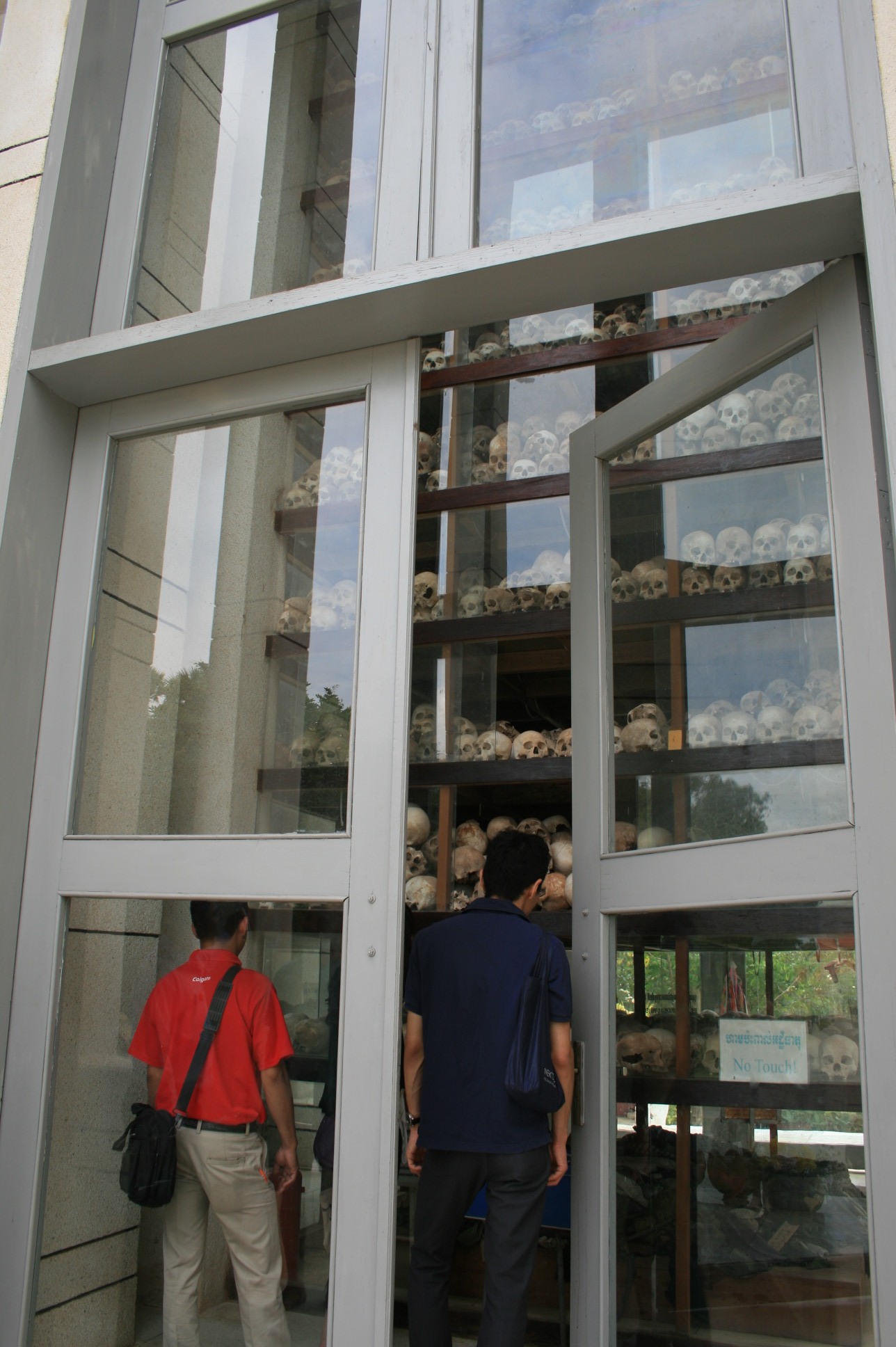
Inner chamber of the memorial stupa containing the skulls, bones and clothing of over 8,000 victims murdered by the Khmer Rouge

After the Killing Fields, we visited the site of the S-21 prison, which has been preserved as a genocide museum.  The original cells, some as small as 08 x 2 metres, are still there – roughly constructed of bricks and mortar.  The ground floors of the prison blocks display information, including row upon row of prisoner mug shots.  The Khmer Rouge kept meticulous records, and photographed all men, women and children who were imprisoned and put to death.  For me, these photographs hit home much more strongly than the skulls.  The expressions on people’s faces were heartbreaking – terror, confusion, the odd awkward smile (you’re supposed to smile for the camera, aren’t you?), defiance, anger, but most often, a quiet/blank/sorrow, like the woman below:

Mother and child victim – with  S-21 reflected in the glass

The remainder of our time in Phnom Penh was spent walking the city streets, which was challenging in the sweltering heat.  The heat seems to intensify the smells, and sometimes, Phnom Penh does not smell nice.  There is a lot of rubbish here, a lot of dust, choking traffic fumes, and frequent whiffs of sewerage. But there are also some pristine areas, with modern air-conditioned shopping centres etc, etc, etc; streets that make you feel like you could be anywhere.  I want to know where I am, so I’ll take the rubbish any day, even if I do walk carefully around it and sometimes refrain from breathing…!  Everywhere we’ve been in Cambodia, it seems that pavements aren’t really for walking – they’re for living (socialising, preparing food, eating, snoozing, drying laundry), for making a living (selling goods, food, constructing goods), and for parking motorbikes and scooters.  Life is very much lived out in the open, spilling onto the streets, so walking is more a matter of zig-zagging around multiple obstacles.

Phnom Penh city streets

The traffic is another fascination here. The streets are so busy and there doesn’t appear to be any real road rules – even the rule of driving in the right hand lane doesn’t at all guarantee that you won’t meet someone coming the other way.  At intersections, it’s a matter of first in first served, and as soon as there is a gap, people just go for it.  Amazingly, this chaos works pretty well – everyone drives fairly sedately and frequently toots their horn to let other road users know they are coming up behind them.  Even heavy traffic at quite major intersections seems to just blend and weave together. Drivers in Cambodia could teach us a thing or two in NZ…with all our road code rules, the most complicated thing we have to figure out for ourselves is how to ‘merge like a zip’.

Iced tea and coffee at a flash restaurant on the riverfront

Some of you might have noticed the lack of food photographs lately.  For well over a week now we’ve had little appetite and have been making do with only two meals a day – breakfast, then a small early dinner around 4-5pm (which I especially need to force myself to eat).  For someone who is usually hungry most of the time, and if not hungry then just plain greedy, this is quite out of character.  Hopefully this changes soon as I came here to eat.

So that was Cambodia, and it was great.  We would definitely come back again to see places we didn’t get to this time around.  And…thanks to Cambodia, I can say:

  1. Fresh durian fruit [tick]
  2. Deep fried crickets [tick]
  3. Squat toilet [tick, tick, tick, tick, and tick]

Colin, about to down a fried cricket (they tasted spicy and crunchy)

We were NOT game to try the bigger bugs!!!
comment 0

That was Battambang

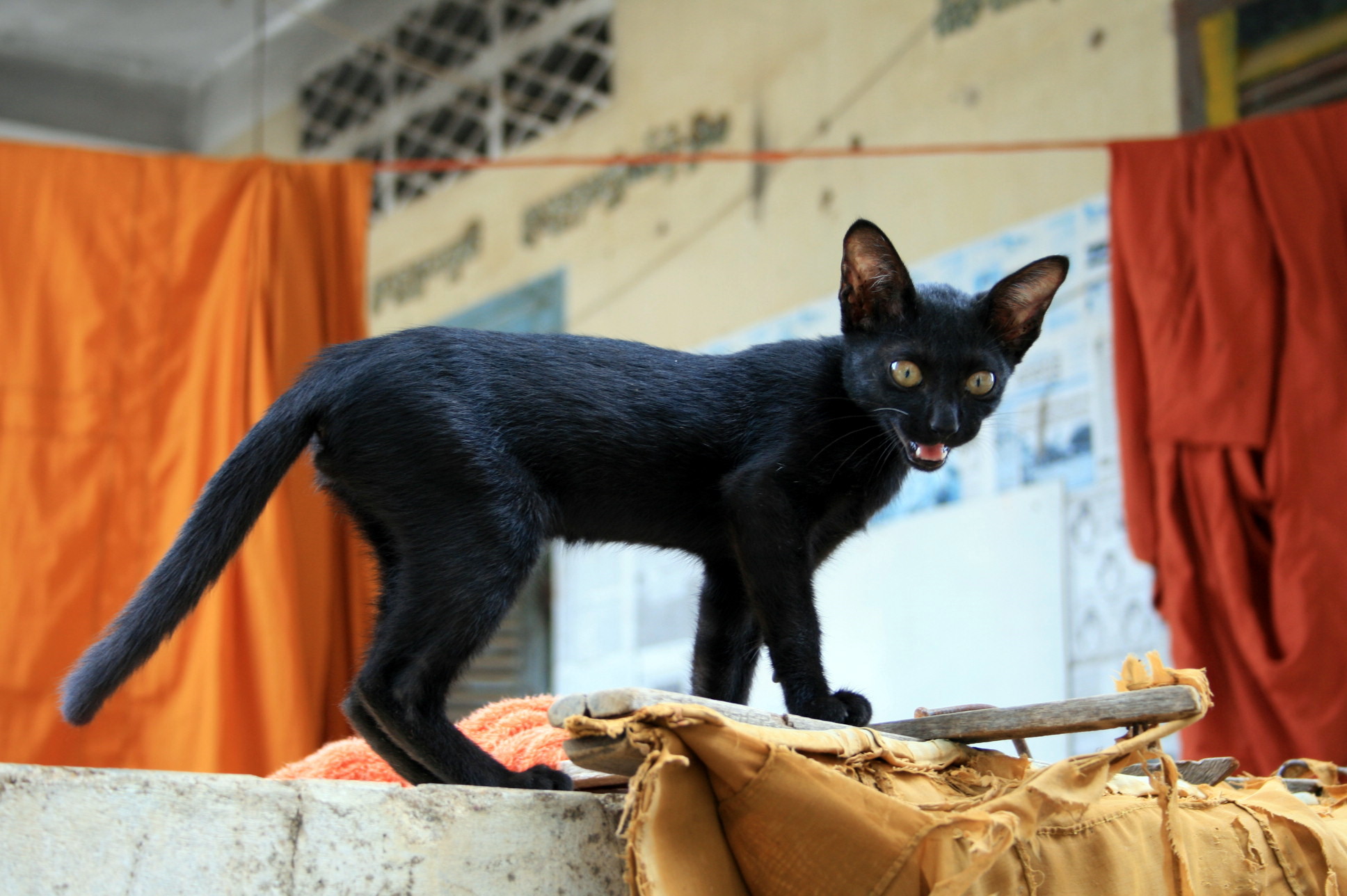
At Wat Kandal Pagoda, Battambang; monks robes drying in the background

If Siem Reap is touristy, then Battambang is its antithesis.  Cambodia’s second largest city (around 250,000 residents) is quiet, laid back, and has the feel of a small provincial town.  The local economy is structured around rice, oranges and other food crops, and tourists are few and far between.  People here definitely aren’t used to seeing many tourists, especially strange looking ones like Colin!  Kids and teenage boys are very friendly and want to say hello, but many adults often forget their manners and openly stare!  It’s amusing to be a minority for a change.

The corner “dairy” near our hotel. This is what Battambang looks like a few minutes walk away from the main street.

We’ve enjoyed being somewhere where you aren’t asked to buy something with every five steps – Battambang has definitely felt more like the real thing.  Tourism is slowly developing though – our hotel owner said that one year ago there were only 20 tuk-tuk’s in the city; now there are 60.  But for now, prices remain significantly less than Siem Reap – we could eat a full meal for around $6 US in Battambang (more like double that at a cheap place in Siem Reap).

Battambang is famous for its French colonial architecture, made all the more appealing by the varying states of decay.  The French legacy continues somewhat – you can buy baguette on every corner.  It’s a very pretty town, very green, with a river running through the middle.  Unfortunately, there is lots of rubbish, mainly plastic.  Occasionally you can see that someone has attempted to clean up by raking the rubbish into a large pile, but there in the pile it continues to sit…

After the intensity of Siem Reap, we enjoyed the relaxed vibe at Battambang.  We did see a few of the local sights, including a crocodile farm (most crocs are destined to be handbags), and an incense factory.  We also visited a local NGO (Komar Rikreay – “happy child”) that rehabilitates street kids, children who have been abused at home, and kids who have been trafficked (who are generally picked up in Thailand). Komar Rikreay provides counselling for the kids, schooling, and teaches them a range of life skills, including how to grow food and raise animals.

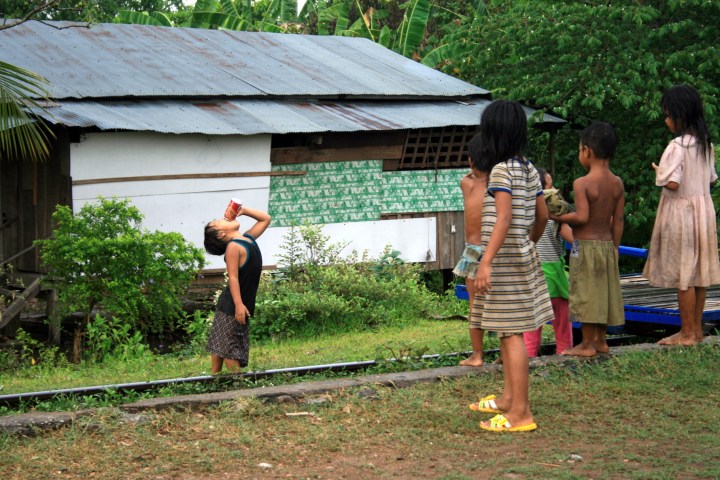
We also took a ride on a bamboo train, which is a good example of how poor people in developing countries use the little that they have at hand to improvise what they need.  Cambodia doesn’t operate trains now, but it used to, and local people have constructed bamboo carts powered by motorbike engines to enable them to travel.  The carts are quite light, and if you meet an oncoming cart, it can be disassembled and taken off the rails very quickly.  At the end of the short trip we took (during which it rained and soaked us to the skin in about 30 seconds), we were met by a group of smiling kids who wanted to adorn us with bracelets they had woven from coconut palm leaves.  One of them asked me to buy her a Coke, which I did, on the condition that she shared it with her friends.  She instantly became the most popular girl, doling out mouthfuls by pushing the others’ heads back and pouring it directly into their mouths – she would not relinquish her grasp of the can!

She retreated across the tracks to down the last mouthfuls herself!

The bamboo train was a great way to get a glimpse of rural Cambodia.  Beautiful though it may be, it is hard work living off the land, especially in the absence of the kind of equipment farmers in New Zealand wouldn’t dream of doing without – including plowing fields using water buffalos.  Rural Cambodians rely totally on their crops and are vulnerable to drought and flooding.

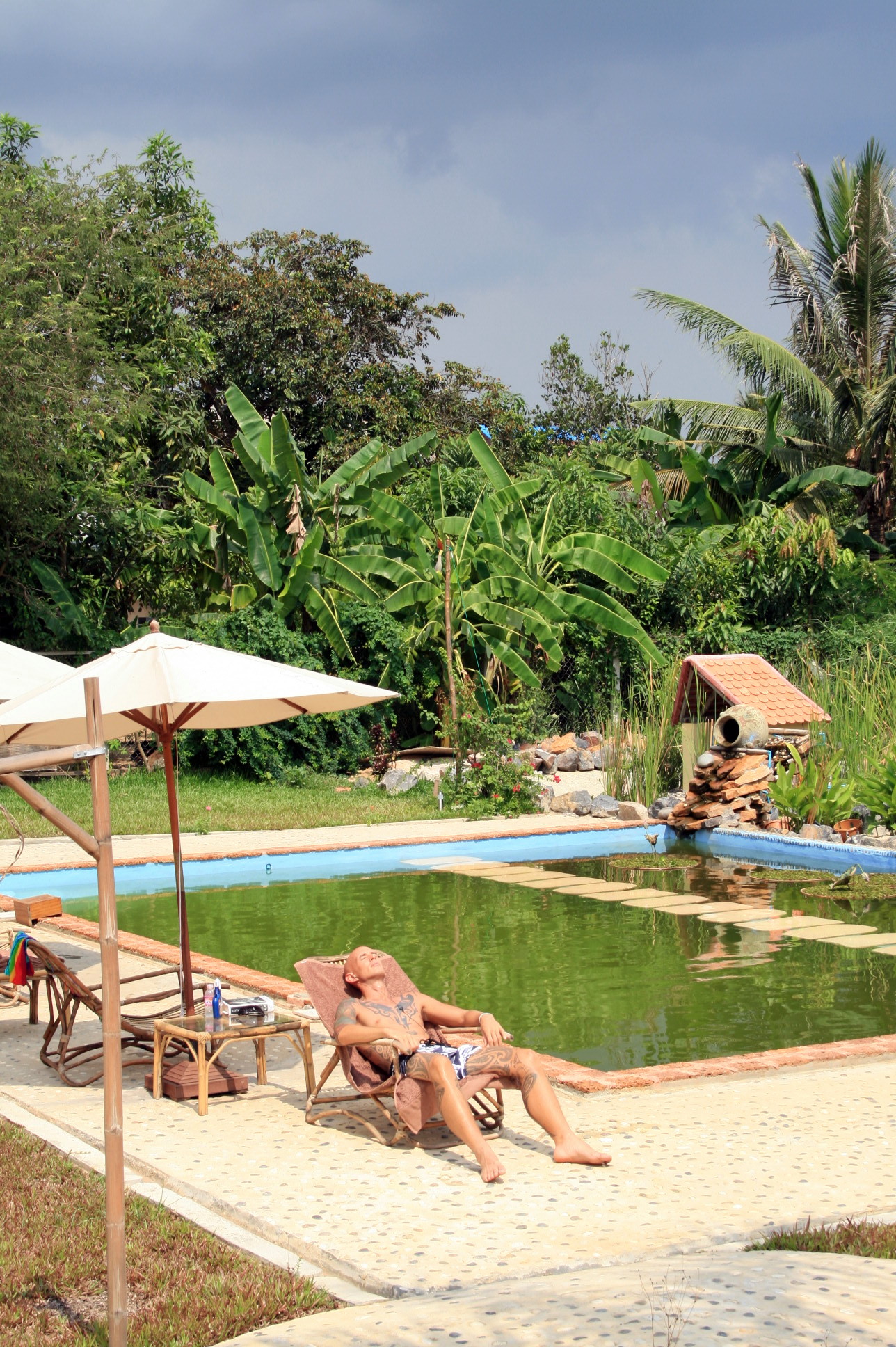
We spoilt ourselves in Battambang by staying in an environmentally friendly hotel run by a Franco-Cambodian couple.  Au Cabaret Vert was lovely – we had our own little bungalow looking out onto a natural swimming pool which is filtered entirely by plants.  Breakfast, included in the price of the room, was Khmer coffee (really, really nice), fresh fruit salad, baguette, and eggs cooked any way you liked.

Colin lazing by the natural swimming pool at Au Cabaret Vert

We left Battambang today, bound for Phnom Penh.  This time we choose a better quality bus with more comfortable seats and more leg room for Colin.  This one did, nonetheless, have chickens stowed in the baggage compartment, including a rooster that started crowing every few seconds as we neared the city.  There is always something to make you laugh here!

comment 1

Leaving Siem Reap

We’ve been surprised at how close we came to blowing our daily budget here.  Siem Reap is no longer a backpackers haven thanks to rapid development over the past ten years.  It is very easy to have a high-end holiday here, staying in five-star hotels and complete with health spas, shopping in boutique stores, drinking in bars stocked with imported French wine, and taking helicopter or balloon rides over the temples.  There is a fantastic supermarket here stocked with imported French cheeses and pates, expensive cars to rent (lots of late model European cars, especially Lexus), and a sprawling night market with clean gravel paths, twinkling fairy-lights and rustic stalls. All this makes staying here very easy, convenient and luxurious, but you definitely pay for it.

Such luxuries are a world away from how most of the locals live their daily lives.  The gap between the have’s and have-not’s is very noticeable.  There are beggars and landmine victims, although not as many as I had anticipated. The most visible indication is the many children on the streets – children who should be in school, but have to help their families earn a living by selling water, fruit, postcards and handmade bracelets outside the temples.  Many of the local people are clearly very poor.  The photo below isn’t very good photographically, but it shows a local woman on her bicycle loaded up with plastic bottles to sell for recycling, with a Hummer in the background.

The Temples are obviously a boon to the local economy. Local businesses have boomed, and have made some Cambodians very wealthy. People come from all over Cambodia to work here in the hotels, or as tour guides and tuk-tuk drivers – earning good incomes, by Cambodian standards. However, all this development made me wish, just a bit, that we had come here ten years ago. While we’ve loved the Temples and other attractions, some of our most memorable experiences have been slightly off the beaten track – experiences that have given us a taste of how local people live, and what is important to them.

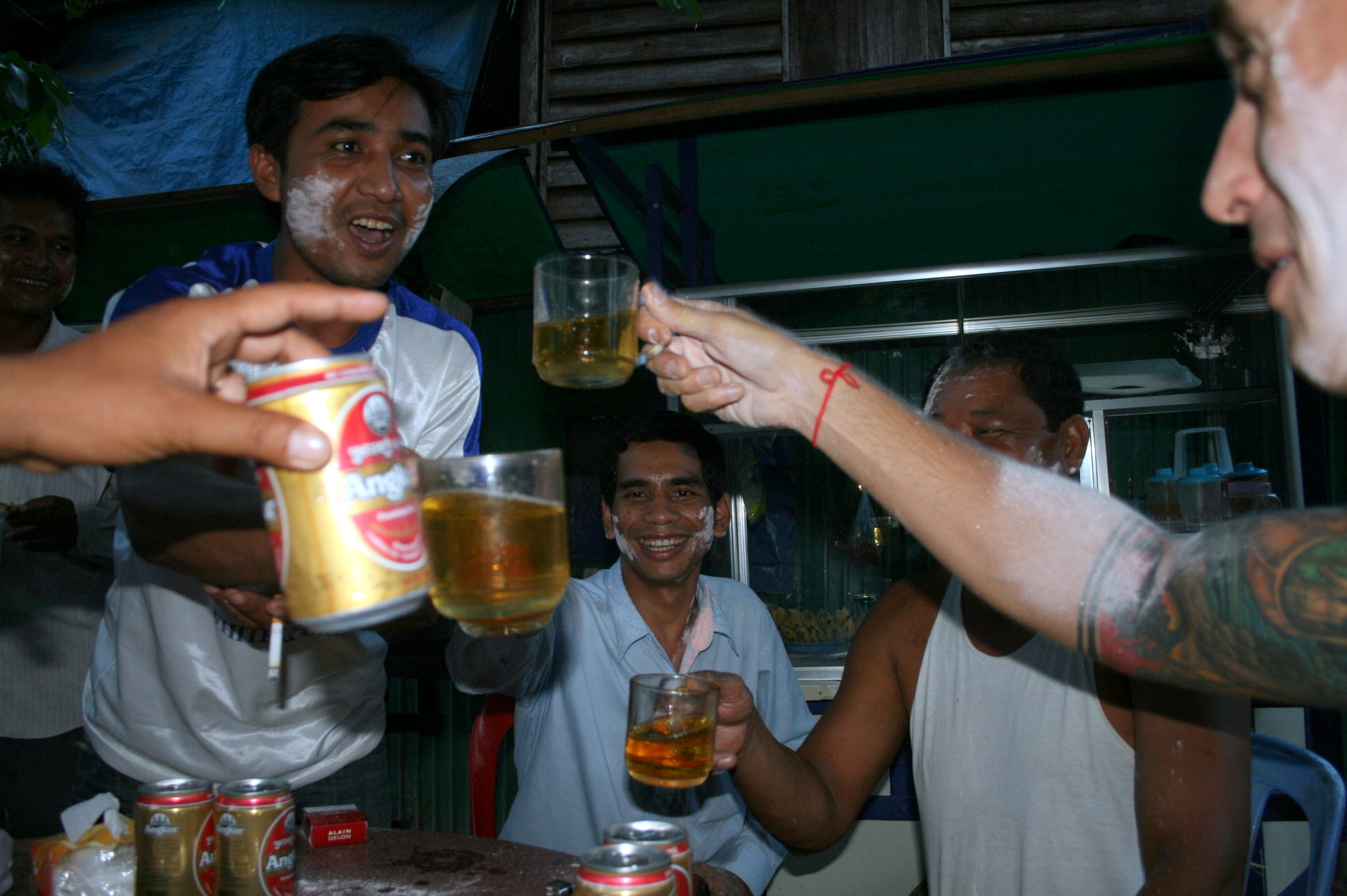
After a day visiting temples, our tuk-tuk driver, Mr Bora, invited us back to his house for a drink to celebrate the Cambodian New Year.  We sat around a table in his backyard, drinking the local Angkor beer out of mugs (with ice added to compensate for the lack of refrigeration).  Mr Bora and his friends, including the village chief, made us very welcome, providing food (e.g. fresh mango salad) and constantly topping up our glasses with beer, and later, a homemade whiskey.

(Left to right) Mr Bora, the village chief, Sambath, and Colin

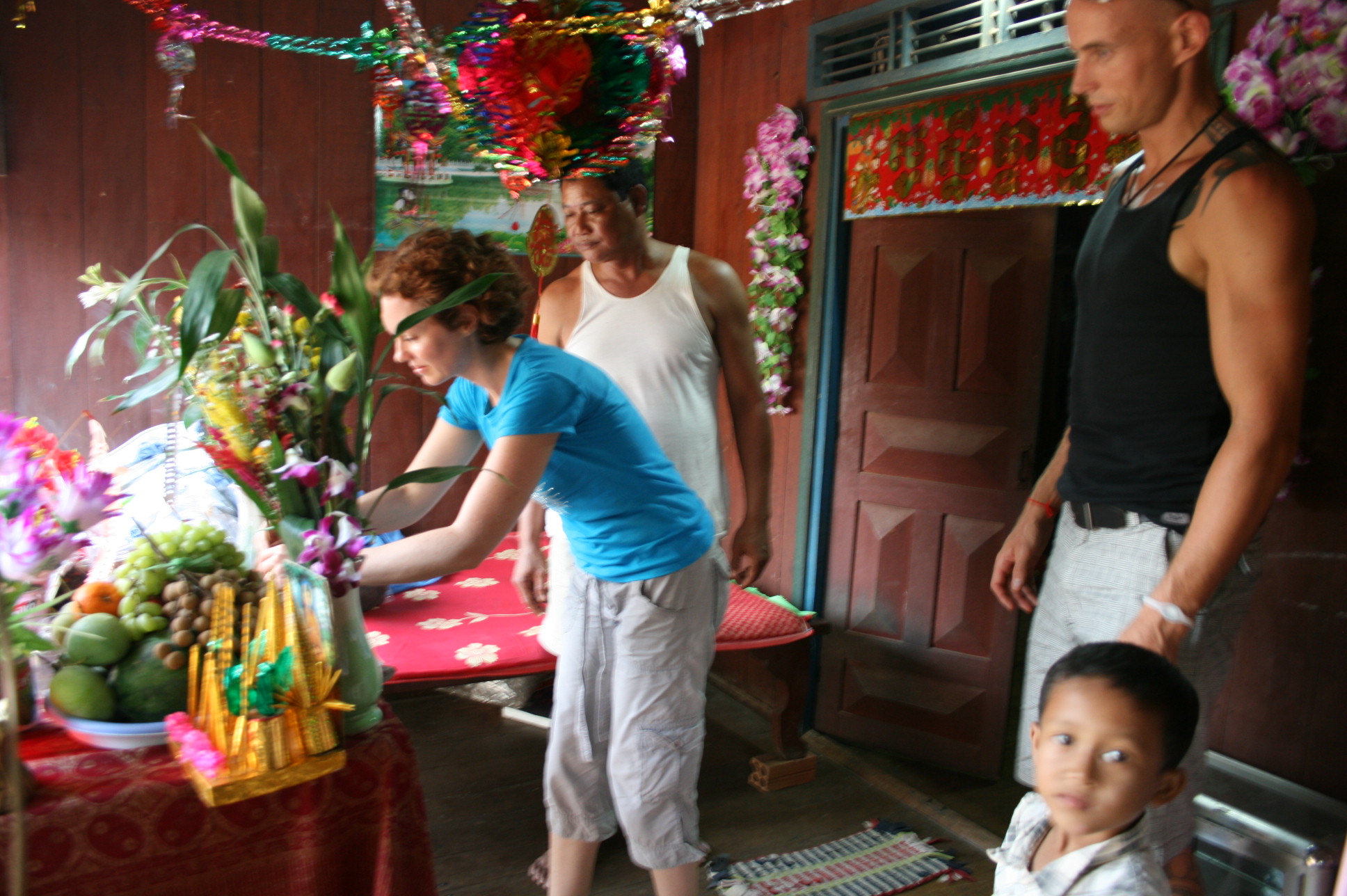
It wasn’t long before I restricted myself to small sips of beer (I was very conscious of the fact that Cambodian women generally don’t drink), although Colin quickly learned to say “Chol moi!” (sp? roughly “cheers, drink up”).  While we were there we were invited to the balcony of Mr Bora’s house to see the family’s New Year shrine and light some incense.

New year shrine at Mr Bora’s house. Chief in the background and Mr Bora’s six year old son in the foreground (photo taken by Mr Bora)

It was great fun, and several people had enough English to make conversation flow pretty well (I was a bit embarressed when we were asked how many languages we spoke…).  We stayed for several hours and, amidst much laughing, were doused with powder (for luck) before we left.

One more Chol moi! for the road

Another memorable day was our trip to Kulen Mountain, accompanied by Mr Davuth, the assistant manager at our hotel, who had a day off.  Technically included as a temple site, few tourists visit the mountain because of its distance from Siem Reap (about 1.5-2 hours drive).  Kulen is another site traditionally visited by Cambodians at New Year, and out of the thousands of people there, we saw maybe 8 other western tourists all day.  The mountain is very important to Cambodians because the stone used to build the temples was mined there and (it is thought) floated down the Siem Reap river (which has its source in the mountains).  People go to Kulen to see a massive Buddha carved on the top of a rock, to drink water from a holy well, and pray at the many shrines scattered through the trees.

People jostling for space and a chance to rub the Buddha’s face

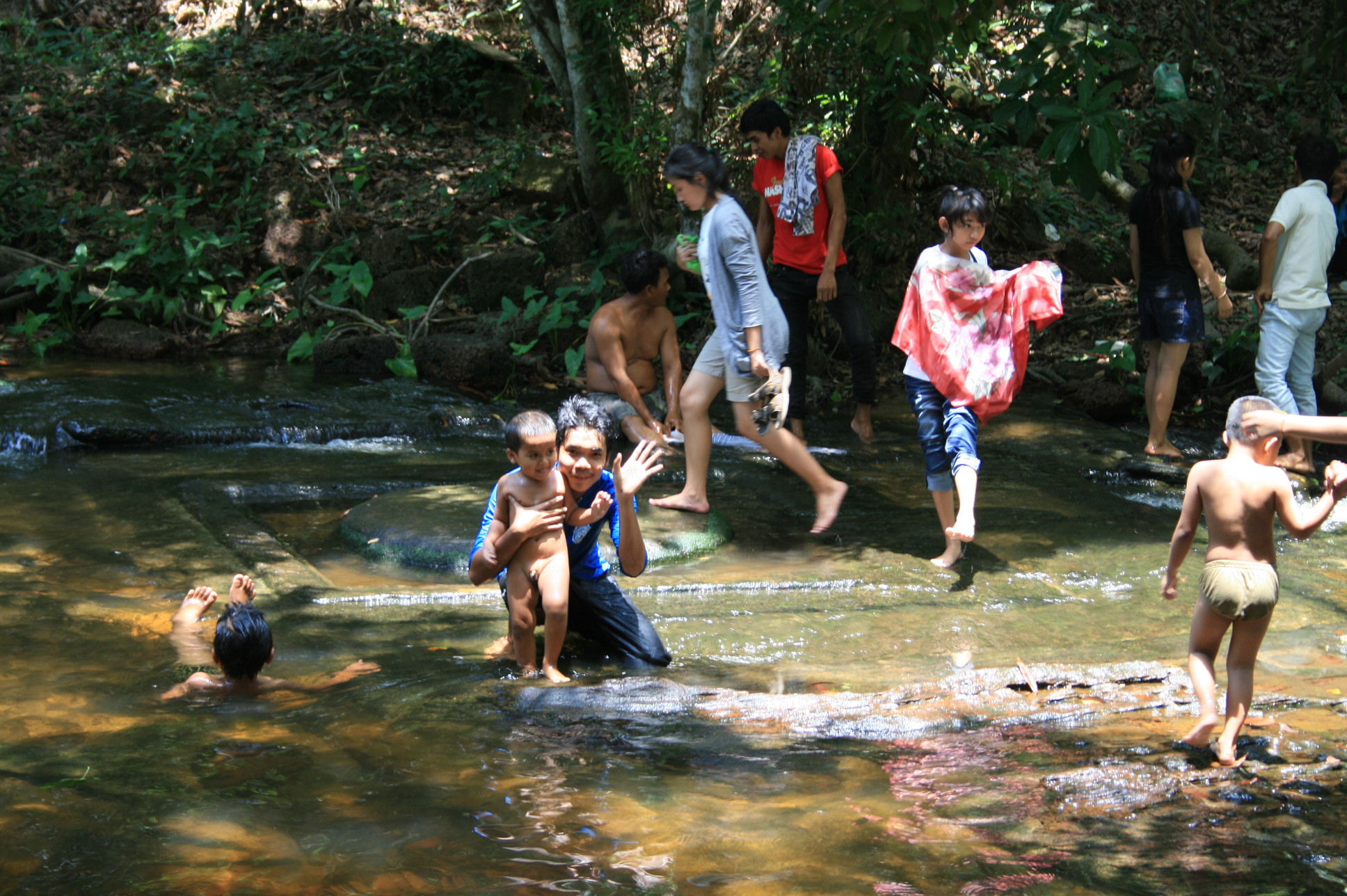
They also go to see Kbal Spean (the “River of a Thousand Lingas”), with carvings all along the stone river bed. The river banks were crammed with people having picnics.  Many were swimming, or just sitting in the river. It was such a hot day that I was tempted to join them, but I only had my bikini, and was too shy to wear it away from the hotel pool (Cambodians are very modest and adults are usually well covered-up when swimming – only small children strip off).

Large lingas carving (with a teenage boy waving for the camera)

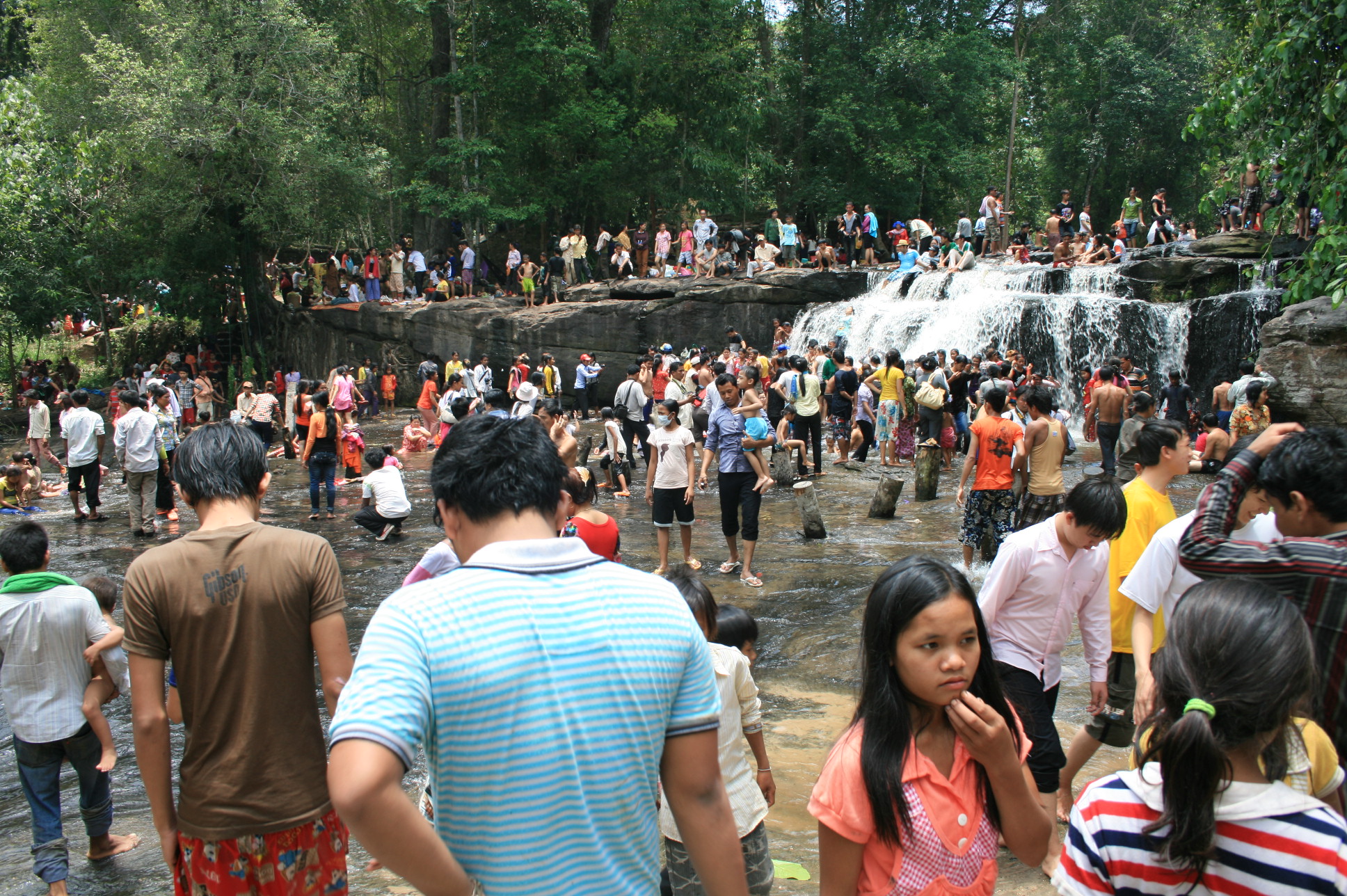
Further downstream there is a waterfall, as well as a small temple in a very ruined state. The river banks around this area were also packed with people. There were thousands of people up the mountain that day, and it is impossible to portray the intensity of such a mass of people in a relatively small geographical area.  The photo below gives a sense of this.

Crowds at the Kulen Mountain waterfall at Khmer New Year

While not the most visually spectacular place we visited, the cultural and religious significance of Kulen Mountain was clear.  It’s sort of like a place of pilgrimage, although out of reach for those who cannot afford transport to get there. We paid $30 US for a car, $30 US for a driver, and $40 US for two tickets to get up the mountain.

We left Siem Reap today, bound for Battambang on a pink bus with people sitting on bags of rice right down the aisle. I kept expecting someone to load on a few chickens – definitely not in Kansas anymore!

comments 6

More Temples of Angkor

While Angkor Wat is wonderful, there are many other beautiful temples that we have visited.  On our first full day, we explored Angkor Thom, which was actually a large city, and the capital of Cambodia until the 17th century.  It covers 900 hectares, and is completely surrounded by walls, and a moat.  Within the complex itself there are many temples, terraces, and pools.  The most impressive temple within the city is The Bayon, which used to be the State Temple of King Jayavarman VII (who founded Angkor Thom).

Bayon Temple

Close-up of one of the many faces carved into the towers of Bayon

Walking towards Bapuon Temple (the Palais Royale)

Temple of Phimeanakas

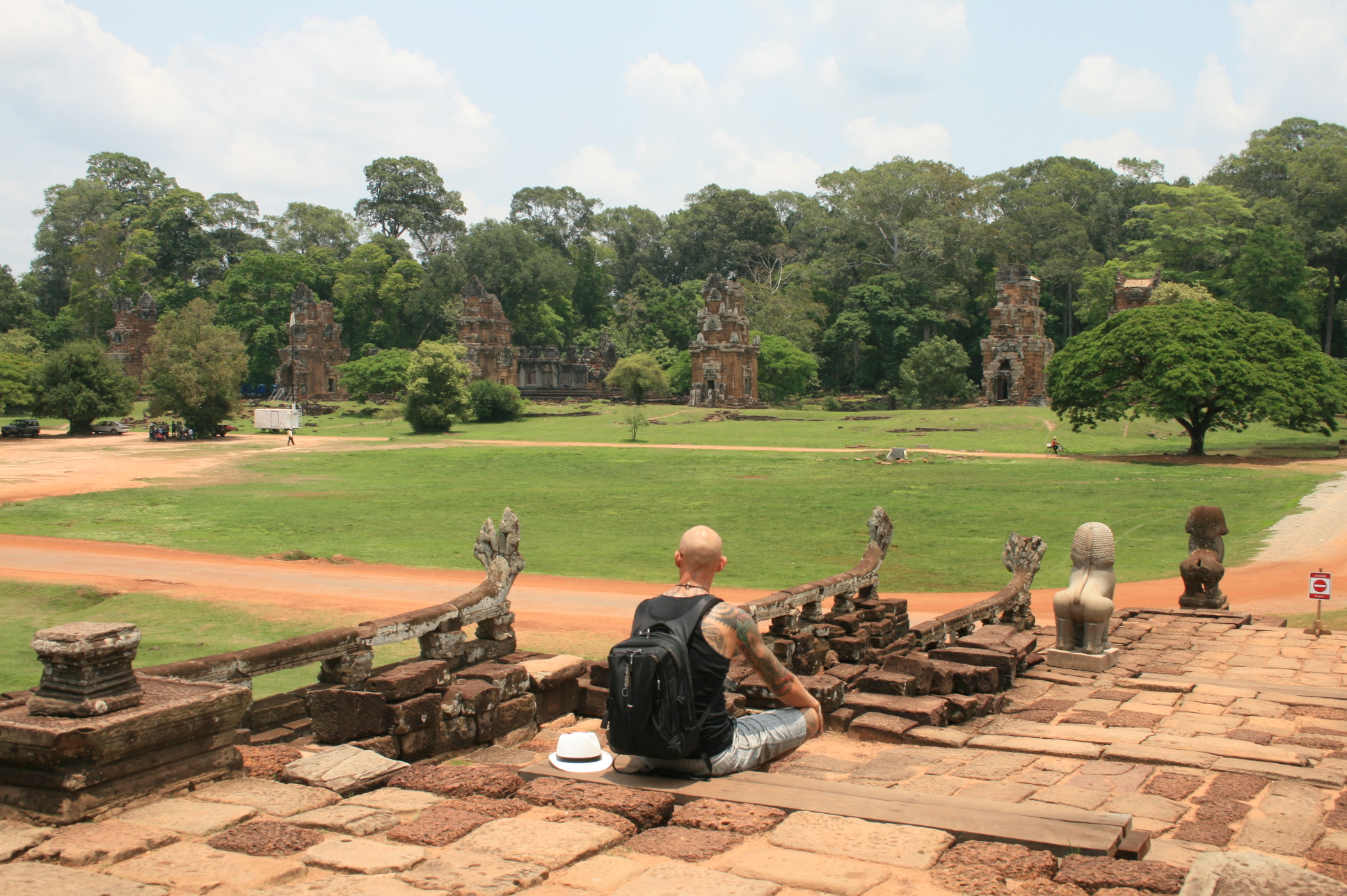
Looking down on Elephant Terrace

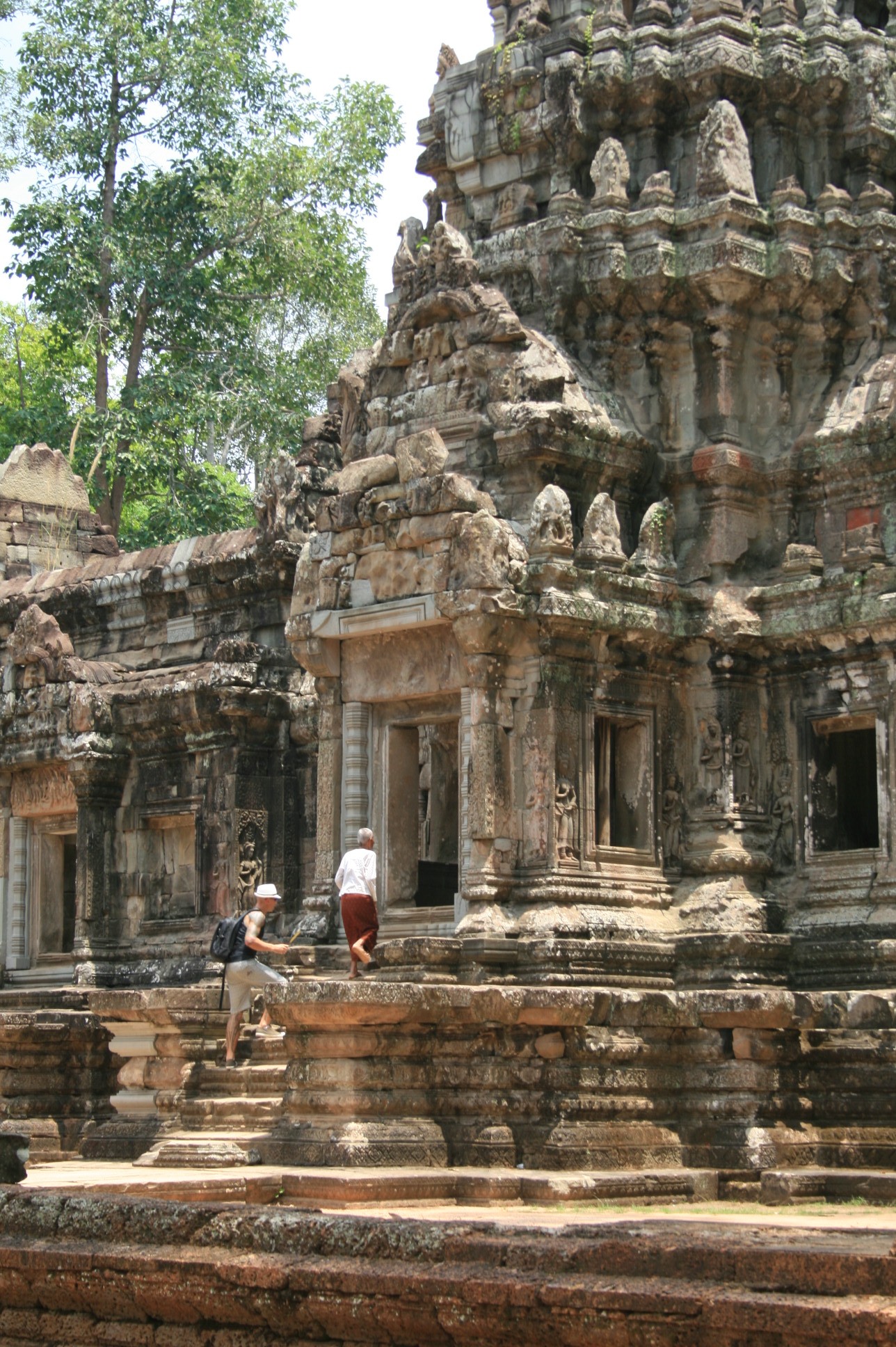
Colin about to receive a blessing from a nun – at Chao Say Tevoda.  This temple has received extensive reconstruction.

Cambodian boy running through Chao Say Tevoda

Stalls outside Thommanon Temple

At the beautiful Ta Prohm Temple

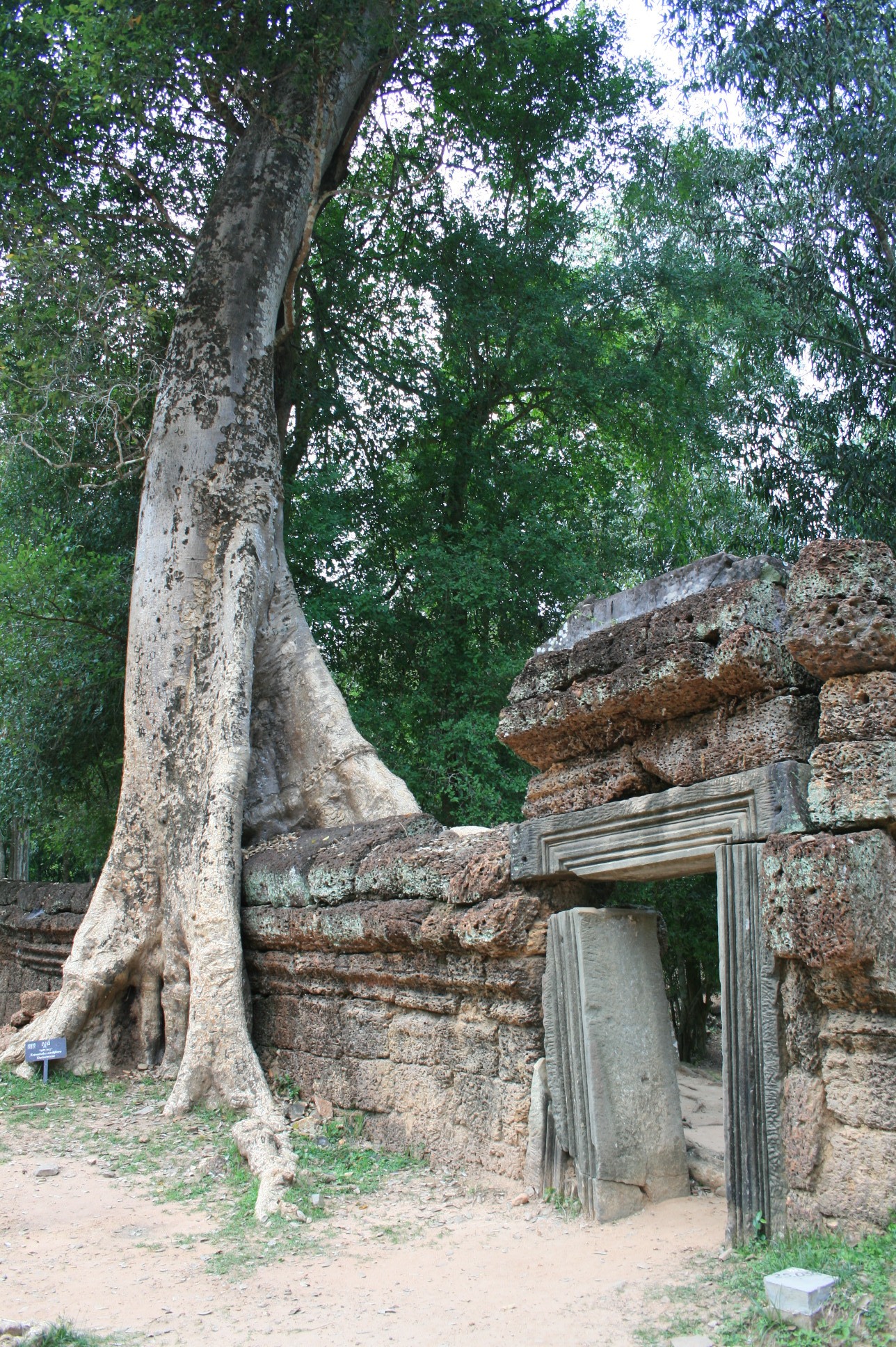
Silk cotton tree roots at Ta Prohm Temple

On our second day at the temples we started at Preah Khan, which appears to have once been a Buddhist university.  We also saw Neak Pean, an unusual small temple constructed on a circular island in the centre of a pond.  We finished at Ta Som, a beautiful small temple in a semi-ruined state.

Nun at Preah Khan Temple

Preah Khan

Neak Pean (small Temple surrounded by moat).  It’s dry season right now so the water was very low.

Cool interior, Ta Som Temple.  Originally, a Buddha would have rested in the centre of the yoni symbol (many artifacts have been stolen from the temples)

Ta Som

On the third day at the temples we visited Kulan Mountain, which is where the stone for the temples was mined (more on this later).  On the way home we visited an outlying temple, Banteay Srei (constructed of glowing pink sandstone), and Pre Rup, built around 961.  We have only seen maybe 40% of all the temples so far.

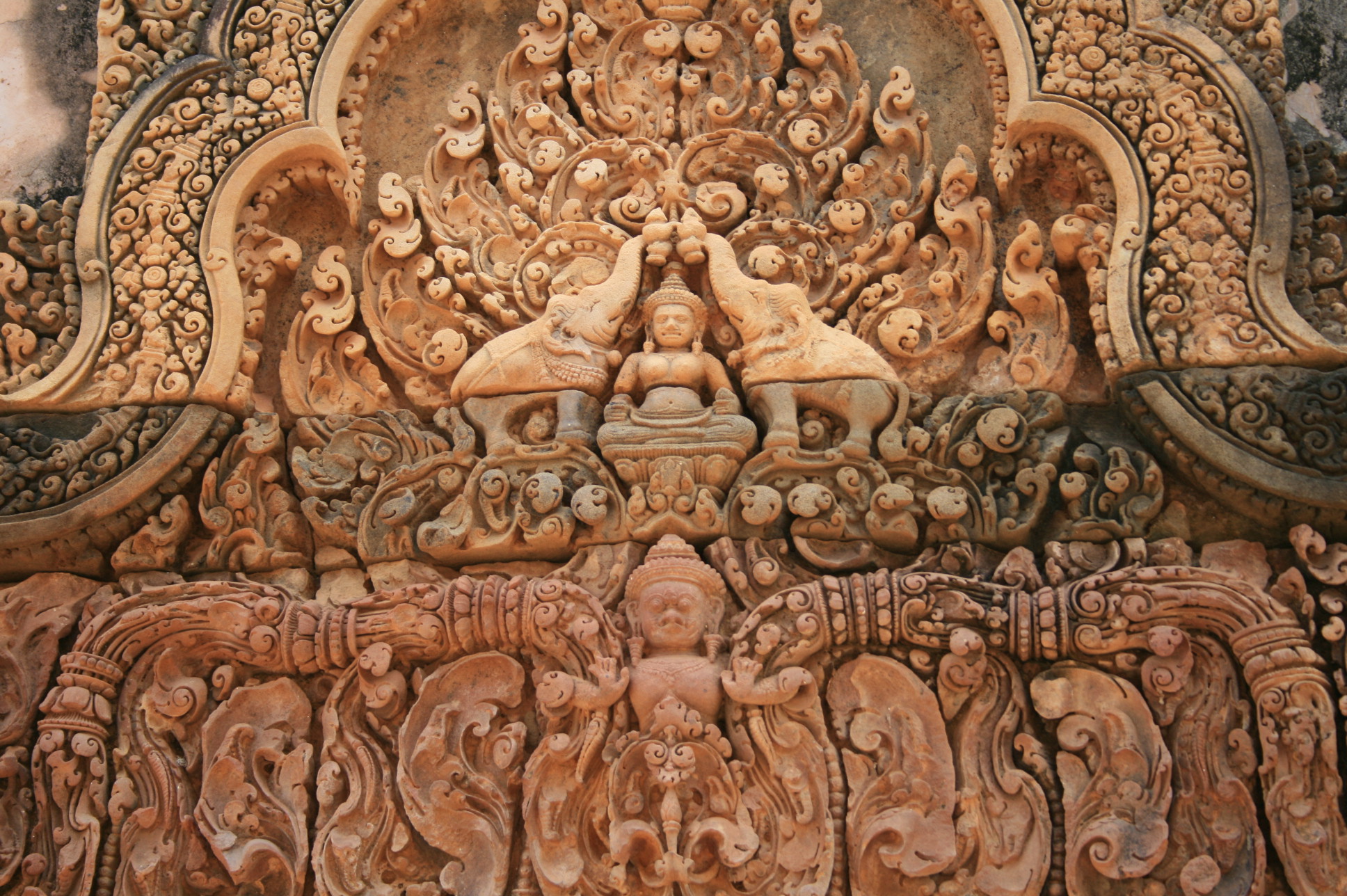
Carvings at Banteay Srei, a highly decorative temple dedicated to women

At Pre Rup Temple, with the late afternoon sun directly behind me