comments 3

Slow boat to Thailand

Last morning in Luang Prabang – waiting for breakfast on the balcony of the hotel restaurant

Luang Prabang is indeed a most beautiful, romantic and relaxed city.  It’s common for travelers to be so entranced that, as Lonely Planet states, they “dream of a never-ending stay”.  We met three such people who had fallen under its spell – a Frenchman, who kept leaving the country every month and flying back in to renew his visa; a Scottish hairdresser in the throes of a new relationship with a local restauranteur, dreaming of establishing a salon; and a Dutch chef on his fourth visit in as many years, who hoped, this time, to find a job with a sustainable income.  It’s not called the Paris of the Mekong for no reason: Luang Prabang just does this to people.

While experiencing our own share of fantastical yearnings during the 12 days we were there, we nonetheless bravely stuck to our schedule, sniffed our goodbyes, and caught the slow boat bound for Huay Xai on the border with Thailand.  We had heard that this two-day journey down the Mekong River was a bit boring, but on the contrary, we found the scenery breathtaking, boat-people-watching intriguing, and each others company endlessly pleasing (which, for a couple of old married people who’ve just spent a whole two months in each others company, is a pretty good sign, in my unbiased opinion).  Slow boats: quite clearly the optimum way to travel, wouldn’t you say?  (And yes, there is also a fast boat option which travels the same route in only one day, although the possibility of fatal crashes, not to mention the certainty of severe trauma, quite rightly deter many.)

Interior of our boat. Most of the passengers were local Lao, who seem to be able to curl up in the most awkward positions and fall asleep at the drop of the hat. This photo was taken only about half an hour into our journey on the first day.

Typical river vista. Some of you may remember the bland and fairly featureless photos from our trip down the Mekong from Phnom Penh to Vietnam. In contrast, the northern segement of the river that we traveled through on the first day was so beautiful, in that green, unspoilt, wild and remote sense that only Laos has treated us to.

Approaching rain. Less than five minutes after I took this picture, the boat met with torrential rain. The crew struggled with the wind to roll down tarps to cover the open sides of the boat, transforming the interior into a dark and intimate tent (in a moment of re-experienced childhood, I was transported to a typical “Winter Game” blizzard…)
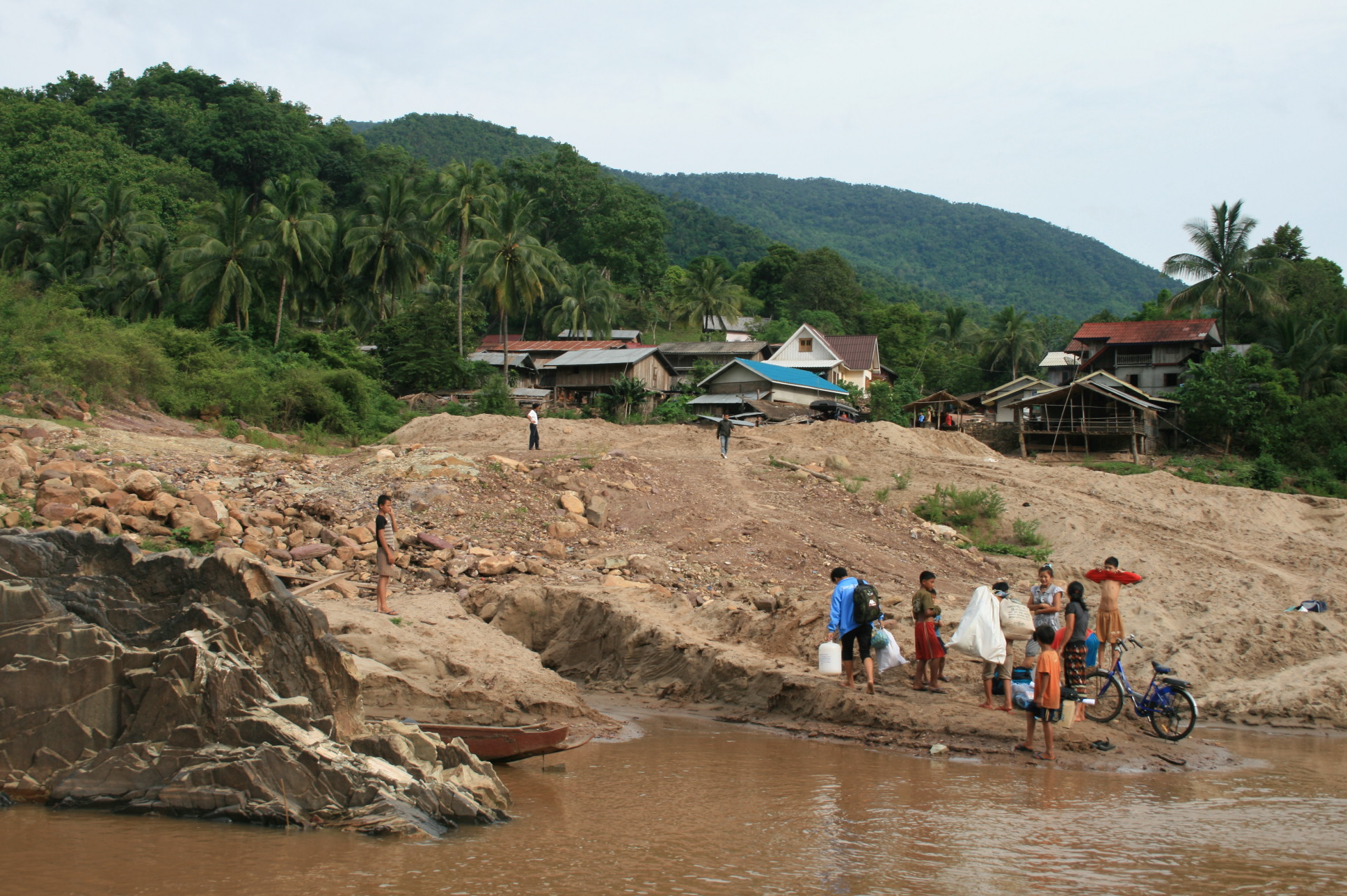
Occasionally, the dense jungle would part, revealing a small village. This was one of the larger ones we encountered on the first day (and still, only boasted maybe 10 huts at most). The boat dropped off a few people here, and several sacks and boxes, including a bicycle that had been strapped to the roof of the boat.

Nearing dusk, and after nine hours of boating, we arrived at Pak Beng, a small town with a population of 2000 people, where we spent the night. We rented a little bungalow, and this photo was taken from the balcony. There isn’t much at all at Pak Beng, except a jetty (our boat is third from the right), a few guesthouses, and a sense of total isolation. We very nearly decided to stay an extra night here, which in spite of (because of?) the the absence of ATM’s, Internet, and other Western trappings, effortlessly established Laos as a “must-return” country for us.

Sadly, leaving Pak Beng the next day. The bungalow we stayed in is second from the right.
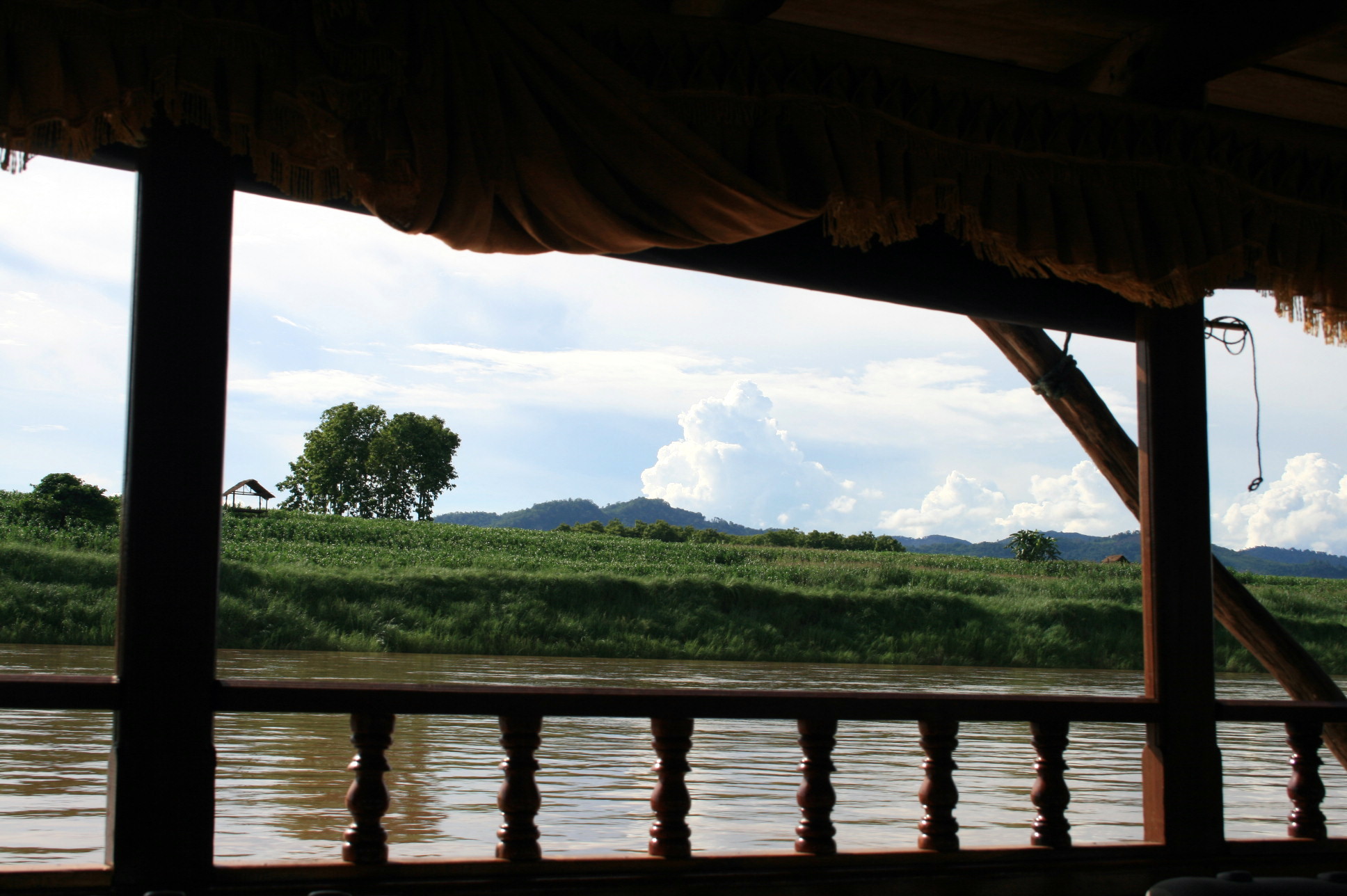
In the course of the next day, the landscape started to open up a bit more. We encountered increasingly more tracts of cleared and farmed land as we neared the border with Thailand. This field was planted in sweetcorn.

About an hour south of our journey’s end, we encountered around 100 Lao monks bathing in the river. It felt a bit sacriligious to snap away at their bare chests, but this didn’t stop me and the other few tourists from frantically capturing this moment as the boat swept past. The cheers and waves of the monks indicated that they were perhaps ok with being celebrities for a few seconds.

Arriving in Huay Xai after another nine hours on the boat. Thailand is to the left of the river, and Laos to the right. The border was closed by the time we arrived, so we stayed overnight in Huay Xai and crossed into Thailand the following morning.

comment 0

Rolling thunder: Living the dream at 110cc

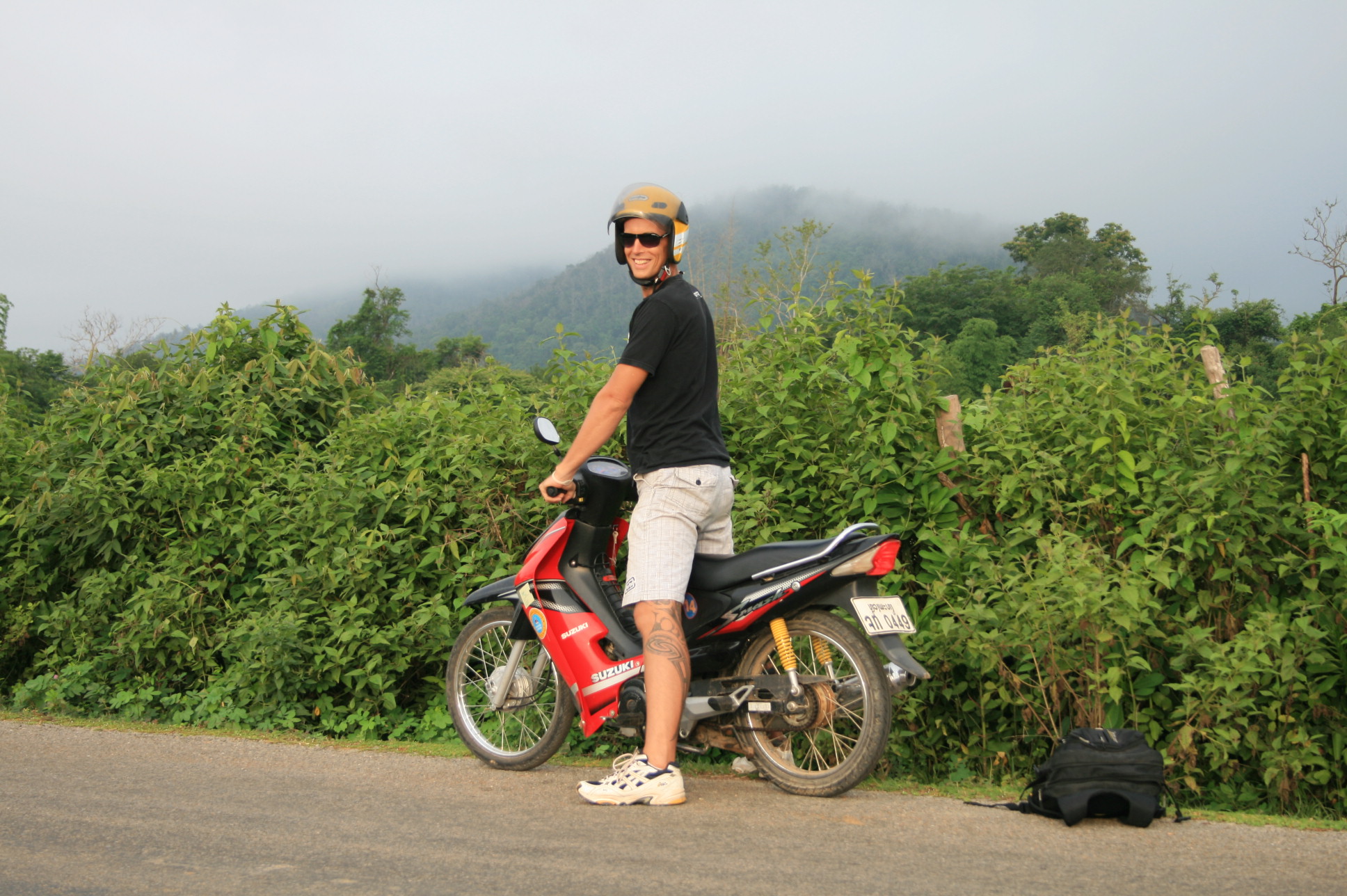
Our trusty stead

After our awesome day motorbiking in Vang Vieng, we were keen to repeat the experience in Luang Prabang.  Like most countries in South East Asia, Laos has a cc limit for motorbikes.  Although Colin would have liked something just a little gruntier (and a little bit less like a scooter), the motorbike above was the best we could organise.  We hired it for 24 hours, intending to do a round trip out to Pak Ou caves (28 kilometres east of the city) and then to Kuang Si waterfall, 35 kilometres west of the city.

We got off to a slightly late start, stopping in town first for coffee and to drop off some laundry, but by 11am we were on the road to the caves.  After a few wrong turns, we finally found ourselves at the turnoff.  Laos’ tar-sealed roads often leave a lot to be desired, but the road to Pak Ou was something else.  We endured 10 kilometres of the most bumpy, pot-holed, rock-strewn, elephant-poo-scattered dirt road either of us have ever seen. The poor little bike struggled, and  I had to get off a couple of times so it could make it up the hill.  Luckily, the countryside and view of the river promised to make the pain in our asses worthwhile…

Nearly at our destination – on one of the smoothest stretches of road.

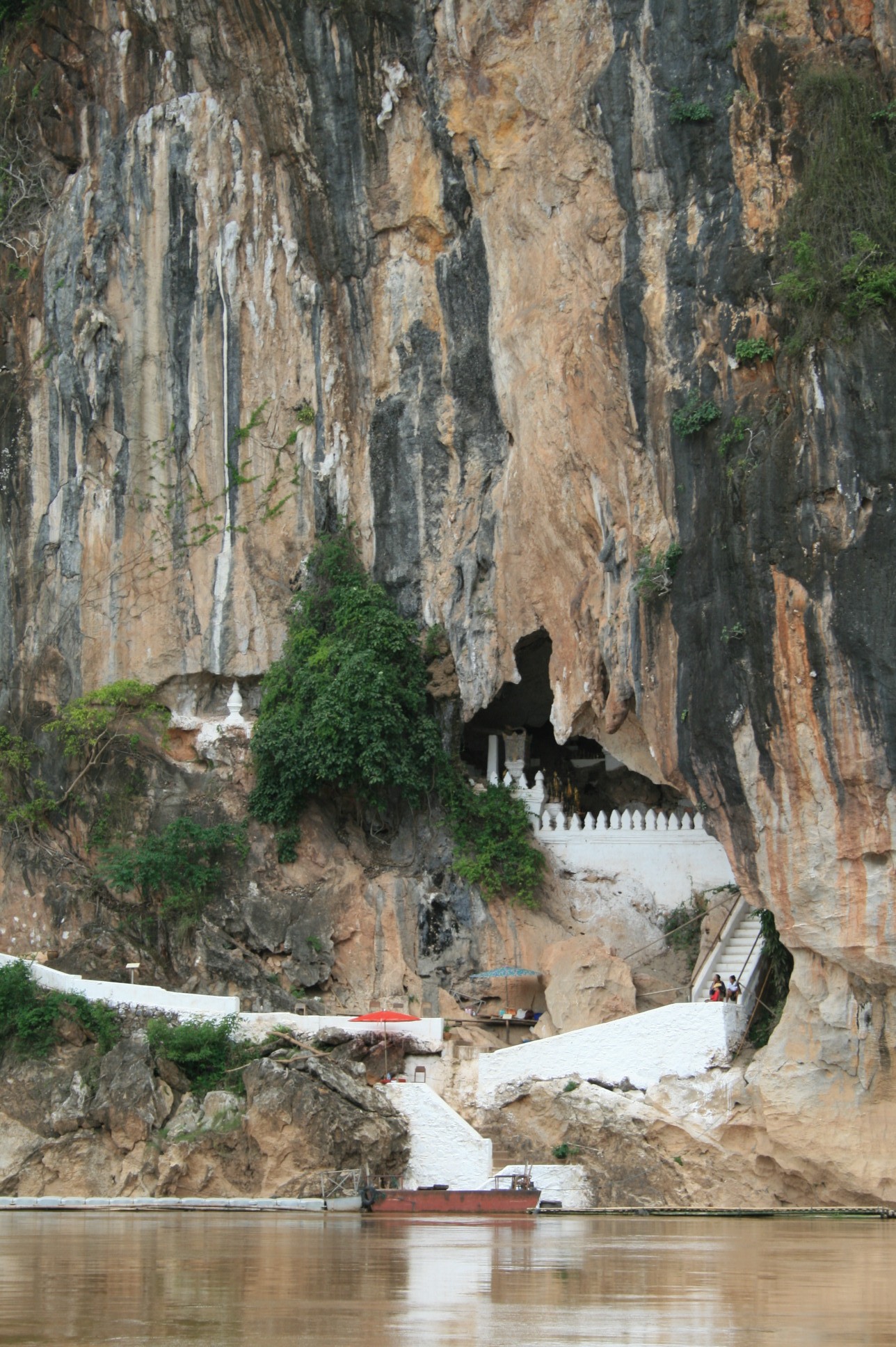
We arrived at a small village, parked our bike, then walked down to the river to hire one of these boats to take us across to the caves.

Approaching the caves. At the base is a rickety, floating bamboo jetty.  Several local women mind the caves, collect the entrance fee, and sell incense and flower offerings.

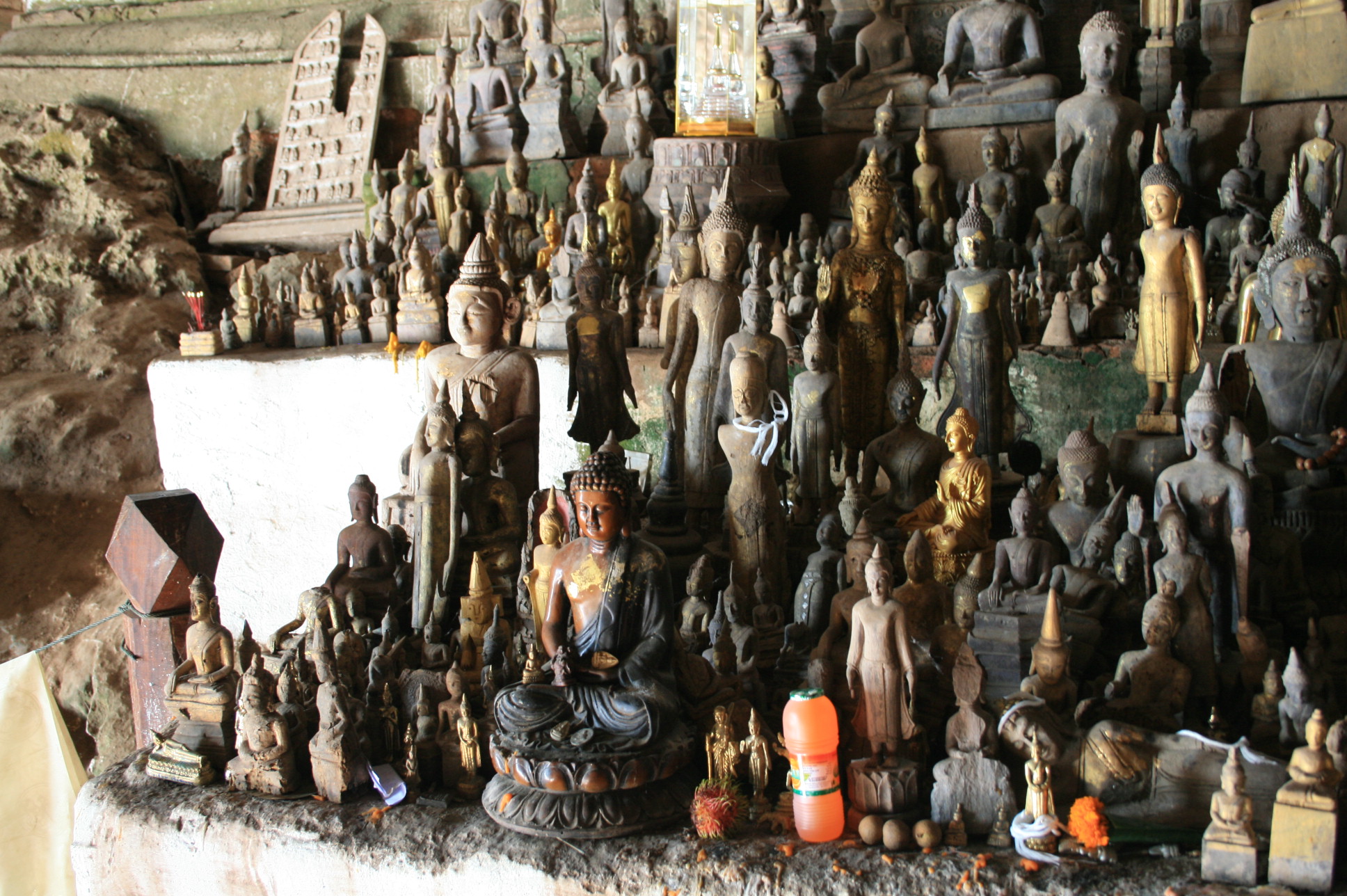
Inside the cave are thousands of Buddha statues, ranging in size from a couple of inches to a few feet. Most of the statues are old and crumbling. The caves actually function as something of a ‘graveyard’ for old and unwanted images of Buddha.

It is thought that the Lao people first began using the caves for religious purposes as early as the 8th century. This early use long predates the arrival of Buddhism in Laos, and dates back to when the local people worshiped nature spirits.

Further up the cliff there is another large cave which is much deeper than the lower cave. When I walked in and around the corner, it was almost pitch black, apart from a single candle burning in front of hundreds more Buddha.

By the time we had seen our fill of the caves and made our way back to the other side of the river, it was getting on in the day.  Our asses were still feeling pretty bruised, so we decided to leave the waterfall for the following day, and gingerly head back to town.

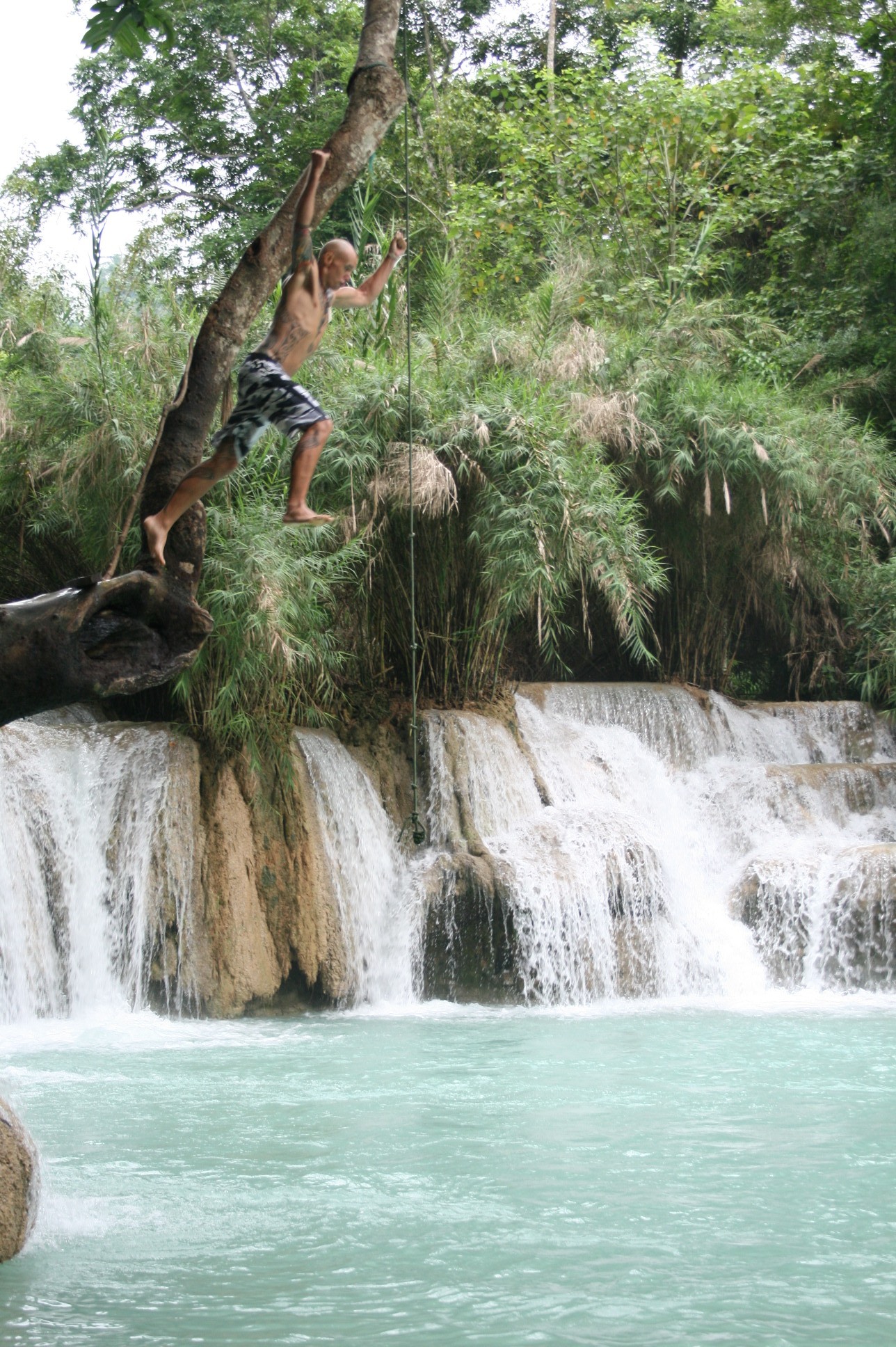
The next morning we were due to return the bike at 9.30am, so we got on the road before 6am for the 35km journey to the waterfall.  It was lovely being up that early in the misty dawn, riding through small villages and dodging chickens and scorpions.  When we arrived at the waterfall, we had the whole place to ourselves, a rare treat indeed, given that it is one of the top tourist attractions for the area.  We swam for about 45 minutes in the beautiful green water, then got changed and rode back to town.  We had time to call in for our regular morning coffee, to pick up our laundry, and buy a fresh pineapple, before returning the bike to the hotel and just making it in time for breakfast.  That’s living the dream alright, even if it is only at 110cc!!

The water looked cold, but wasn’t too bad – a great way to wake up.

The water tumbles down multitiered rocks – really beautiful

The obligatory jump

This is more my style!

Beasty!

comments 5

Eating in Luang Prabang

Luang Prabang’s beautiful temples, French colonial architecture, and natural beauty have made it a popular spot on a South-East Asia travel circuit.  Over the past few years, it has increasingly attracted what Lonely Planet refers to as “well-heeled” tourists – those with money to spend on luxuries and comforts within a backdrop of Asian exoticism.  Predictably, expensive hotels, restaurants and boutique shops have proliferated, making Luang Prabang a little bubble of prosperity within one of the 20 poorest countries in the world.

Over time, Luang Prabang has developed a reputation for excellent food and coffee.  You can eat fine French cuisine here, drink imported wines, take cooking courses with internationally renowned chefs, and purchase locally produced gourmet foodstuffs such as goats cheese, spice mixes and oolong tea.  A destination for foodies indeed.

We arrived in Luang Prabang with our tastebuds zinging in anticipation, and although we had to eat some mediocre food on our way to gastronomic bliss, we have indeed eaten well here.  This post presents some highlights, beginning with our new shared passion – finding the perfect coffee to start our day (yes, I’ve managed to get Colin addicted to coffee!!).

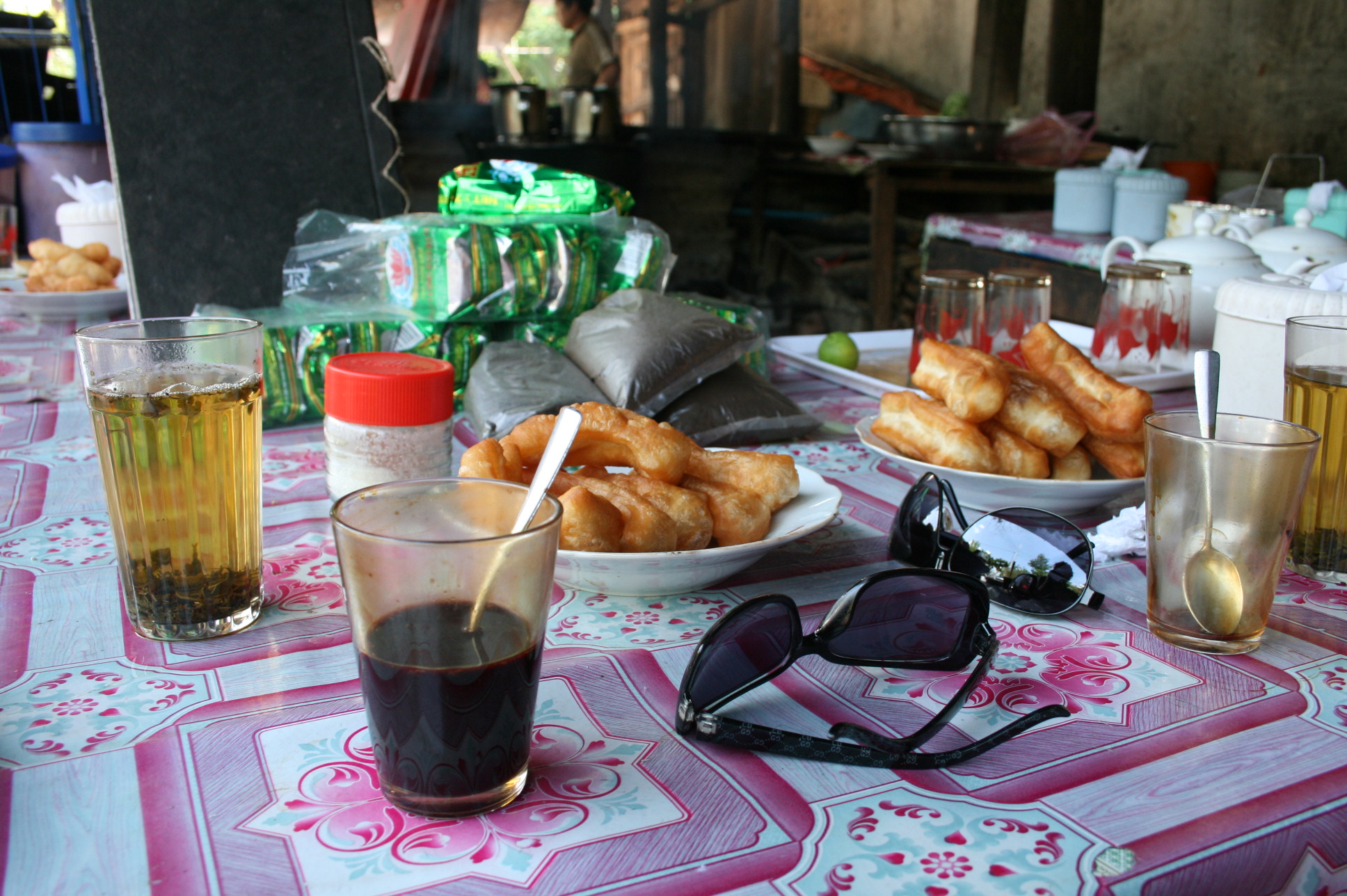
As in Vietnam, the best coffee is not to be found in cafes targeting tourists, but in the scruffy little shops frequented by locals. All the locals we asked recommended a particular shop down by the river. This open-air shop – sandwiched between a smokey barbeque stand and a noodle vendor – is only open between the hours of 6.30-11am. There we fell head over heels for Lao coffee, brewed over an open fire to a luscious syrup that turns your lips and teeth dark brown as you drink it. The coffee is served in a glass with two teaspoons of sweetened condensed milk, and costs only 3,000 kip (about 50 cents NZ). Complimentary green tea is provided and deep fried pastries are available for dunking in your coffee.

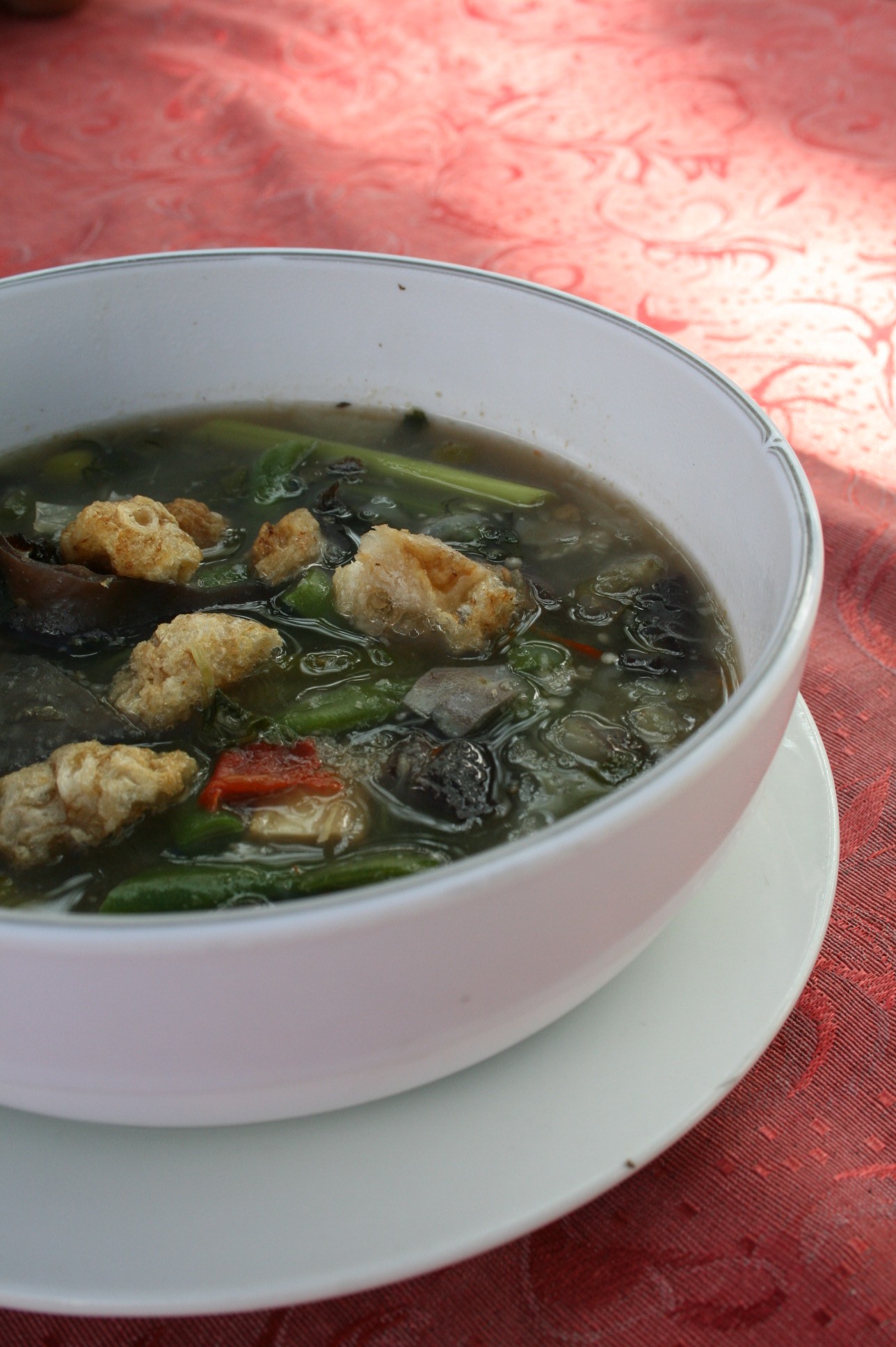
Vegetable stew at The Big Tree cafe – dark with eggplant, warm with chilli, crunchy with woodear mushrooms, loaded with virtuous vegetable goodness (and arriving, unexpectedly, with a few tasty chunks of pork crackle).

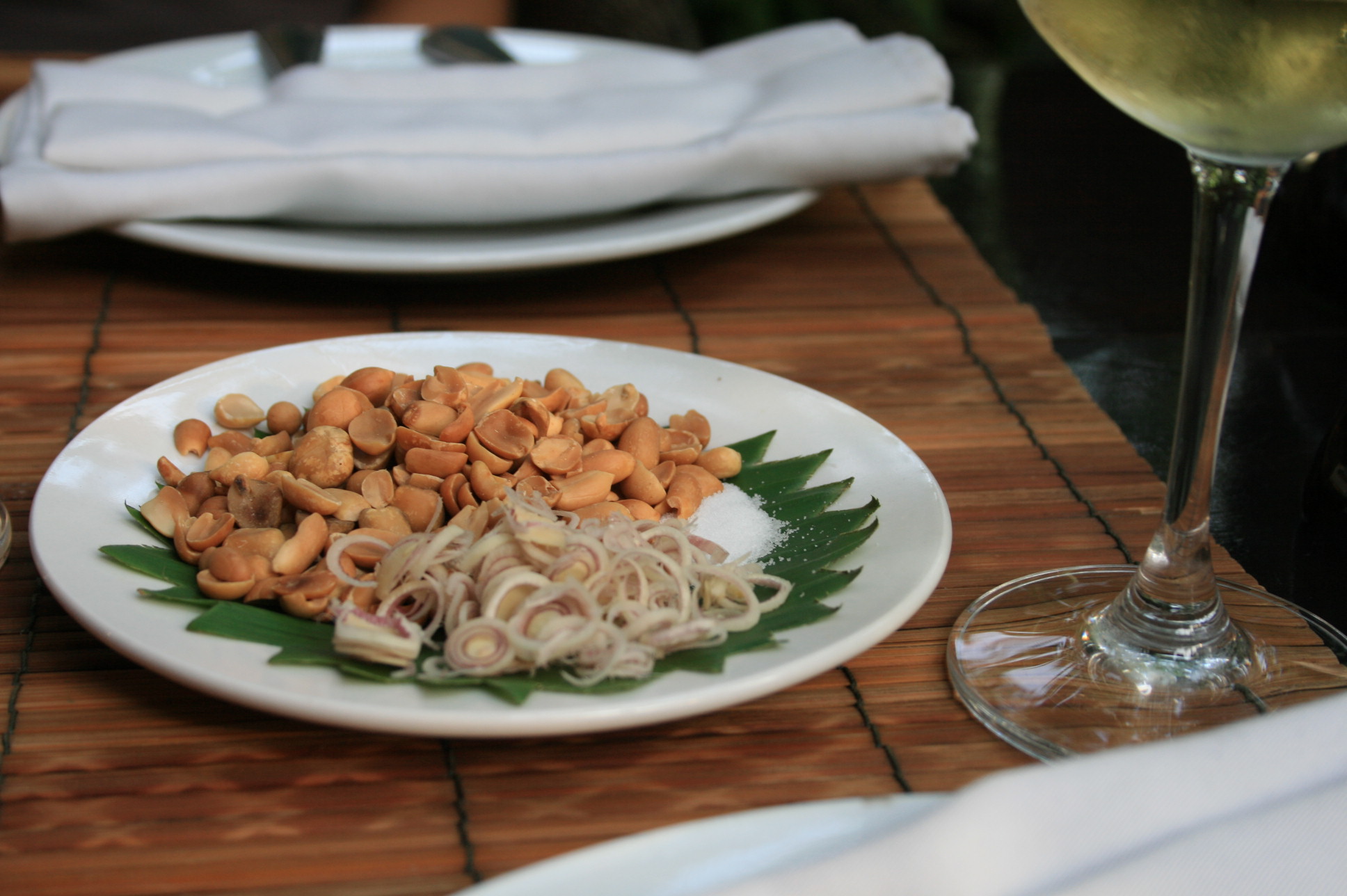
Spurred by the recommendation of Lonely Planet and the staff at our hotel, we decided to splurge on a nice dinner at Tum Tum Cheng. Unfortunately, this complimentary nibble turned out to be the highlight of the meal: dry, unsalted peanuts served with thin slices of fresh lemongrass and a small pile of salt. This moreish combination went perfectly with the house “French white wine”, which proved to be highly drinkable.

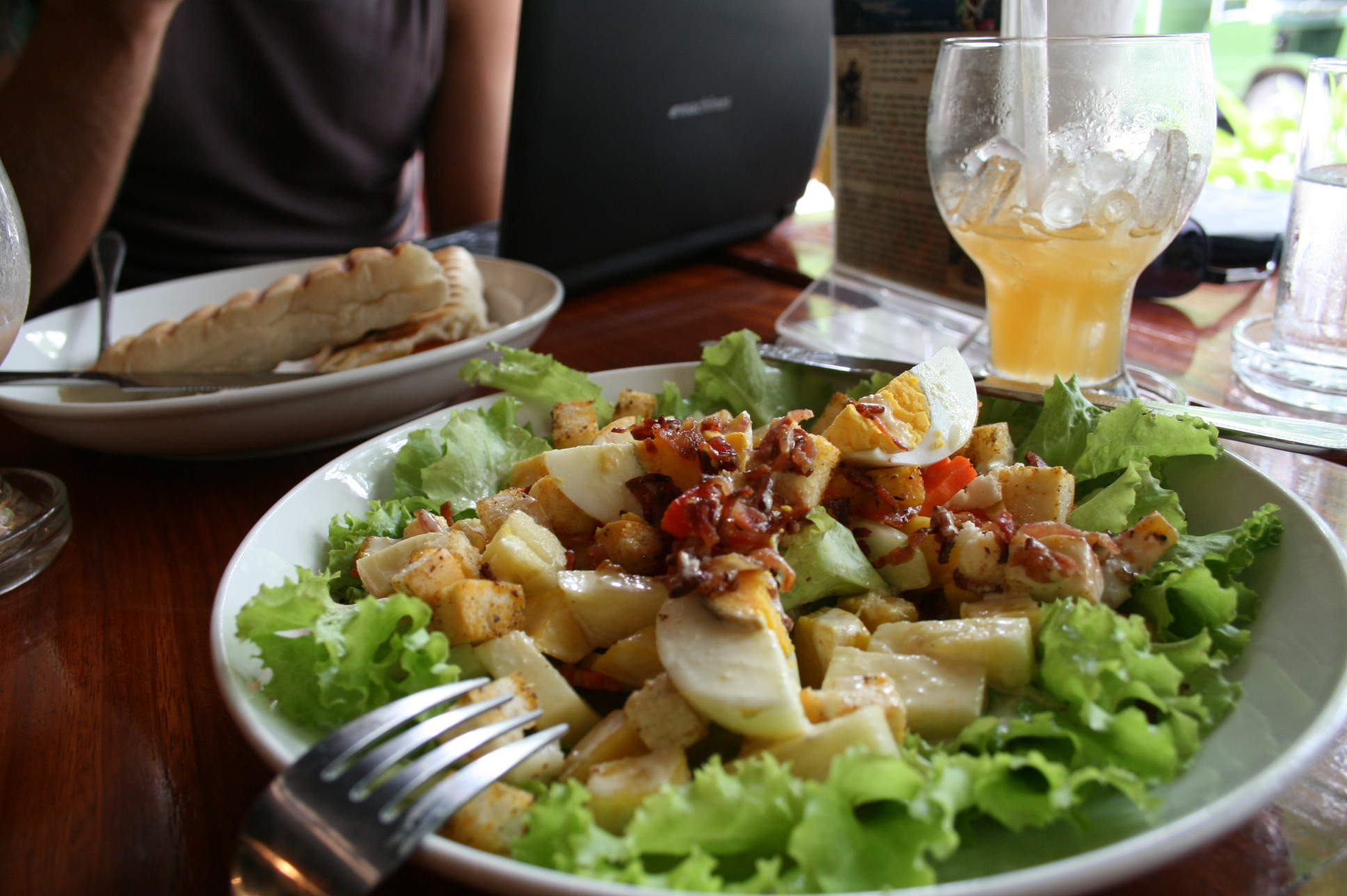
Hardly Lao food, this salad at Saffron Cafe nonetheless became a mutual favourite for lunch. The combination of salad greens, boiled egg, crispy bacon bits, croutons, raw vegetables, ripe mango and tangy lime vinaigrette was exactly what we craved on several hot days in Luang Prabang.

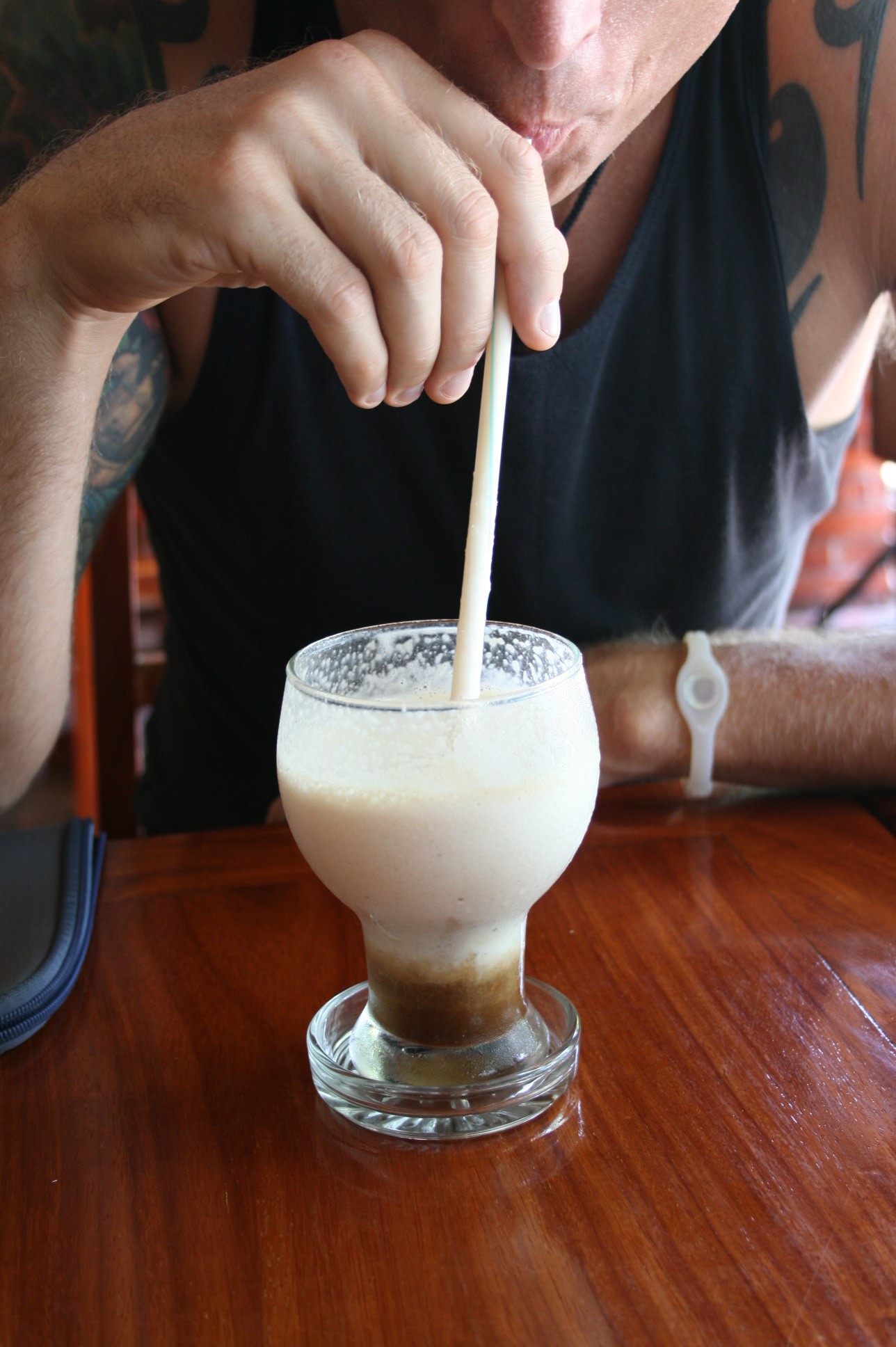
In addition to the salad, we also became addicted to Banana Macchiato’s at Saffron.  Their Banana Macchiato is a banana smoothie poured over espresso and it is unbelieveably good. The bitterness of the strong coffee provides an addictive contrast to the creamy, sweet banana-ery liquid. If you want your marriage to remain intact it is a mistake to order only one of these to share.  Seriously, why has no-one in New Zealand thought of this before? It’s nothing short of a taste sensation that we will do our best to recreate at home (wherever that ends up being).

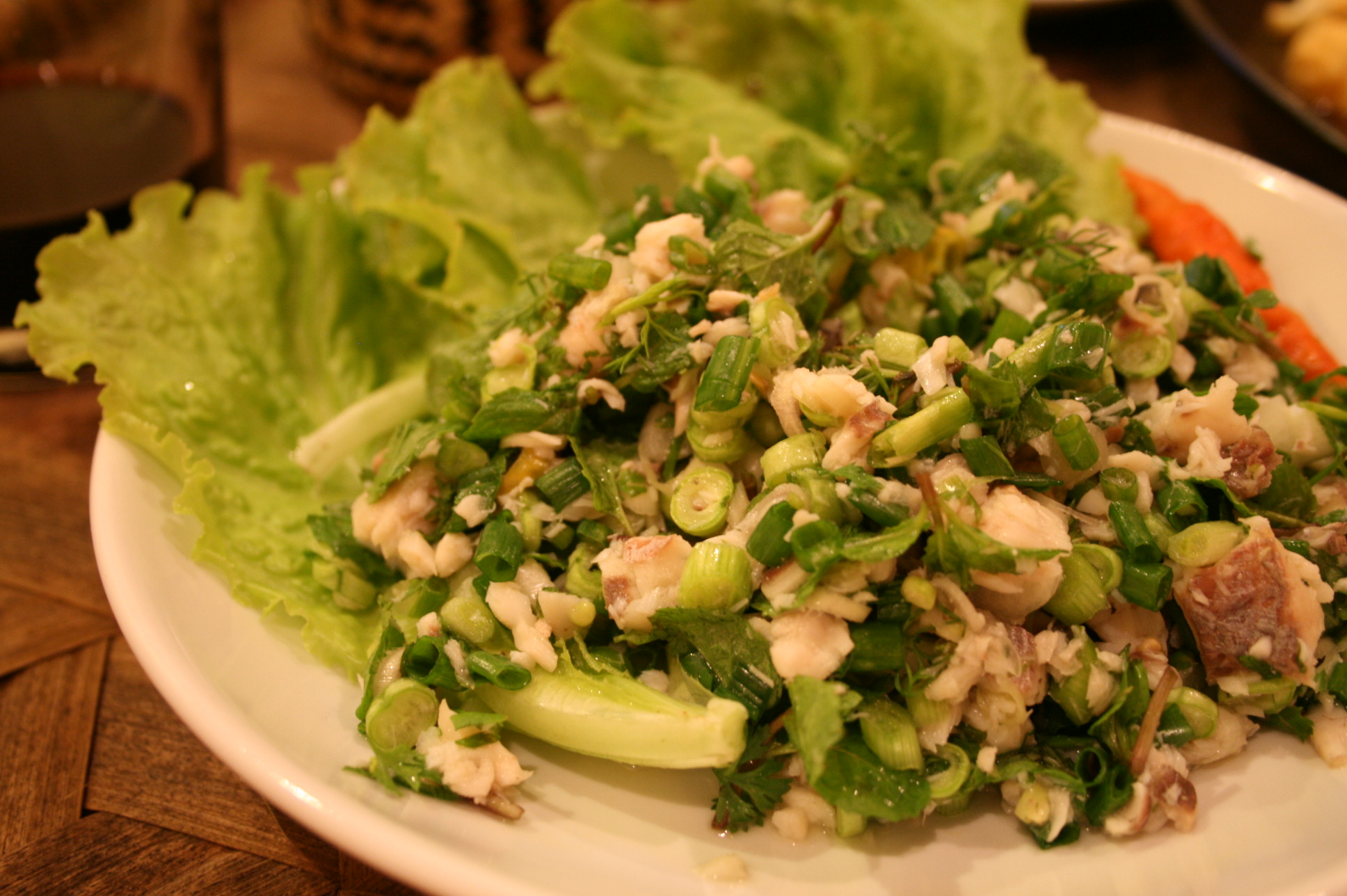
Fish Laab from the excellent restaurant at our hotel. Laab is a popular Lao dish made with fish, chicken, pork or tofu. It is essentially a cold salad. The cooked protein is mixed with a variety of herbs including banana flower, lemongrass, spring onion, garlic, shallot, coriander and a touch of chilli. It’s delicious pared with the traditional accompaniment – sticky rice.  I love eating food like this – light and nutritious, but intensely flavoured.

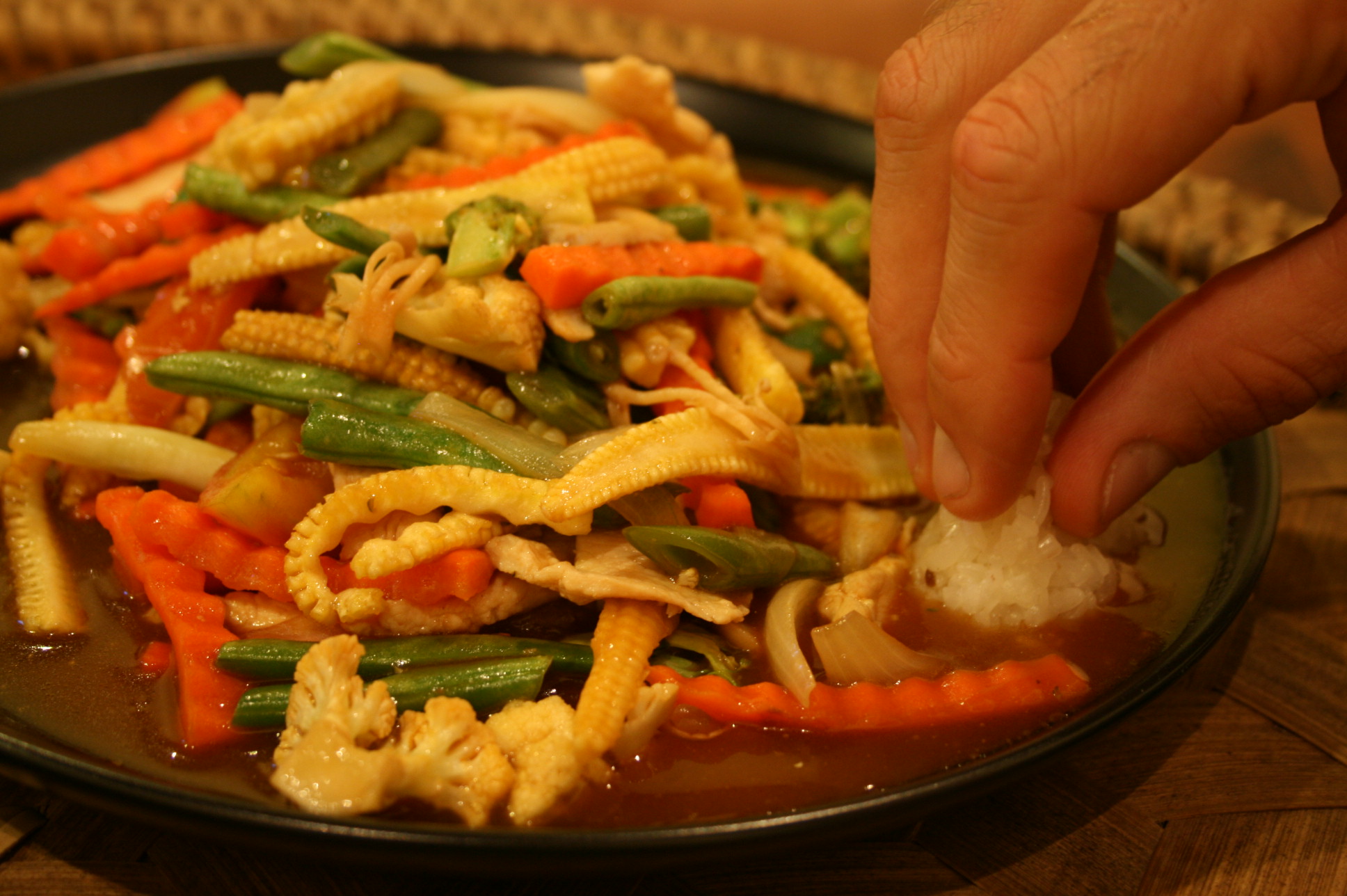
Stir-fried vegetables with chicken, again from the restaurant at the hotel. While it may not sound very exciting, this dish was lovely and we ate it several times – perfectly cooked vegetables in a sweet-salty sauce that makes you feel virtuous (after maybe one too many banana pancakes) without feeling like you are missing out too much (on more pancakes).

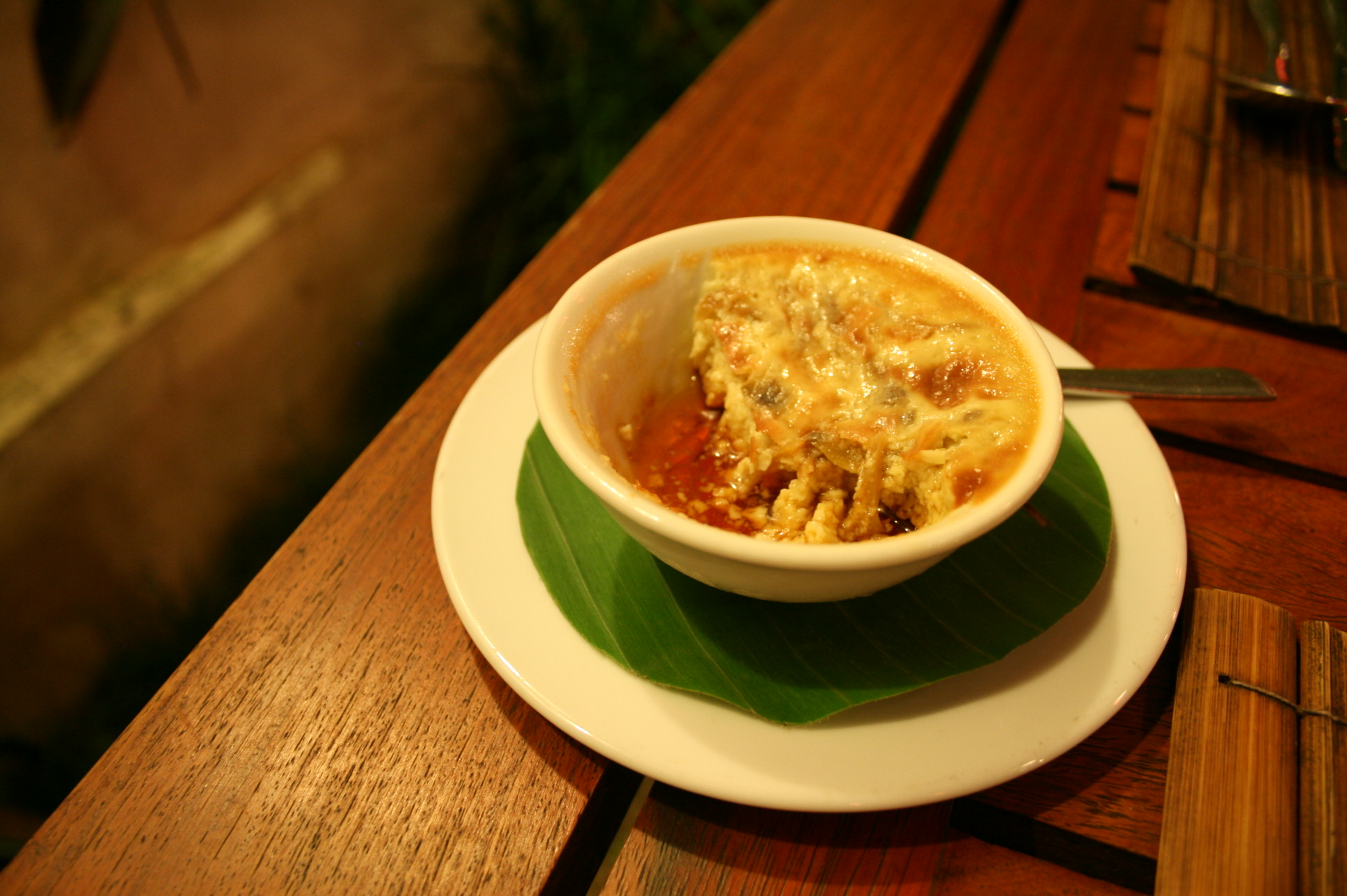
Coconut custard topped with caramelised ginger at Coconut Garden Restaurant. This was simply divine. It was served cold, and the best part was a layer of hard caramel at the bottom of the cup which had half-melted into a liquid caramel sauce. Sweet, creamy custard, slightly chewy ginger, and the slightly bitter edge of burnt sugar – bliss in every bite.

Pork Laab – this one we made ourselves at a cooking course run by Tamnak Lao Restaurant. I’m so glad we learnt how to make this dish as it’s one we will definitely make again. The pork version is particularly good. On this course we also made another excellent dish – a mellow pork and chicken curry. The curry began by frying a scary amount of garlic and shallot which thankfully transformed into sweet, soft, nutty nuggets melding gently with the coconut milk curry. The curry was only mild in terms of heat, like most Lao food, although a sweet chilli chutney (jeowbong) is provided on the side for extra spice if desired.

Luang Prabang salad at Tamnak Lao. This was another great salad, featuring boiled egg and a small amount of friend pork mince and peanuts built over a combination of watercress, cucumber and fresh mint. Versions of this salad appeared on menus throughout town.

comment 1

One night in Luang Prabang

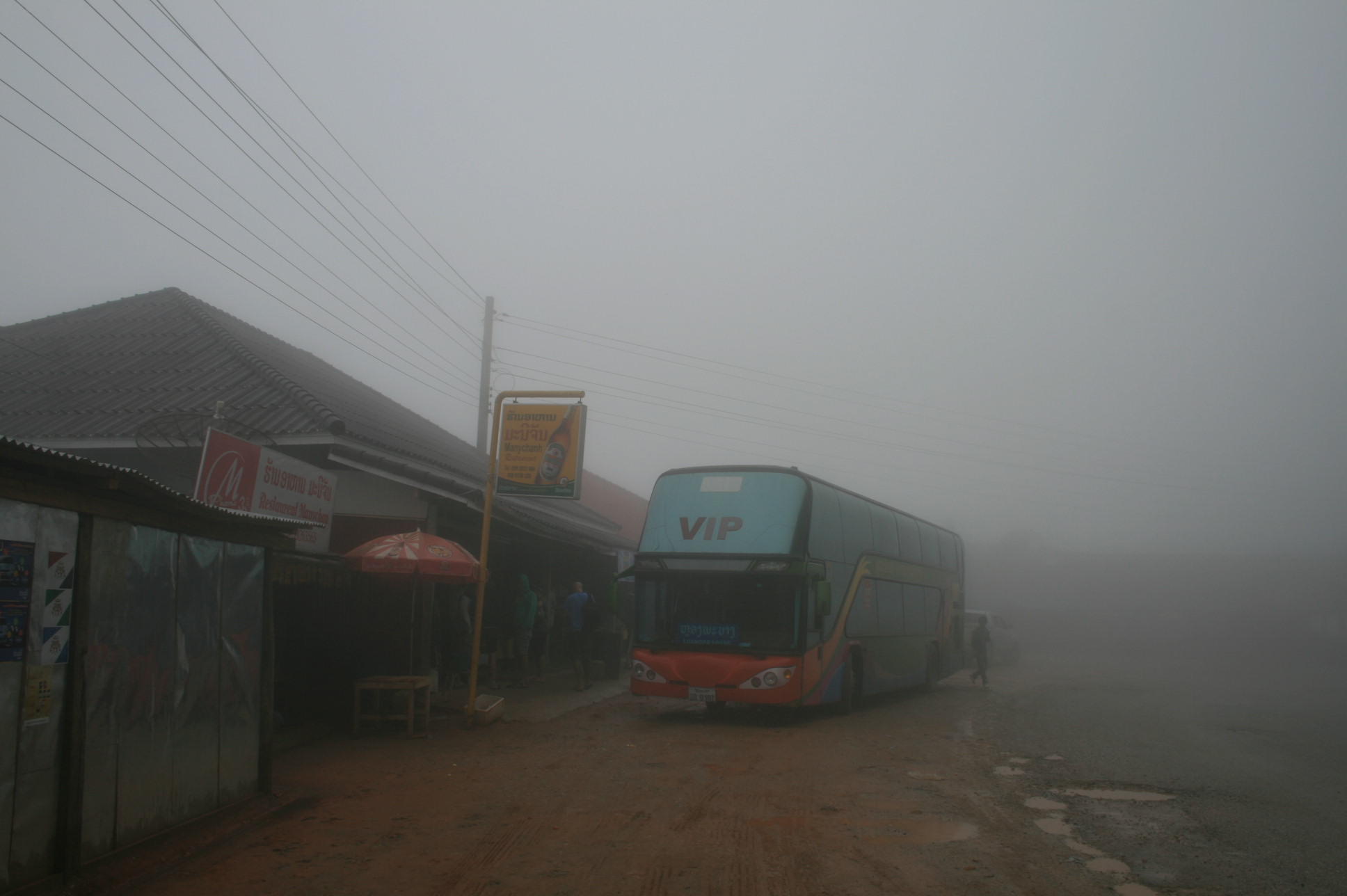
The journey from Vang Vieng to Luang Prabang was the most incredible bus trip we have taken so far.  The terrain is impossibly mountainous, causing all traffic to crawl and wind, up, down and through the most dramatic landscape I have ever seen.  Towering hills, plunging green valleys, tangled jungle, and periodically, little villages comprised of tiny houses perched on the side of the road with sheer drops directly behind them.  The 213 kilometre journey took our bus nearly seven and a half hours, as the terrain and condition of the roads means that buses can rarely go faster than about 40 km/hour.  It was raining the day we traveled, and the bus stop near the zenith was completely shrouded in mist.

On the way to Luang Prabang

Luang Prabang is a beautiful town – another Unesco World Heritage site, often called “The Paris of the Mekong”.  The city (Laos’ second largest) only has a population of 50,000 people.  The lovely, slow pace, makes you feel like you are kicking back in a small country village, although the prices of food and accommodation remind you that you’re not.  Luang Prabang also has a thriving party scene, as we discovered one memorable night.

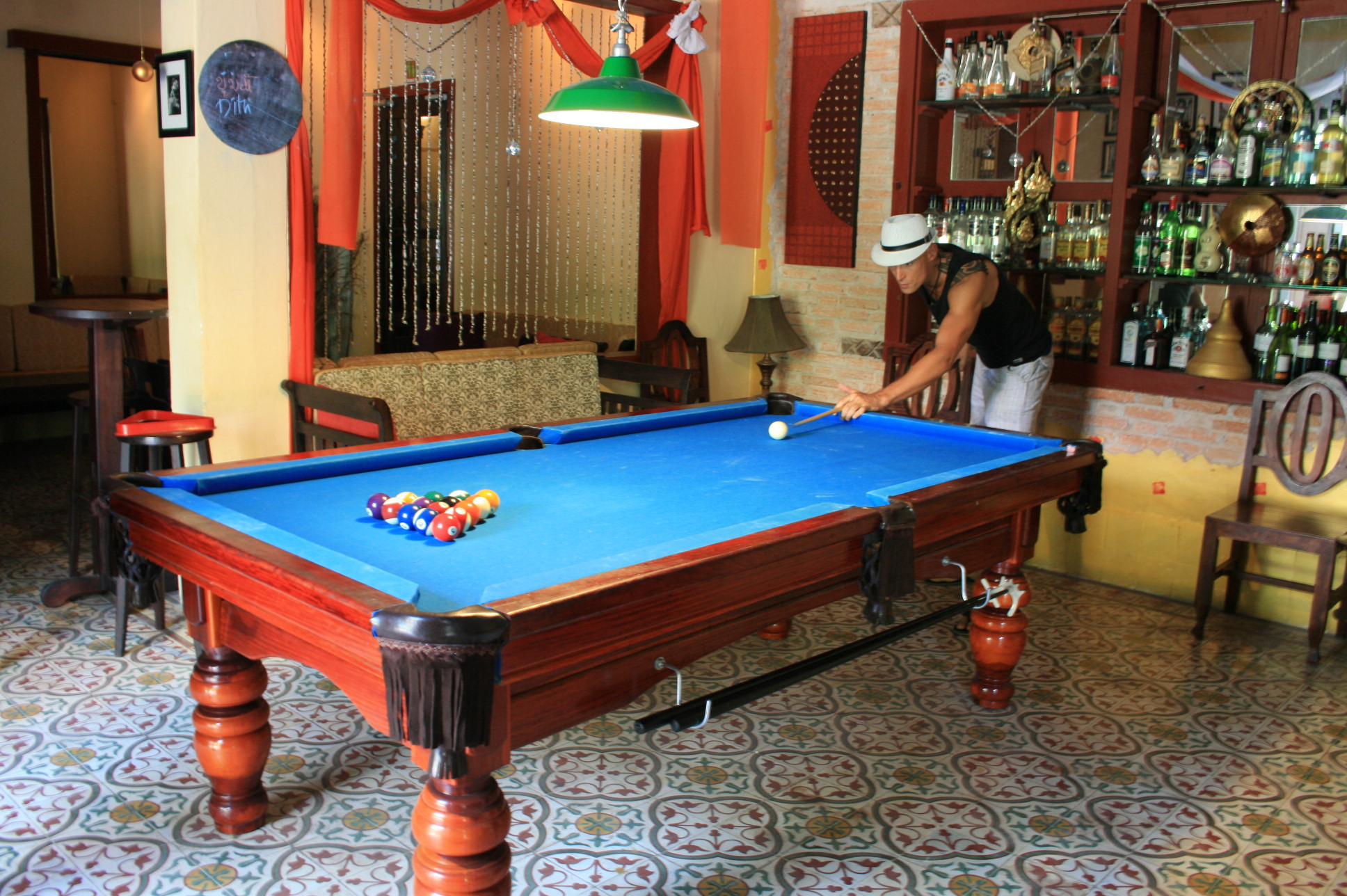
On our first full day in Luang Prabang we walked around the town, then in the afternoon, decided to escape the heat with a gin and tonic at a pub on the riverside we had glimpsed the night before.  As soon as we arrived at the Blue Ice Bar, we were warmly welcomed by Alex and Noi.  The bar wasn’t actually open at the time, but they said it was fine to come in, have a drink and play some pool with them.  We then spent several enjoyable hours hanging out with them and the owner Phout, fortified with free shots of Blue Ice (a blend of local spirits that Phout mixes himself).

At the Blue Ice Bar

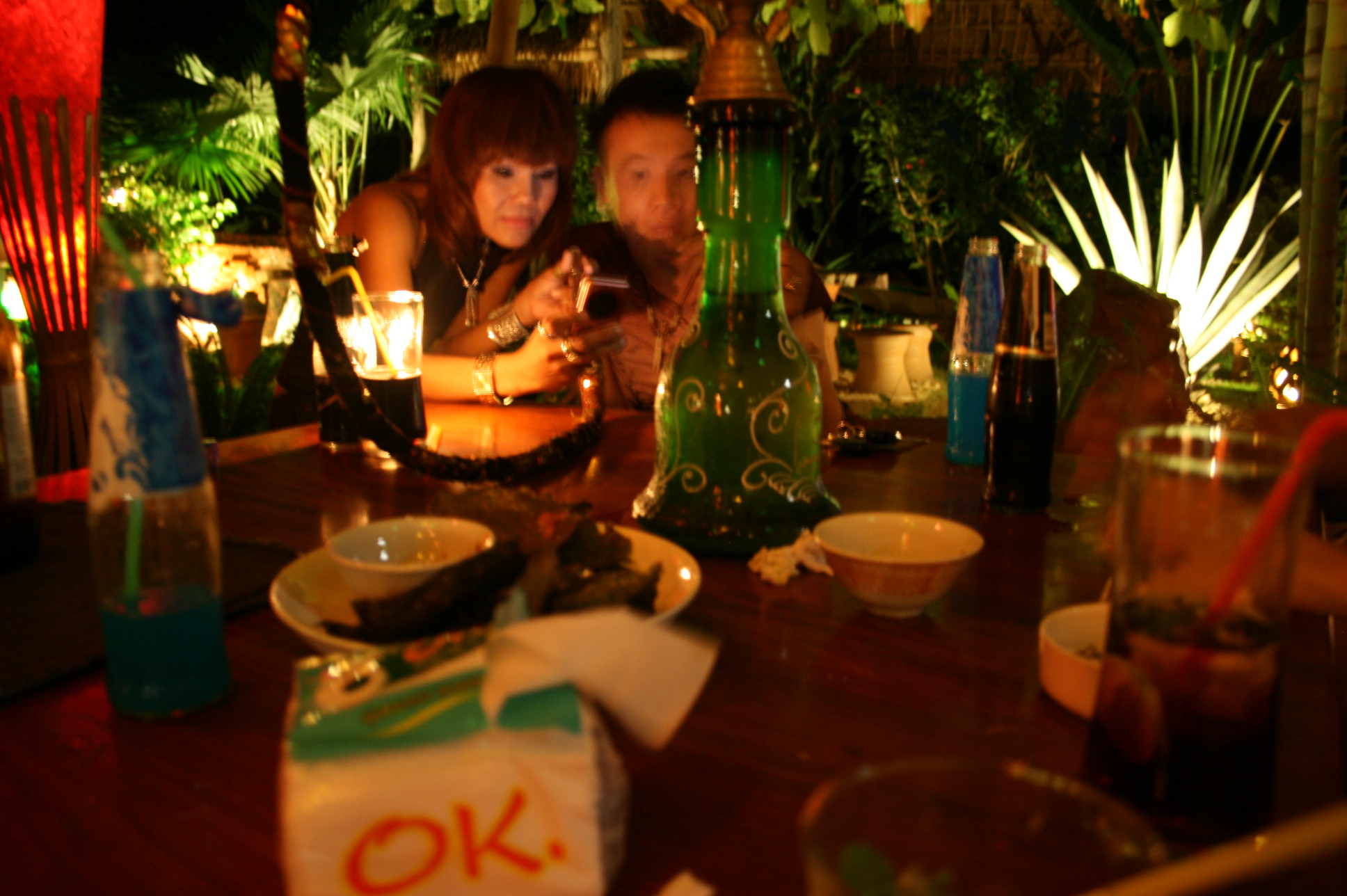
Before long we were joined by Julian, a funny Frenchman who is currently living in Luang Prabang; David, a travelling Irishman on his last night in the town; Gow, a Malaysian businessman, and various other characters.  Much frivolity ensued.  After it got dark, Alex, Phout and Noi invited us to go to Utopia with them.  Utopia is an institution in Luang Prabang, a legendary garden bar with low tables and cushions scattered about, a volley-ball court, open-mic’s, beautiful images projected onto large screens, great cocktails, and so on.  We spent an enjoyable couple of hours there, smoking a Turkish water pipe (minty-fresh!), and swapping stories (the group by then also included Tim and Aikesha – an American couple we had met in Vang Vieng and randomly bumped into at Utopia).

Noi and Phout at Utopia

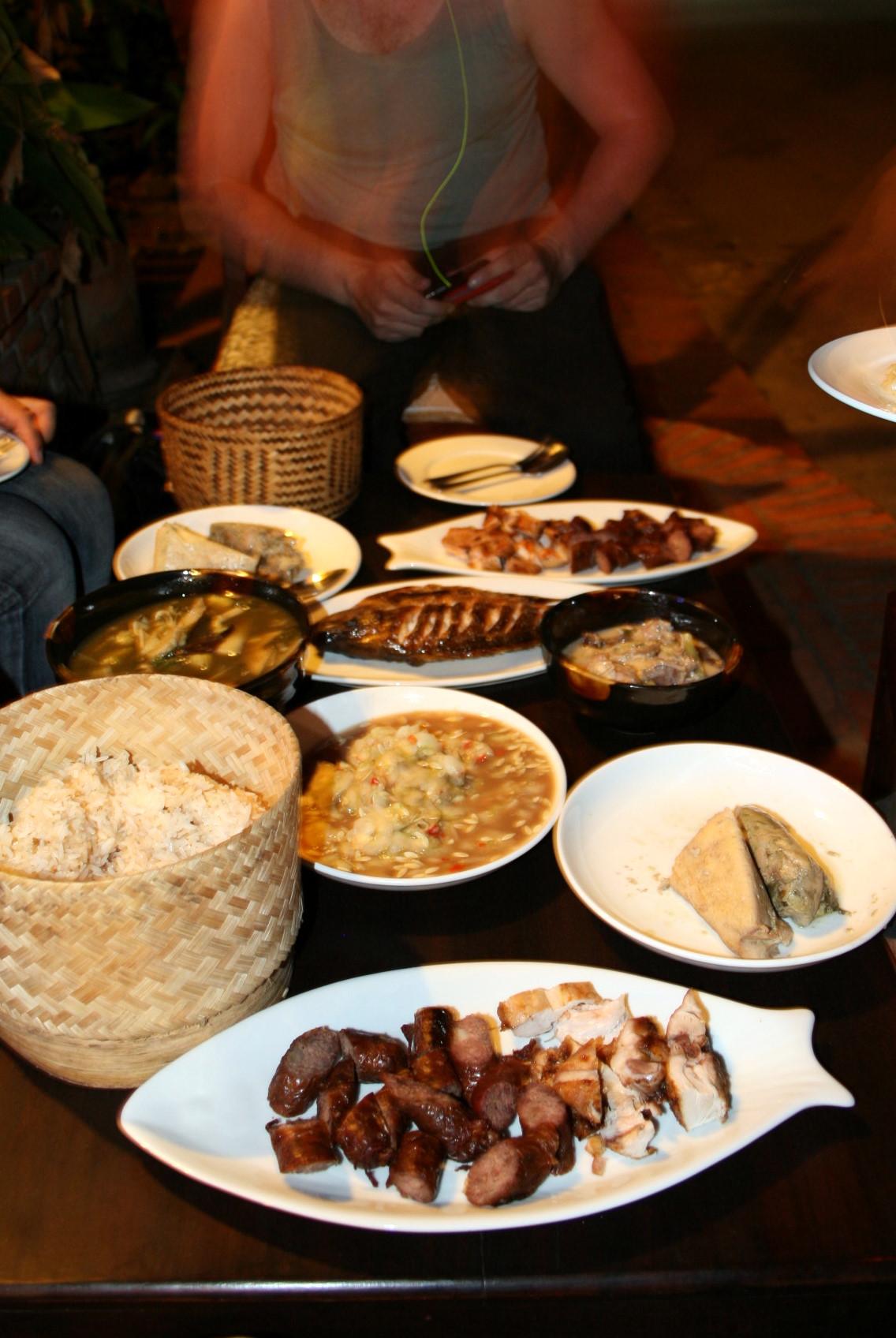
After a while, Alex and Phout asked us back to the Blue Ice Bar for dinner.  The bar doesn’t usually serve dinner (just snacks), but they had prepared a feast of Lao food for us – delicious bamboo soup, a whole steamed fish, Luang Prabang sausage, sticky rice, and a chicken and egg dish steamed in banana leaves (a specialty of Luang Prabang).

Dinner at Blue Ice

After more merriment, Julian (the Frenchman) asked us back to his place, where we spent an amusing couple of hours trying to understand Julian’s very broken English.  Pantomime helped.  Finally, it was after 2am, and we thought that we should get back to our hotel.  We walked back, only to find that we were locked out.  We then spent the next 45 minutes ringing the doorbell and the hotel phone, all to no avail.  We could not rouse anyone and eventually gave up, but since the whole town was quiet and it was a warm night, we decided to sit down by the river and wait for the sun to come up.

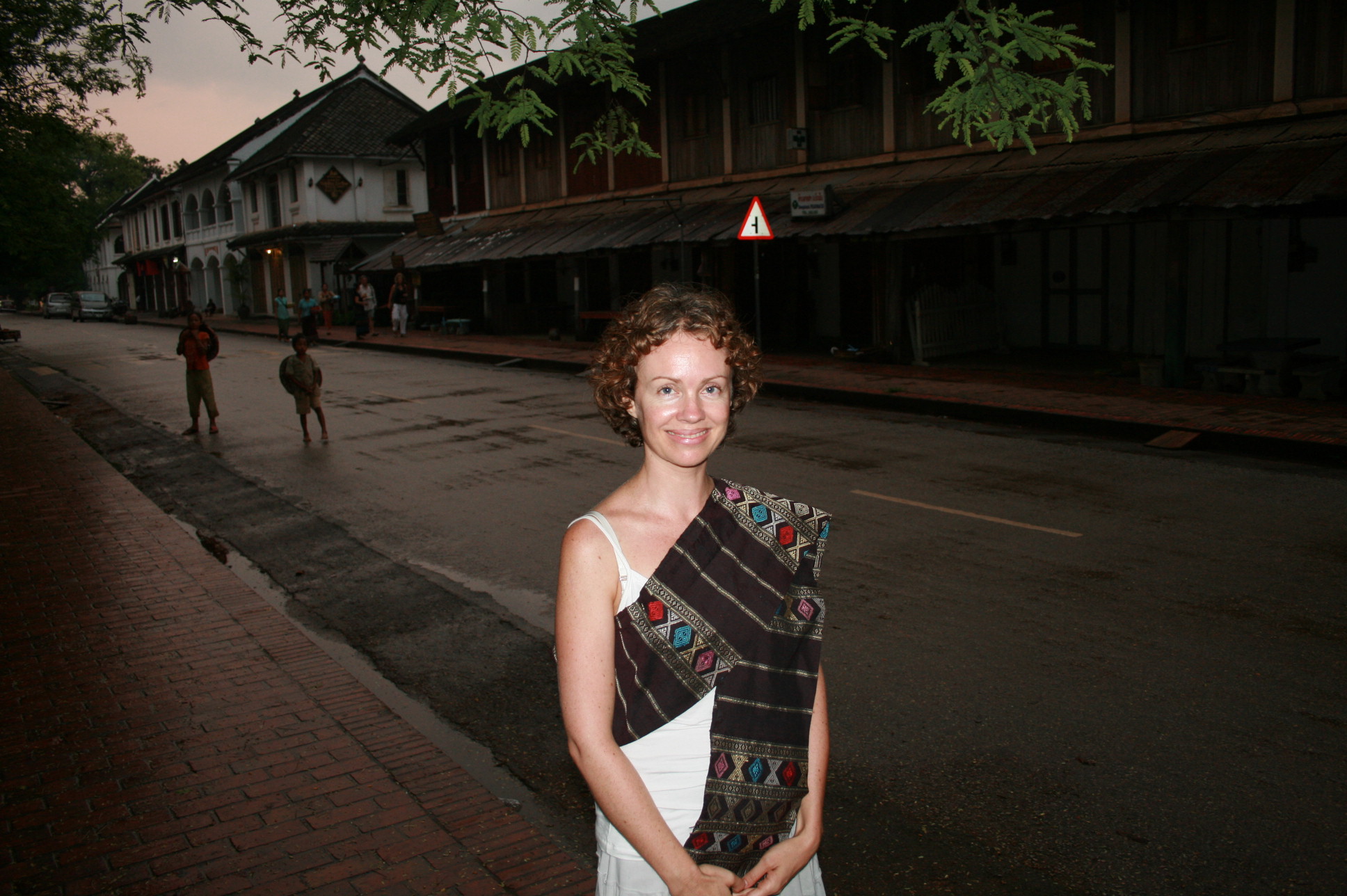
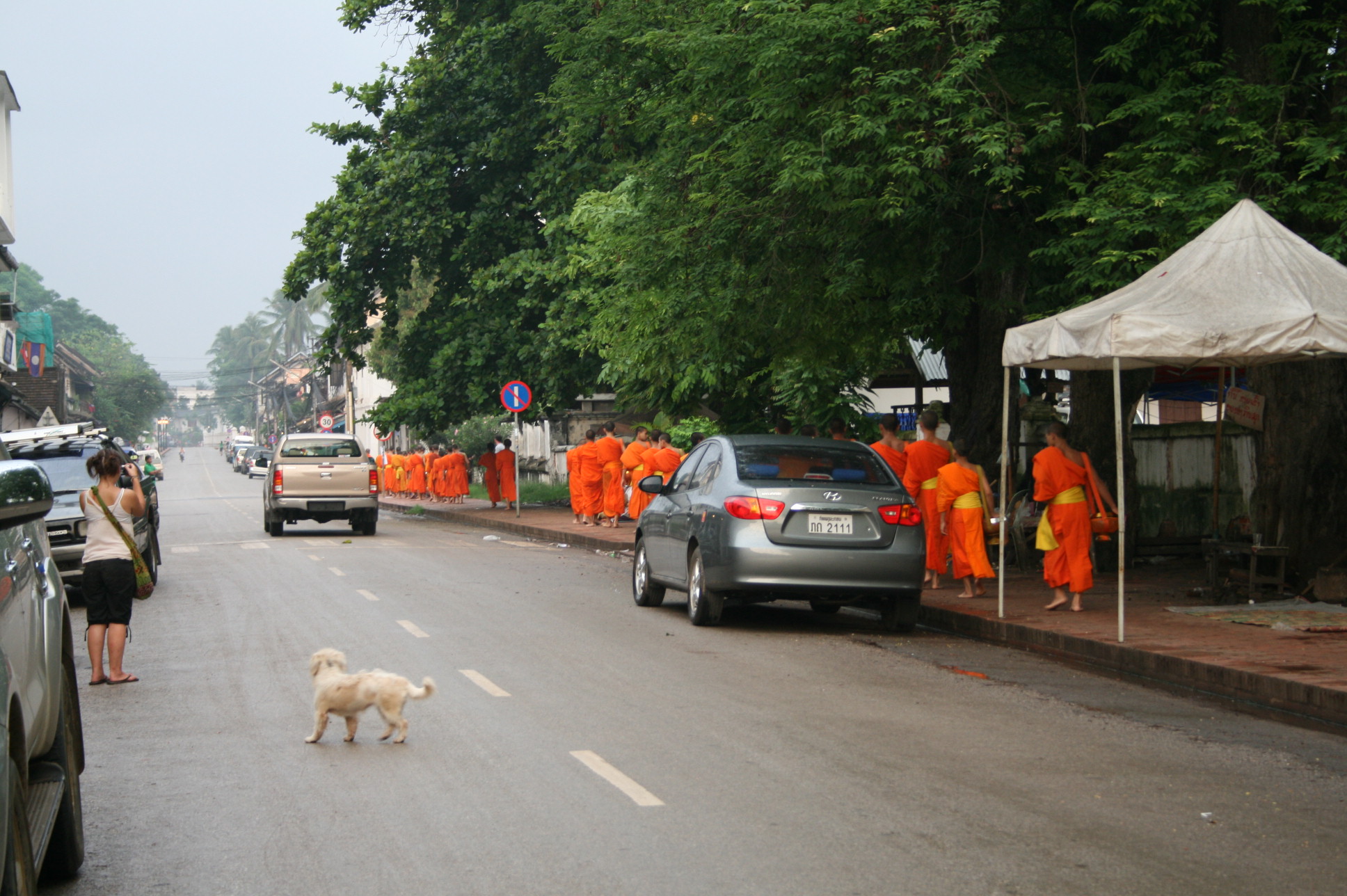
We only had to wait a couple of hours before the town started coming to life.   Every morning in Luang Prabang, the local monks walk in single file along the city streets to receive food as alms from the townspeople.  They aren’t allowed to prepare food for themselves, so are reliant on receiving food in this way.  Getting up at dawn to see this ritual is a must-do in Luang Prabang and our night on the streets meant that we could do this without the need for a clanging alarm clock!  Around 4.30am, two women walked past carrying loads of food, and they asked us if we wanted to come with them to see the monks.  Warmed by the Lao hospitality of the night before, we gratefully accepted, and walked up with them.  They adorned us with scarves and laid out food in trays ready for the monks.

Looking a bit sleepy…

When the monks became visible, the women gestured for us to hand out the food.  We sat there on the street and placed handfuls of sticky rice, bananas, and small packets of biscuits in the monks bowls.  About 300 monks walked past, many of them quite young (it’s common in Laos for boys and young men to live at a monastery as novices for a few months or a year).  The whole experience just felt so surreal, especially tacked onto the end of an already epic night.

You’re not supposed to photograph the monks, although doing so from across the street is considered ok.

The women kept handing us trays of food, so we kept on putting it in the monks bowls and putting it in the monks bowls…until at some point it clicked that the women were selling the food to us.  Each tray of food we handed out was worth 10,000 kip, and we had handed out 21!  Looking back, all the signs were right there in front of us and after traveling in Asia for the last two months, we should have been more alert.  But, sleep deprived and not expecting that the morning alms ritual had metamorphosised into a tourist spin, we were sitting ducks. After we coughed up, the women actually asked if we wanted to come back the next day!  Getting tucked occasionally is just par for the course when traveling in Asia, so you have to learn not to sweat the small stuff.  We headed back to the hotel, slept for several hours, then met up with Phout and Alex again for a trip to the market and another wonderful dinner.  What a night!